
21 September 2026
Wind-Driven Rain In Carlisle: Why A West-Facing Wall Leaks When The Tiles Are Fine
In a gale, rain travels sideways and upwards. Why Carlisle roofs and walls let water in during a south-westerly, and which repairs actually stop it.
Ask most people in Carlisle what a wet December looks like and they will describe the rain falling. The rain that damages buildings here does not fall, it flies. During Storm Desmond a gauge at Honister Pass logged 341.4mm in 24 hours, a UK record, and almost none of that arrived vertically - it came in on a south-westerly that had been running for days. That is the difference that catches homeowners out. A roof can be in genuinely good order, with every slate sound and every gutter clear, and still deliver water onto a bedroom ceiling the moment the wind swings round. Exposure to driving rain is graded in litres per square metre per spell, and the two worst bands on that scale start at 56.5 and 100. Cumbria spends a lot of the winter in them. Here is what that actually does to a house, and why the fix is rarely on the part of the roof you are looking at.
Watch: how a south-westerly pushes water in where the slates are fine.
Sideways rain is a different problem from heavy rain

A pitched roof is a drainage system. It assumes water arrives from above, lands on the covering, and runs downhill under gravity until it reaches the gutter. Everything about the way slates are lapped, the way flashings are dressed and the way underlay is hung takes that assumption as read.
Wind-driven rain breaks it. Once air is moving at gale force, droplets travel at an angle closer to horizontal than vertical, and the surfaces taking the load are the ones a roof design treats as secondary: the gable wall, the verge, the upstand where a roof meets a chimney, the head of a window. None of those are waterproof in the way a slate is. They are weather-resistant details that work because they are not usually pointed straight into the weather for eight hours at a stretch.
Volume is not really the issue either. A summer cloudburst can drop more water in ten minutes than a December front manages in an hour, and the roof sheds it without complaint. What does the damage is duration plus direction.
A wet, windy spell keeps one elevation of the house saturated for long enough that every small gap on that side has time to fill, and pressure does the rest. If you have already paid for roof leak repairs that held all summer and failed in November, that combination is usually why.
Exposure to driving rain is a measured figure, not a feeling
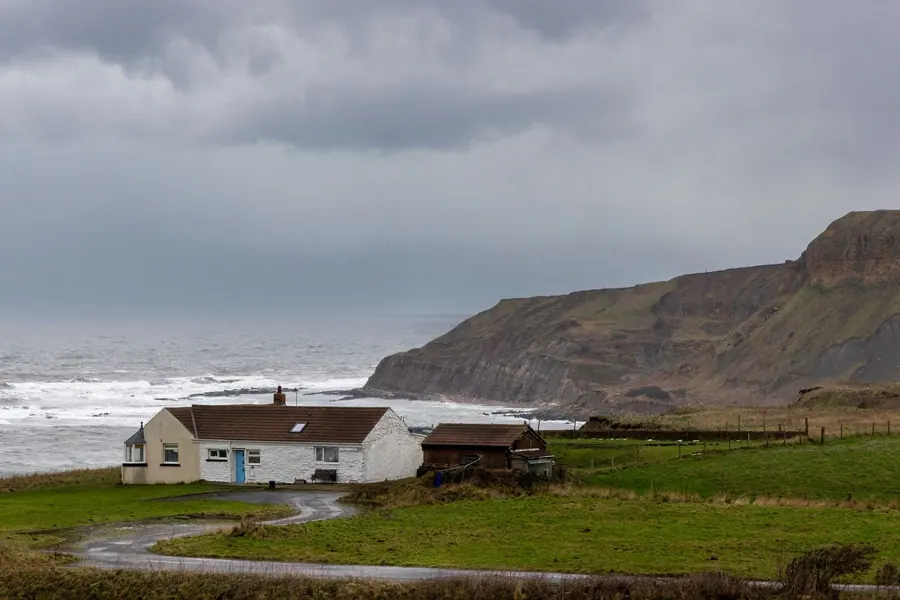
There is a British Standard for this, BS 8104, and it turns exposure into a number. The method works out how much water a wall face receives during a wet spell, expressed in litres per square metre. Below 33 is sheltered. Up to 56.5 is moderate, up to 100 is severe, and anything at or above 100 is classed very severe. The western side of the country is where the top two bands live.
The Building Regulations then carve the country into four zones on that basis, and the map sits in Approved Document C, which covers resistance to moisture from outside. Cumbria is not marginal on that map. It sits with the north-west coast, western Scotland and west Wales in the bands where the guidance stops treating wall construction as a free choice and starts setting minimum thicknesses and protection.
That grading is a weather artefact, not a judgement about local building. The Met Office account of Storm Desmond describes a persistent south-westerly flow carrying moisture from as far off as the Gulf of Mexico, with 405mm falling at Thirlmere in 38 hours. Carlisle sits at the end of that conveyor with nothing much between it and the Solway to slow the wind down. Houses in Stanwix or on the western edge of Morton take the full run of it; a terrace tucked behind others in Denton Holme does not. Two roofs of identical age and construction a mile apart can be on completely different weather diets.
How water gets past slates that are doing their job

This is the part that sounds wrong until you see it. In a strong wind, the pressure on the windward face of a roof is higher than the pressure in the space under the covering. Water sitting in the gap between two slates is caught between those two pressures, and it moves towards the low one - which is inwards and upwards. Add capillary action, which will lift water through a narrow gap on its own with no help from the wind at all, and you have a mechanism that walks rain up a slope.
That is why the lap a slate needs is not a fixed number. It gets longer as exposure increases and as pitch gets shallower, because the lap is the distance the water has to climb before it reaches open air inside the roof. A covering laid to a lap that suits a sheltered site in the Midlands is under-specified on an exposed Cumbrian gable, and it will behave itself for years until the right storm comes along.
The edges are worse than the field of the roof. A verge is a raw cut edge where wind pressure is highest and where mortar bedding cracks long before anything else fails. An abutment against a chimney or a neighbour’s gable relies on lead upstands and cover flashings that only work if they are deep enough and properly tucked in. Where the underlay has been cut short at the verge, or has sagged and torn with age, there is no second line of defence at all.
None of that shows up in a look from the pavement. None of it leaks in ordinary rain either, which is how a roof gets a clean bill of health in September and floods a landing in January.
In a long blow, the wall is the leak

Plenty of the damp blamed on roofs around Carlisle never came through the roof. It came through the wall, and the reason is how those walls were built.
A solid stone or single-skin brick wall has no cavity to interrupt water. It keeps the weather out by being thick enough that rain soaking into the outer face never reaches the inner one before the weather changes and the wall dries again. That is a perfectly sound strategy until the wall stops getting a chance to dry. Approved Document C reckons a solid external wall in severe exposure needs 328mm of brick or stone and a rendered face, and in very severe conditions it expects impervious cladding rather than bare masonry. A great many Victorian and Edwardian houses in the city were built to neither standard, because they were built to look right and to keep out the weather of an average year.
Red St Bees sandstone, which is most of older Carlisle, makes it more interesting again. It is porous and it takes up water readily, so a west or south-west facing elevation in a four-day blow can be carrying a serious amount of moisture through its full depth. The damp then shows up internally as a patch near a ceiling or in a corner, which looks exactly like a roof leak. Cavity walls are not automatically safe either: retrofitted full-fill insulation has a long history of trouble in the very severe zone precisely because it can bridge the gap that was doing the drying.
Pointing and render decide how much of that soaking gets through
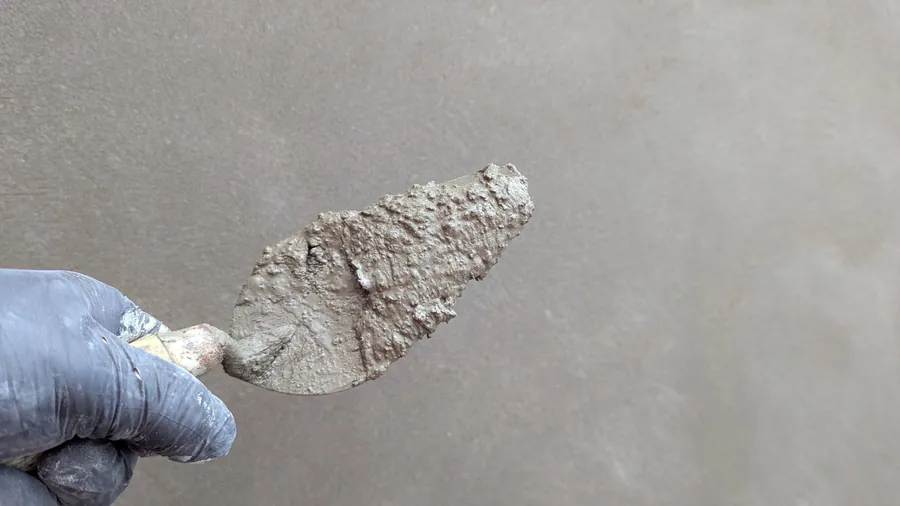
If the wall itself is the defence, the joints are the weak point. Open or eroded pointing gives wind-driven rain a direct route into the depth of the masonry, and on a gable with 40 or 50 square metres of exposed face there can be a lot of open joints working at once.
The mix matters as much as the state of it. Hard cement pointing on soft sandstone stops the joint breathing, so the moisture that does get in has to leave through the stone instead. Over a few winters the face of the stone blows off in sheets while the pointing sits there looking immaculate, and that is before frost gets involved - a process covered in more detail in our piece on what a Carlisle winter does to a roof. Lime mortar is softer than the stone on purpose, so the joint takes the wear and can be replaced.
Render behaves the same way. A cracked cement render on an exposed elevation is the worst of all worlds: it lets water in through the crack, then holds it against the wall and stops it evaporating. The wall stays wet through the whole winter instead of drying between fronts. Guide figures for re-pointing a two-storey gable in the city usually land somewhere between £1,200 and £3,000 once scaffold is allowed for, and a lime specification runs above a cement one, but it is the only version of the job that lasts on soft stone.
A leak that only shows in a south-westerly has told you where to look

Homeowners apologise for this one. They say the leak is intermittent, as if that makes it harder to solve. It is the opposite. A directional leak is the single most useful piece of evidence you can hand a roofer.
Keep a note for a month. Date, roughly how hard it was blowing, which way, and whether the damp appeared. If every appearance lines up with wind from the south-west and nothing happens in still, heavy rain, the fault is on that elevation and it is pressure-driven rather than gravity-driven. That rules out most of the roof immediately and points at the verge, the abutment, the wall head or the window head on the weather side.
Then remember that the entry point and the appearance point are different places. Water that gets in at a verge lands on a rafter or on top of the underlay and runs along it until it meets a nail or a fold it can drop through, which on a shallow pitch can be several metres away. Our article on why a leak keeps coming back after a repair covers the tracing side of it properly. The short version is that the stain on the ceiling is a clue about the wind, not a map of the hole.
What stops it, and what only hides it

Everything that works does the same thing: it restores a drainage route or gives water somewhere to go that is not inside the house.
Re-bedding a failed verge, or replacing it with a mechanical dry verge system, usually runs £300 to £800 per gable including access, and it removes the detail that cracks first. Renewing lead flashing where a roof meets a chimney or a party gable, with upstands deep enough for the exposure, sits in the £350 to £700 range on most Carlisle houses. Repairing or extending underlay at the verge and eaves puts the second line of defence back. Re-pointing in lime, and re-rendering in a breathable mix where render has already failed, lets the wall shed what it takes on. If the property is listed or in a conservation area, check with Cumberland Council’s planning and building control service before changing a render or a verge detail, because both are visible alterations.
What does not work is anything that relies on a film. Silicone water repellents, elastomeric roof coatings and a tube of sealant along a flashing all share the same flaw: pressure-driven water finds a way round the edge of a coating, and once it is behind, the coating is the thing preventing the wall or the roof from drying out. You end up with a house that looks treated and stays wet. Of the wind-related call-outs we take between October and March, a fair share are second visits to somebody else’s sealant.
Damage done in a named storm is a different conversation from damage that has built up over ten winters, and insurers treat the two very differently. If a gale has actually taken something off the roof, read our guide to storm damage and how Cumbrian insurance claims work before you ring anyone. The evidence you gather in the first day is the part people wish they had later.
If the damp in your house keeps time with the wind rather than the rainfall, that is a diagnosis waiting to happen rather than a mystery. Book a free roof and wall check in Carlisle and we will start on the weather side.
Frequently Asked Questions
What is wind-driven rain and why does it matter in Carlisle?
It is rain carried horizontally by wind rather than falling vertically, so it hits walls and roof edges instead of landing on the slates. It matters here because exposure to it is measured in litres per square metre per spell, and western Cumbria sits in the severe and very severe bands of that scale. A wall that never sees a drop in a normal shower can take a soaking that lasts days when a south-westerly sets in.
Can rain really travel upwards under a roof slate?
Yes. Wind blowing at a roof creates higher pressure on the windward face than in the space beneath the covering, and that difference pushes water up the side laps and head laps of slates that are otherwise perfectly sound. Capillary action in a tight gap does the rest. It is why a roof can pass every visual check and still let water in during a gale.
Why does my leak appear on the wrong side of the room?
Because water entering at a verge or an abutment lands on a rafter or the top of the underlay and runs along it before it drops. On a shallow pitch it can travel several metres across the roof before it finds a nail hole or a sagging fold to fall through, which puts the ceiling stain nowhere near the fault.
Will a waterproof coating or sealant stop wind-driven rain?
Not for long, and on a solid stone wall it usually makes matters worse. Pressure-driven water finds a route around a surface film, and once it is behind it the coating stops the wall drying out again. The repairs that hold are the ones that restore the drainage path: re-pointing in the right mix, a sound verge, renewed underlay and flashings with proper upstands.
Free Roof Survey & Quote
Free roof survey and a fixed written quote, anywhere across Carlisle and Cumbria.