
2 September 2026
Frost And Thaw: What A Carlisle Winter Does To Your Roof
Carlisle's wettest month is also its frostiest. What the freeze-thaw cycle does to slate, mortar, gutters and flat roofs - and what to check before December.
Carlisle’s wettest month of the year is December, at 98mm of rain. Its frostiest month is also December, at nearly ten nights of air frost. Those two facts sitting on top of each other are the single most destructive thing about a winter here, and they explain most of the damage that turns up on local roofs between November and March. It is not the cold. Aberdeen is colder and its roofs last well. It is that a Carlisle roof is reliably saturated when the temperature drops through zero, and it does that around 42 times a year. Every one of those nights is a chance for water sitting somewhere it should not be to expand, push, and leave the gap slightly bigger than it found it. Here is what that actually does, part by part.
Watch: what the freeze-thaw cycle does to a Carlisle roof over winter.
December does both things at once
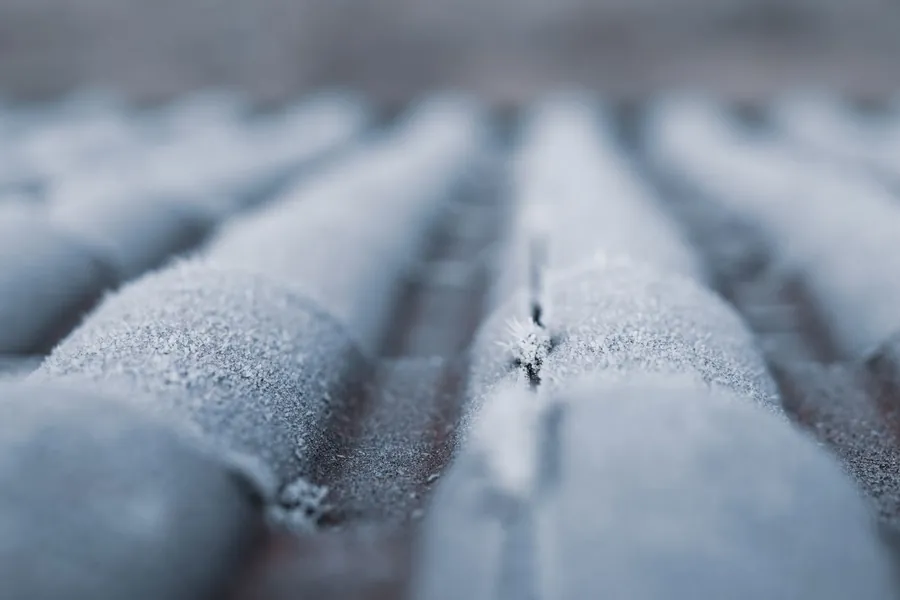
Pull the long-term figures for the city and the pattern is stark. Across the 1991 to 2020 baseline, Carlisle averages 918.8mm of rain over 152 wet days, and 42.4 nights of air frost. The Met Office long-term averages for Carlisle show December carrying 98.1mm of rain and 9.9 air frosts, January 81.3mm and 8.6 frosts, February 69.4mm and 8.5 frosts.
Compare that with somewhere genuinely dry and cold, or somewhere wet and mild, and neither gets the same treatment. A dry frost is harmless to a roof - there is nothing in the joints to expand. A wet December with no frosts is hard on gutters but easy on masonry. Carlisle gets both in the same week, repeatedly, and that combination is what people are really describing when they say roofs “do not last as long up here”. They last exactly as long as the fixings and joints survive the cycling, and the cycling is relentless. Anyone quoting for roof work in this city who has not factored that into the detailing is quoting for a different climate.
The nine per cent that does the work
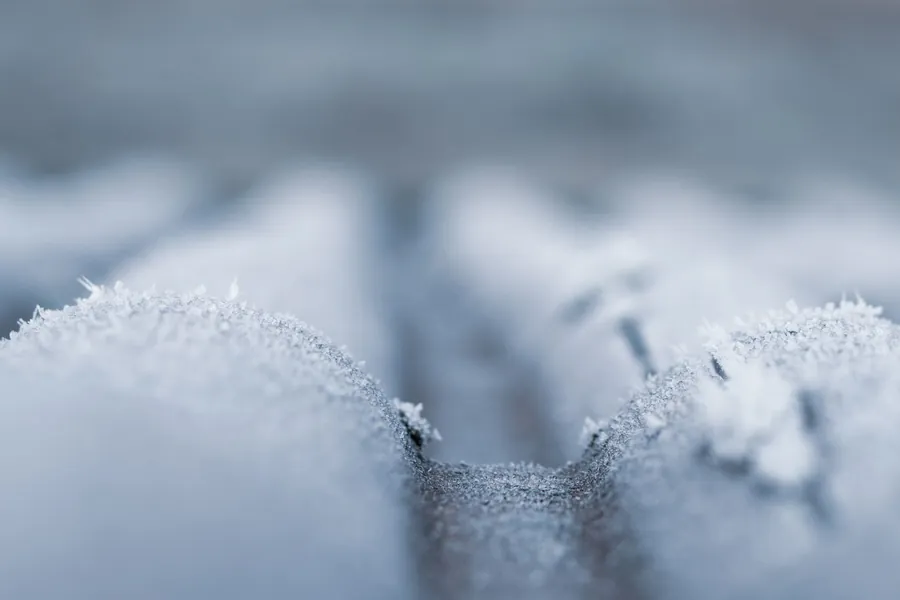
Water expands by roughly nine per cent when it freezes. That sounds modest until you consider where it is expanding. A hairline crack in mortar, a nail hole that has opened up, the space between two slates, the gap under a lifted felt lap - all of them fill with water during rain, and all of them are sealed enough that the water cannot escape quickly.
When that water freezes, it has nowhere to go but outwards. The pressure generated is enough to break the material around it, which is the same mechanism that shatters rock on the fells above the city. One night does nothing measurable. Forty nights a year for fifteen winters is a different proposition. The Met Office explains the different types of frost and why a clear, still night after rain is the worst combination - which happens to be the classic Carlisle winter night, when cold air drains down the Eden valley onto a city that spent the previous day getting soaked.
The important consequence is that freeze-thaw does not create new faults. It finds existing ones and makes them bigger. Which is why the state of your roof in October largely decides what your roof looks like in March.
Slate splits, sandstone flakes, mortar crumbles
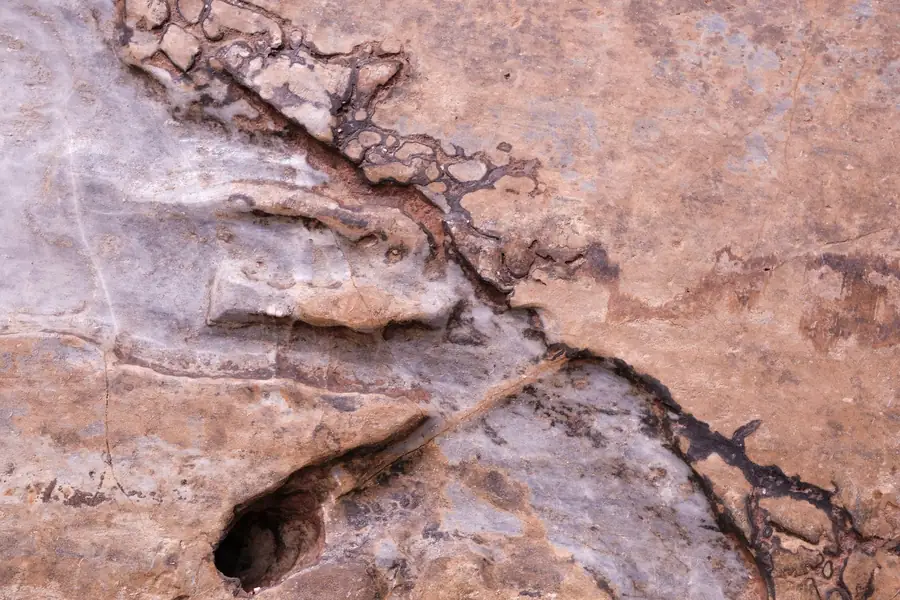
Every material on a Carlisle roof responds differently.
Slate is laid in natural layers, and water works its way between them. Freeze one of those saturated layers and the slate delaminates - it splits along its own bedding plane, and you get a thin flake lying in the gutter and a slate on the roof that is now half the thickness it should be. Good Welsh slate resists this well. Cheaper imported slate laid in the eighties and nineties often does not, and a roof that starts shedding flakes rather than whole slates is usually telling you the material was the problem, not the fixing.
Sandstone is the local complication. Carlisle’s older chimney stacks, wall heads and copings are red St Bees sandstone, which is porous and drinks water readily. Frost then lifts the face off in sheets, which is why so many stacks in the city centre look sound in outline but sandy and rounded up close. It is a known behaviour of the material rather than neglect - Stone Federation Great Britain is the trade body for the sector if you want the technical background on how stone weathers and what repairs are appropriate.
Mortar sits in the middle. Bedding under ridge tiles, flaunching around chimney pots, verge fillets and repointing all crack first and crumble second, and every crack is a new reservoir for the next frost.
Ice at the eaves is a roof problem
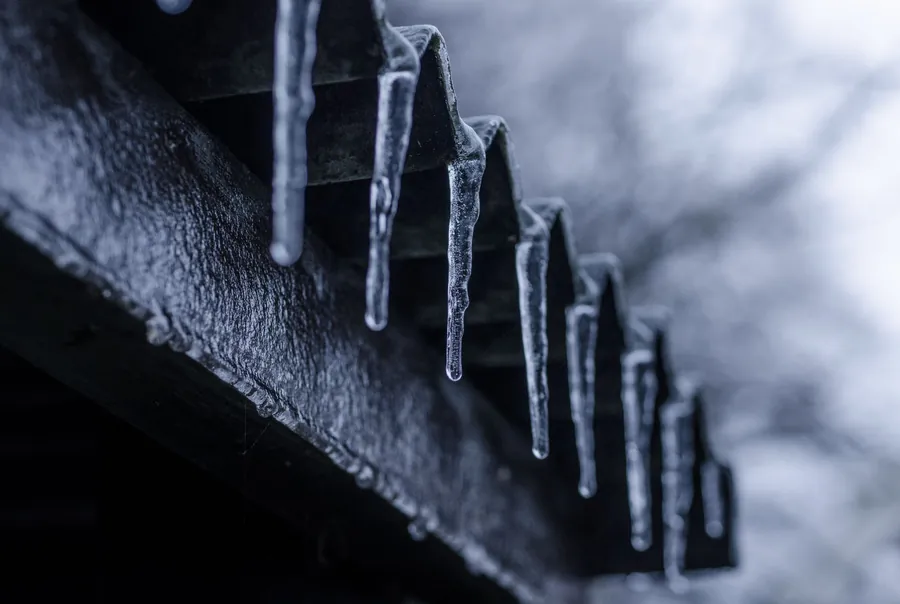
A gutter full of ice is not a picturesque detail, it is a structural load. Water weighs a kilogram a litre and ice not much less, and a blocked ten-metre run holding standing water that freezes solid is carrying a serious weight on brackets that were sized for flowing rainwater.
Cast iron, still on plenty of Carlisle terraces, is brittle in cold weather and splits along its length when trapped water expands inside it. Plastic sags between brackets and never quite recovers the fall it had. Either way the damage often only shows in April, when the gutter is dry and you notice it is now overflowing in one place it never used to.
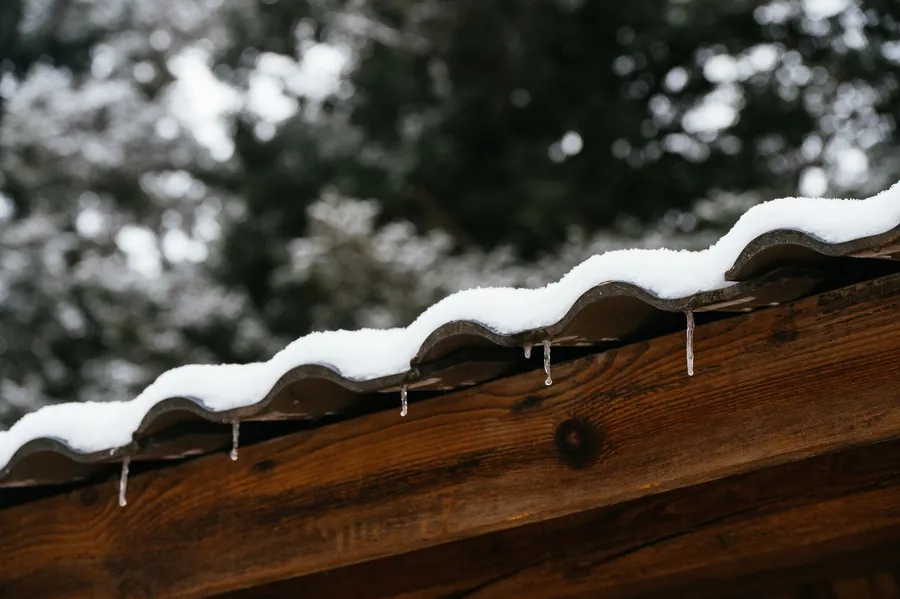
Icicles along the eaves point at one of two things. Either the gutter is blocked with the previous autumn’s leaves so meltwater cannot get away, or heat is leaking out through the roof, melting snow higher up the slope and letting it refreeze when it reaches the cold overhang. The first is a guttering job and takes an afternoon. The second is an insulation and ventilation issue, and left alone it pushes meltwater back up under the slates where nothing is designed to stop it.
Flat roofs and the cold snap
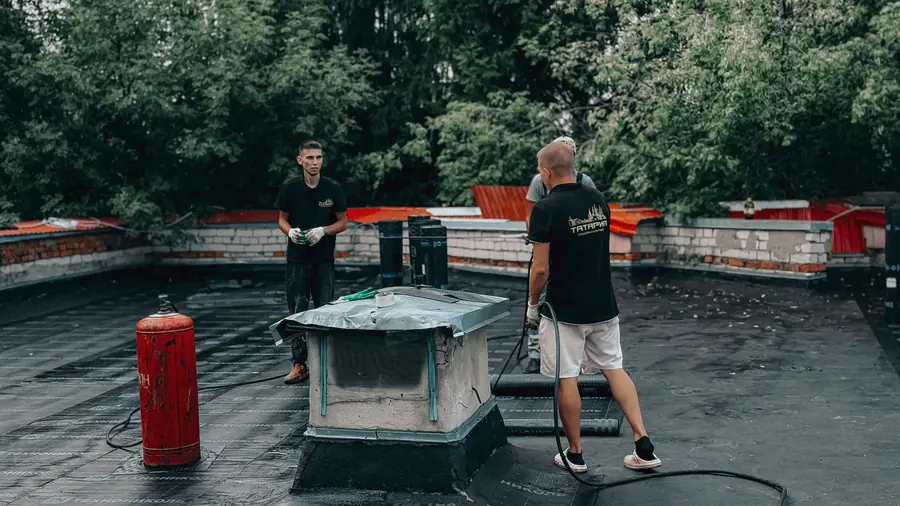
Flat roofs get a rougher winter than pitched ones because water does not leave them, it sits.
Old mineral felt loses whatever flexibility it had once the surface temperature drops below freezing. A roof that flexes slightly underfoot in August is rigid and glassy in January, and any movement in the deck below - which happens as timbers take up moisture and the structure cools - can crack it. Ponded water that freezes then acts as a wedge, lifting laps and working into seams that were watertight in autumn.
This is why so many garage and extension roofs around Harraby and Morton fail in the first hard frost after a wet autumn rather than during a summer downpour. If yours holds standing water for more than a couple of days after rain, deal with the falls before winter rather than patching the split afterwards. Every year a flat roof spends ponding is a year of freeze-thaw working on the weakest seam it can find.
What the loft shows in a cold snap
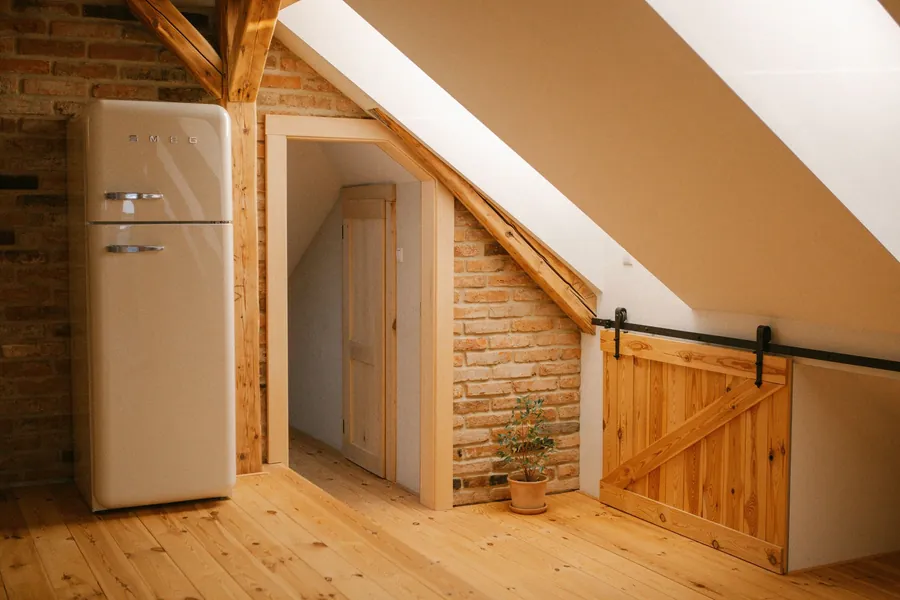
Go into the loft on a genuinely cold morning, before the sun gets on the roof, and take a torch. What you see there in January tells you more than a summer inspection ever will.
Frost on the underside of the felt, or a rim of white on the nail points coming through, is condensation that has frozen. It means household moisture is reaching the loft and not being ventilated away. It is extremely common in Carlisle houses that have had loft insulation topped up without the eaves ventilation being checked, because the insulation blocks the gap it needs to breathe through.
The reason it matters is that it does not stay frozen. It melts on the first mild afternoon, all of it at once, and lands on the ceiling below as what looks like a leak but is not. If your damp patches appear on clear, dry days after a cold night, that is your answer, and the difference between loft condensation and an actual leak is worth being sure about before anybody starts lifting slates looking for a hole that was never there.
What to do before the first hard frost
None of this needs to be expensive, and almost all of it is cheaper in September than in January.
Clear the gutters properly, meaning check the outlets and downpipes rather than just scooping the runs. Have any cracked or slipped slates replaced now, because each one is an open route for water into the batten and the fixing. Look at the ridge and verge mortar and get open joints dealt with before they hold water. Check that the loft has clear ventilation at the eaves and that insulation has not been stuffed into the gap. If you have a flat roof, note where water stands after rain and get the falls corrected rather than the puddle patched.
Then leave the roof alone once the weather turns. A frosted slate roof is one of the most dangerous surfaces there is, snow hides everything you would need to see, and the work you would be paying emergency rates for is the work you could have booked in autumn for a normal price.
If you would rather have someone look before winter does, book a free roof check in Carlisle and get it on the list while the weather is still on your side.
Frequently Asked Questions
Can frost really damage a roof?
Frost on its own does very little. Frost arriving on a roof that is already soaked is what does the damage, because water expands by about nine per cent as it turns to ice and any of it sitting inside a crack, a mortar joint or a porous slate has to push something out of the way. Carlisle averages 42 nights of air frost a year and gets nearly a metre of rain, so local roofs go through that cycle dozens of times each winter.
Why does my roof only leak when the weather turns cold?
Usually because it is not a leak. Warm damp air from the house rises into a cold loft, condenses on the underside of the roof and freezes there overnight. Nothing drips while it stays frozen. When the temperature climbs the following afternoon, all of it melts at once and comes through the ceiling looking exactly like a leak - on a day with no rain. If your damp patches follow the thermometer rather than the forecast, the problem is ventilation, not the covering.
Should I worry about icicles on my gutters?
They are worth paying attention to. A row of icicles means meltwater is running to the eaves and stopping there, which usually points to a blocked or badly falling gutter, or heat escaping through the roof and melting snow that then refreezes at the cold edge. The ice itself is heavy enough to pull cast iron sections off their brackets, and on a Carlisle terrace that can take a length of guttering and a chunk of fascia with it.
Is it worth getting the roof checked before winter rather than after?
Yes, and it is much cheaper. Almost everything frost exploits in January is already visible in September - open mortar joints, a cracked slate, a gutter holding standing water, a lifted felt lap. Sorting those in mild weather is routine work at a normal price. Sorting them in a cold snap means emergency call-out rates, short daylight and a roof surface nobody should be walking on.
Free Roof Survey & Quote
Free roof survey and a fixed written quote, anywhere across Carlisle and Cumbria.