
5 August 2026
Why Your Roof Leak Keeps Coming Back After You've Had It Fixed
A leak repaired twice that still comes back was almost certainly repaired in the wrong place. Here is how water really moves through a roof.
If you have had a leak fixed once and it came back, you probably assumed you got unlucky with the roofer. If you have had it fixed twice and it is still coming back, you have started to wonder whether roofs are just like that.
They are not. A leak that keeps returning is nearly always a leak that has been repaired in the wrong place, and the reason is a piece of physics that is completely invisible from inside your house.
Water does not fall straight down
Here is the thing almost nobody outside the trade knows: the wet patch on your ceiling is very rarely underneath the hole.
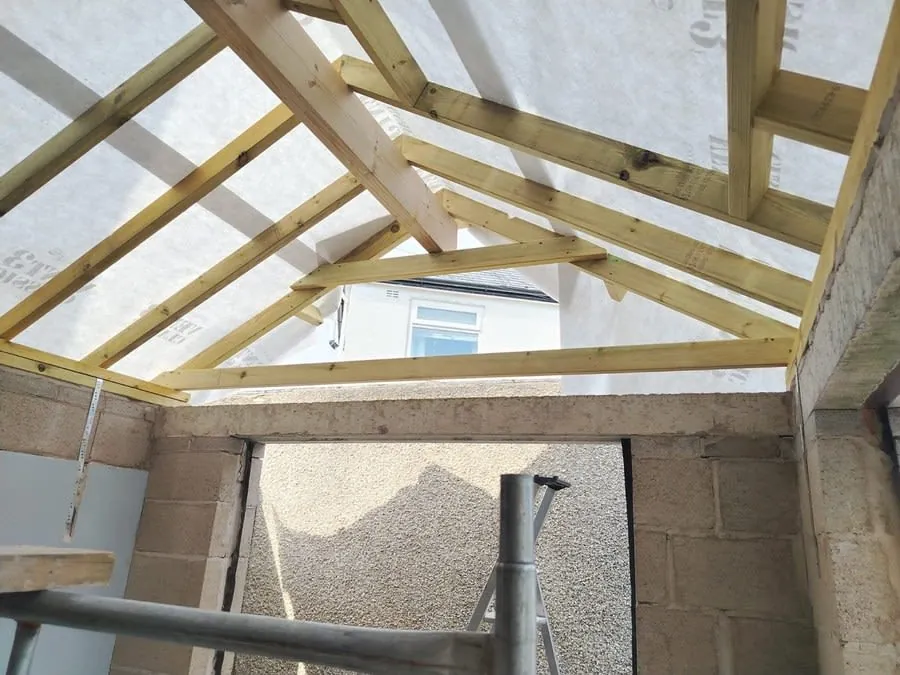
Water gets into a roof through a gap - a lifted slate, a split in a lead flashing, an open mortar joint. Once inside, it does not drop vertically onto your plasterboard. It lands on something. Usually that something is the top surface of a rafter, or the underside of the roofing felt where it sags between rafters.
And then it runs. It follows the slope of the timber, or the sag of the membrane, until it reaches a point where it can go no further - a nail, a joint, a low spot, a hole in the felt. Only then does it drop.
That run can be a foot. It can be four metres. On a shallow-pitched roof with sagging felt, water can travel a remarkable distance sideways before it appears. So the stain on your bedroom ceiling might be directly below the fault. Or the fault might be up near the ridge, or over by the chimney, or on the other side of the roof entirely.
Which means that a roofer who goes up, finds the point above the stain and repairs whatever looks worst there is guessing. Sometimes the guess is right. Often it isn’t, and you pay again.
The five places Carlisle leaks actually start
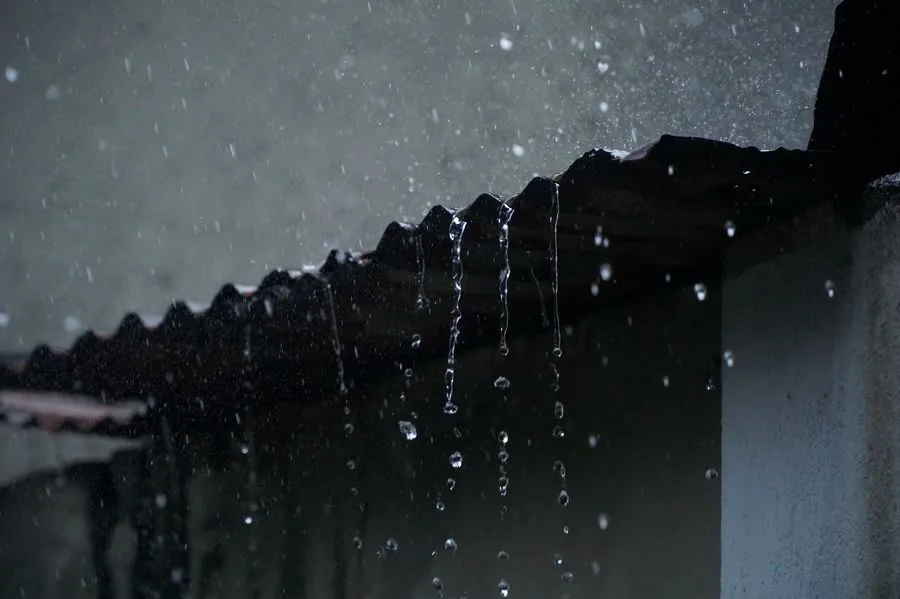
After a thousand-odd repairs in one city you learn where to look first. Across Carlisle’s housing stock, the overwhelming majority of leaks begin in one of five places, and only one of them involves the slates themselves.
Party-wall abutments. Carlisle is a terrace city. Where your roof butts up against your neighbour’s gable, that junction is weatherproofed with lead soakers stepped into the brickwork. Lead work-hardens over decades, cracks along the fold, and lets water straight in. This is the single most common cause we find in Denton Holme, Caldewgate, Currock and Botcherby.
Chimney stacks. Four sides of exposed masonry, a mortar bed at the top and a complicated lead junction all round the bottom. Cracked flaunching lets water run down inside the flue; failed flashings let it in at the roof line. Chimneys punch far above their weight as a source of leaks.
Valleys. Where two roof slopes meet, all the water from both of them is funnelled into one channel. Block that channel with leaves or moss and the water backs up sideways under the slates. This is the classic “only leaks in really heavy rain” fault.
Verges and ridges. The edges. Wind gets underneath an edge and lifts, which is why storm damage nearly always starts at a verge, a hip or the ridge rather than in the middle of the roof.
Slipped or broken slates. The one everybody thinks of, and genuinely the least common of the five on an otherwise sound roof.
Why sealant usually makes it worse
Somewhere in the history of a persistent leak, someone will suggest sealant. Black bituminous goo squeezed along a flashing. A tin of roof-and-gutter compound. In the worst cases, a full elastomeric coating sprayed over the whole roof.
There are three problems with this.
First, it does not address why the gap opened. A lead flashing that has split has split because lead moves with temperature and eventually fatigues. Filling the split does nothing about the movement, so it splits again next to your repair.
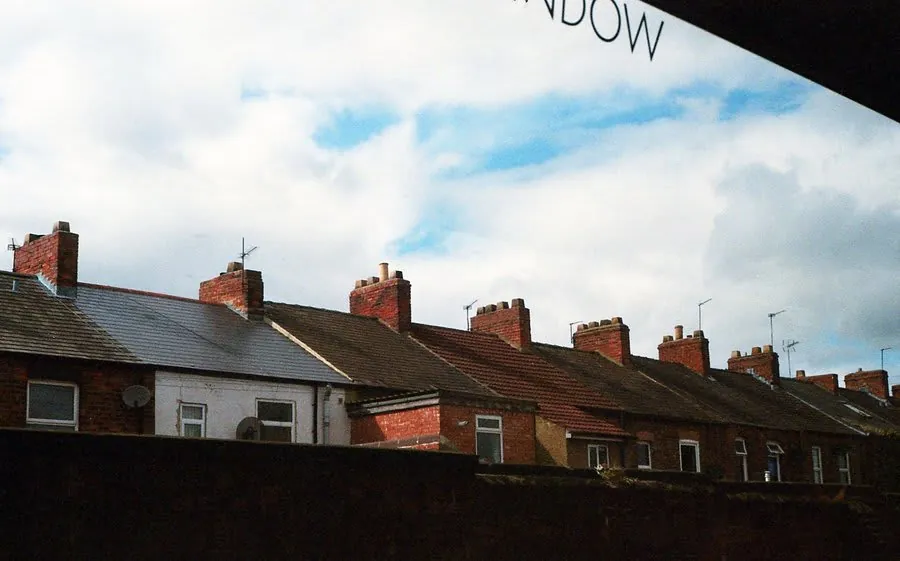
Second, it traps water. A roof needs to be able to dry out. Sealing the outside surface while water is still getting in behind it - which it will be, because you fixed a symptom - gives you a roof that stays wet inside, which is how you get rot in battens and rafters.
Third, and most annoyingly, it makes the correct repair harder. Lead that has been coated in bitumen has to be cleaned or replaced before it can be dressed properly. You have added cost to the job that eventually has to happen anyway.
The exception is genuine temporary work. If it is January, water is coming in, and the permanent repair needs dry conditions, then sealing something to get you through a fortnight is sensible. It just needs to be understood as a holding measure by both parties, with the real repair booked in.
Condensation is not a leak
Before assuming you have a leak at all, rule this out, because in a Carlisle winter it is extremely common and it looks almost identical from below.
Warm, moist air is generated constantly inside your house - showers, cooking, drying washing, breathing. It rises. If it gets into the loft and meets the cold underside of the roof, it condenses back into water, exactly like the inside of a car windscreen.
The signs: droplets or frost on the underside of the felt on a cold morning. Wet nail points coming through the sarking. Damp that appears across a broad area rather than in a defined patch. Damp that is worse in winter and improves in summer - a real leak does the opposite, because winter storms and summer downpours both bring rain.
The fix is airflow, not roofing. Continuous ventilation at the eaves through the soffits, often with a vent at the ridge as well, so moist air is carried out before it can condense. People spend a great deal of money on roof repairs for a problem that a set of soffit vents would have solved, which is why we check for it before we quote.
How a proper leak trace works
A real diagnosis works from the inside out, and it takes longer than fifteen minutes.
It starts with questions, and they are worth thinking about before anyone arrives. When did it start? Does it happen every time it rains, or only sometimes? Does it depend on wind direction? Does it appear during the rain, or a few hours after? Is the patch growing, or the same size it has always been? Each of those narrows the field considerably.
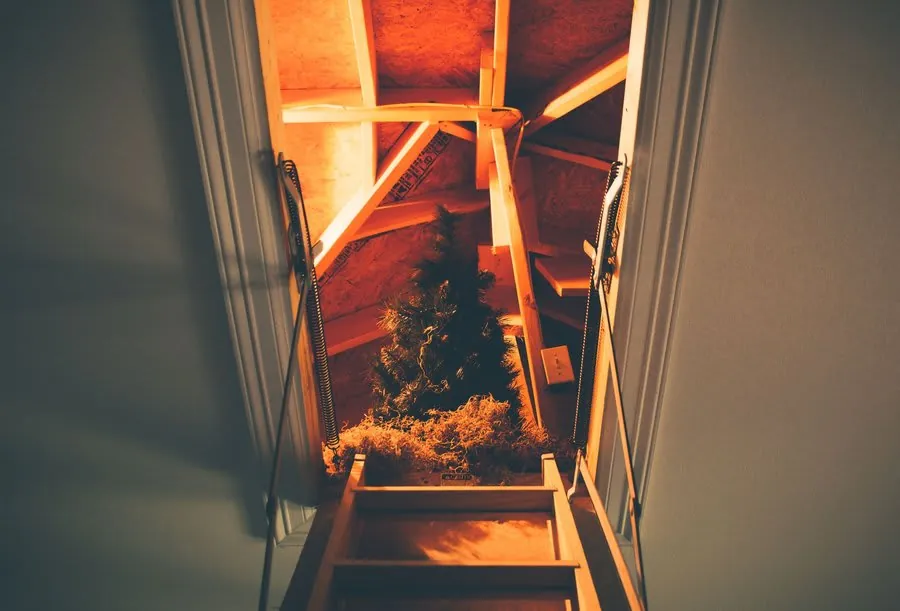
Then the loft. Ideally while it is raining, or shortly afterwards, because that is when the evidence is visible. The job is to find the highest wet point and work upwards from there, following the run of the water back along the rafters and the underside of the membrane to where it is coming through.
Only then does anyone go on the roof, and by that point they are checking a specific hypothesis rather than wandering about looking for something obvious. That is the difference between a repair that holds and a repair that moves the problem along by six months.
Where the loft is inaccessible - a room in the roof, a dormer, a flat roof over a bay - you fall back on correlating symptoms with the roof geometry above them, and sometimes on a controlled water test, running a hose over sections of the roof in sequence while someone watches inside. It is slower, but it beats guessing.
What to ask the next roofer who quotes
If you are getting someone out to a leak that has already beaten two other people, three questions will tell you most of what you need to know.
“Can you have a look in the loft?” If the answer is that they do not need to, be careful. There are situations where loft access genuinely is not possible, and a good roofer will explain which one applies to you and what they will do instead. “I can tell from outside” is not that explanation.
“What do you think has failed, and why?” You want a mechanism, not a material. “The lead soaker along the party wall has work-hardened and cracked along the fold, which is normal at that age” is a diagnosis. “It needs sealing round there” is not.
“Where is the water entering, and where is it appearing?” If those two answers are the same point, ask how they established that, because more often than not they are different points and that difference is the entire reason the previous repairs failed.
It is also reasonable to ask about insurance and about a written workmanship guarantee, and to check whether the firm is registered with a scheme such as TrustMark or a trade body like the NFRC.
A leak that keeps coming back is frustrating, but it is not mysterious and it is not a reason to replace a sound roof. It is a sign that nobody has yet found where the water is actually getting in. That is a solvable problem, and it is most of what we do.
If your roof has beaten a couple of people already, our roof leak repairs page explains how we approach it - or if you are wondering whether the roof has simply had its day, repair or replace walks through how to tell.
Frequently Asked Questions
Why does my roof still leak after being repaired?
Almost always because the repair was made directly above the ceiling stain rather than where the water is actually entering the roof. Water runs along rafters and under the felt before it drops, often a metre or more from the entry point, so a patch placed under the stain misses the fault entirely.
Can a roof leak only happen in certain weather?
Yes, and it is a genuinely useful clue. A leak that only appears in driving rain from one direction usually points to a wind-driven fault on that elevation, such as a verge or flashing. A leak that only shows in prolonged heavy rain more often points to a blocked valley or gutter backing water up under the slates.
Is roof sealant a permanent fix for a leak?
No. Sealant and roof coatings bridge a gap without addressing why the gap opened, and they frequently make things worse by trapping moisture inside the roof structure and by making the correct repair harder to carry out later. They buy a winter at best.
How do you find the source of a roof leak?
By working from the inside out. That means getting into the loft, ideally while it is raining, following the run of water back up the rafters and the underside of the felt to the highest wet point, and then correlating that with the corresponding detail on the outside of the roof.
Free Roof Survey & Quote
Free roof survey and a fixed written quote, anywhere across Carlisle and Cumbria.