
15 September 2026
Spray Foam Loft Insulation In Carlisle: Why Lenders Refuse It, What Removal Costs And What To Do Instead
Spray foam on a Carlisle roof can stall a mortgage, a sale or equity release. What lenders really do, what removal costs, and the safer way to insulate.
Someone knocks, or an advert follows you around your phone, and the pitch sounds sensible enough: seal the underside of the roof with foam, kill the draughts, watch the heating bill drop. A fair number of Carlisle households said yes over the last decade. The Property Care Association puts the number of UK homes with sprayed foam in the roof at around 250,000, and when it inspected more than 500 of them alongside the HomeOwners Alliance, roughly 35% had at least one defect caused by the installation. Putting that right usually costs somewhere between £2,000 and £8,000 before anyone touches a rotten timber. What makes it worse here is the roof it tends to get sprayed onto. Victorian slate on brittle bitumen felt, or on nothing at all, in a city that sees rain on more than 150 days a year. Here is what goes wrong, and what the options are if it is already up there.
Watch: why a valuer baulks at foam, and what it costs to get it back off.
What is actually sprayed onto the roof
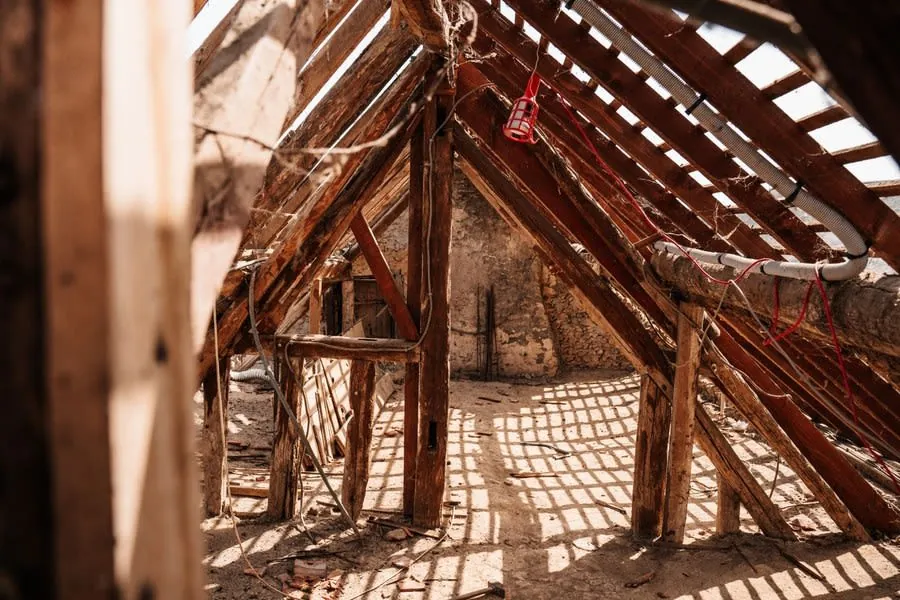
The product is sprayed polyurethane foam, applied wet and expanding in seconds against the underside of the roof. It comes in two families and the difference matters more than any installer’s brochure suggests.
Open cell foam is light, spongy and permeable. Vapour passes through it rather than stopping at its surface, so the moisture keeps travelling until it hits whatever sits behind - usually the underlay. Closed cell foam is dense, rigid and effectively a vapour barrier in itself. It also bonds to timber with real force, which is the detail that decides most removal quotes later on.
Neither type is inherently a disaster. A foam roof designed properly, on a covering in good order, with the right control layers and a ventilation path, can work. The trouble is that almost none of the retrofit jobs sold to homeowners were designed at all. They were sprayed over whatever happened to be there, on a roof nobody had surveyed, and a decent share of them end up as a roof replacement rather than the cheap insulation upgrade they were sold as.
Why a Carlisle roof is a poor candidate
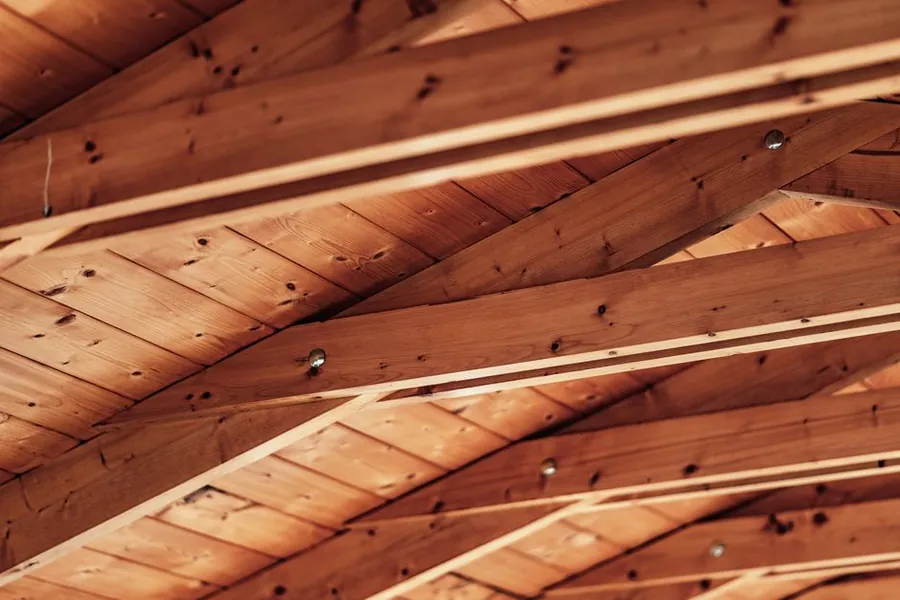
In March 2024 the Building Safety Regulator published modelling on moisture risk where spray foam is applied to timber sloped roofs, and two of its findings speak directly to housing stock like ours. The worst case it assessed was foam sprayed straight onto the roof covering with no underlay behind it, which came out high risk in every scenario modelled. And the modelling ran two climates, London and Newcastle, with the northern one producing the worse results across most of the cases.
Carlisle is wetter than Newcastle and no warmer. Now think about what is above the rafters on a typical pre-war terrace in Denton Holme, Currock or Caldewgate. Either a bitumen felt underlay that has spent seventy years going brittle, or, on the older slate roofs, no underlay whatsoever - slates nailed to battens with daylight between them. Both are the situations the research puts at the sharp end.
The mechanism is simple enough. Warm damp air rises out of the house, meets a cold surface, and condenses. A traditional Carlisle loft copes because it is ventilated: air moves in at the eaves, across the void, and out again, and the timbers get a chance to dry. Foam the rafters and that airflow stops. Moisture that used to leave now has nowhere to go and sits against the wall plate, the rafter feet and the batten ends, which are the coldest and wettest parts of the roof to begin with. Anyone who has read our piece on telling loft condensation apart from a leak will recognise the pattern. Foam does not create the condensation problem. It removes the roof’s ability to recover from it.
The problem nobody mentions at the sales visit
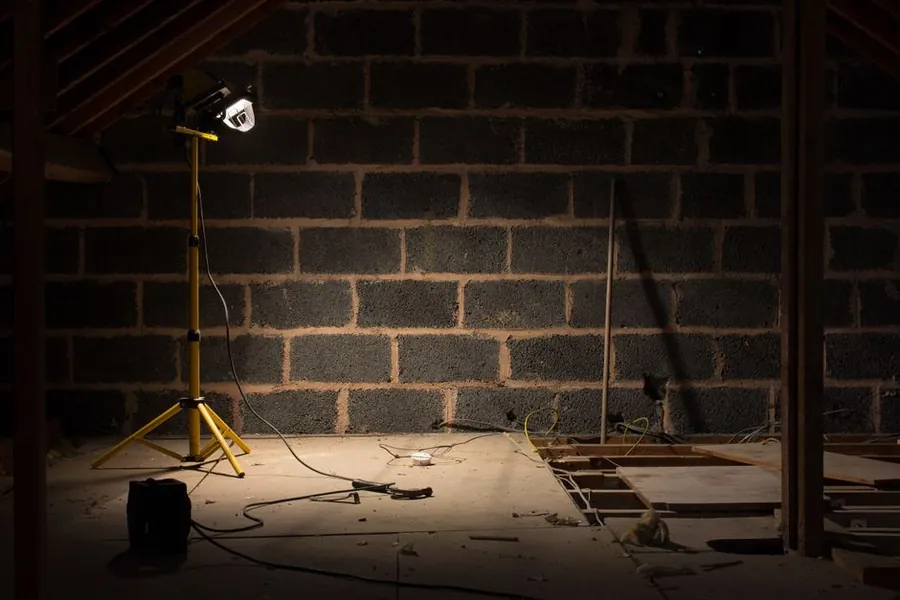
Even where the foam is behaving itself, it creates a second problem that has nothing to do with physics.
A surveyor’s job in a loft is to look at timber. Rafter condition, wall plate, purlin bearings, daylight through the covering, staining that tells you where water has been getting in. Foam covers all of it in a continuous skin. The RICS consumer guide on spray foam insulation is blunt about the consequence: where the timber structure is covered, it cannot be fully seen or inspected, and the presence of the foam is something that can affect a surveyor’s opinion of value.
That is the bit homeowners find hardest to accept, because it is not an accusation that anything is wrong. It is the absence of evidence that anything is right. A surveyor cannot certify what they cannot see, so the report says so, and everything downstream of the report reacts to that sentence.
What lenders actually do
The internet gets this wrong in both directions. There is no rule that every lender refuses a house with spray foam, and anyone telling you your home is unsellable is overstating it. There is equally no truth in the installer’s line that it makes no difference.
What tends to happen is messier than either version. Policies vary from one lender to the next and they have moved about since 2023. Some will lend without a murmur. Some decline the moment the word appears on a valuation. The largest group sit in between: the valuer flags that the roof cannot be assessed, and the lender then asks for more - a specialist inspection report, or removal, or holds a retention until something is produced. Since 2023 the Property Care Association has run an inspection protocol for surveyors and a register of assessors trained to use it, and a report from one of those assessors is increasingly the document that settles the question either way.
The inconsistency is the real grievance. In early 2025 the PCA and the HomeOwners Alliance wrote jointly to government asking for a single agreed approach, precisely because two buyers on the same Carlisle street can get opposite answers depending on who they bank with. The PCA’s own homeowner guidance on sprayed foam sets out where it stands.
Equity release deserves its own sentence. Lifetime mortgage providers have been markedly stricter than mainstream lenders, and the reason is straightforward: they are underwriting the value of the property decades out, on a house they will eventually have to sell. A roof nobody can inspect is a poor fit for that model, and a refusal there often arrives with no route to appeal.
Where it bites: the sale you have already agreed

Almost nobody discovers this problem at a convenient moment. They discover it eight weeks into a sale, with a survey on the table and a chain behind them.
The sequence is predictable. Buyer’s surveyor goes up the loft ladder, sees foam, writes that the roof structure could not be inspected and recommends specialist investigation. The lender reads the same sentence. The buyer, who has no idea whether this means nothing or £9,000, gets nervous. Suddenly you are negotiating against an unknown number rather than a quote, and unknown numbers always cost the seller more than real ones. Our guide on reading a roof before you exchange covers the buyer’s side of the same conversation.
If you are selling a Carlisle house with foam in the roof, get the inspection done before you list rather than after an offer. A report that says the installation is sound, with the original paperwork attached, is an asset. A report that says the foam needs removing is unwelcome, but it converts a frightening blank into a figure you can price into the asking price and control. The worst position is the one most sellers end up in, which is finding out at the same moment the buyer does.
Removal: what the job is and what it costs
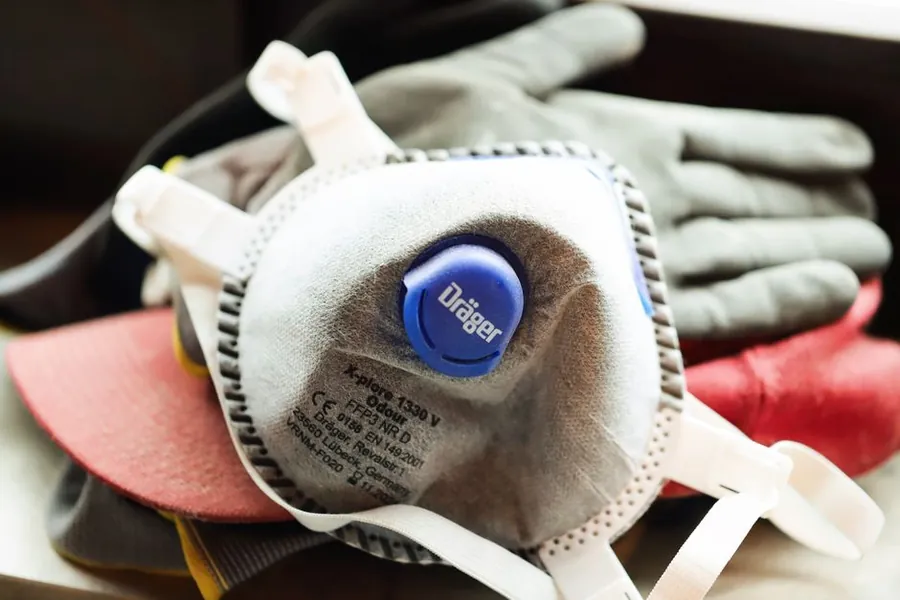
Removal is dirty, slow, manual work. There is no solvent and no clever machine. Open cell foam is cut and scraped away in sections and comes off reasonably well, though it fills a skip fast. Closed cell is a different job entirely: it has gripped the rafters and the underlay, and taking it off cleanly from inside is often not achievable at all. On those roofs the realistic route is to strip the covering from outside, renew the underlay and battens, and put the slates or tiles back - which is to say, a re-roof, with the foam removal happening along the way.
UK guide prices for removal alone run roughly £40 to £100 per square metre of roof area, putting most houses between £2,000 and £8,000. A Carlisle two-bedroom mid-terrace with around 60 square metres of roof sits near the bottom of that; a three-bedroom semi with 80 to 90 square metres sits comfortably in the middle. Then come the costs the removal quote does not include, and these are the ones that move the total: an inspection report first, new underlay and battens where the covering comes off, splicing decayed rafter feet or a section of wall plate, scaffold if the work is done externally, and re-insulating the loft floor at the end so the house is not worse off than before.
Two things to watch for. Be wary of anyone quoting removal without setting foot in the loft. Be warier still of a firm that strips the foam and then assures you the roof underneath is fine, with no independent assessment anywhere in the process. The whole point of an inspection is that it comes from someone with nothing to sell you.
What to do instead, and in what order
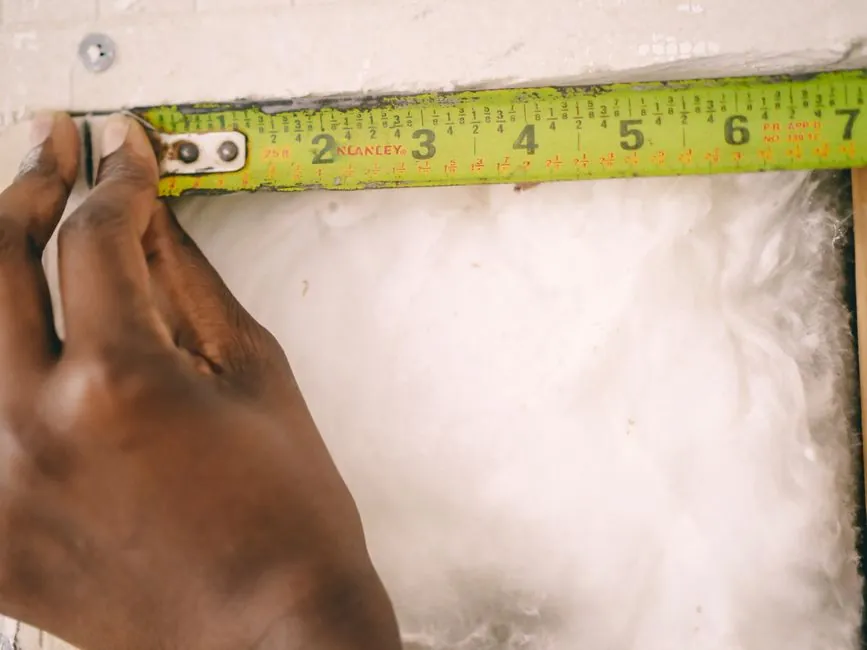
The answer for the overwhelming majority of Carlisle houses is unglamorous and has not changed in thirty years: insulate the ceiling, not the roof slope.
Mineral wool laid to about 270mm across the loft floor, first layer between the joists and second layer running the other way over the top, is cheap, effective and entirely uncontroversial. Any surveyor can assess it with a torch and a tape. No lender has ever asked a question about it. The loft above stays cold and ventilated, which is exactly what a roof full of eighty-year-old timber wants in a climate like this one.
A few details decide whether that works. Leave the eaves gap clear - pushing insulation hard into the corner blocks the airflow and gives you a damp loft from a completely different cause. Insulate and draughtproof the loft hatch, because a bare plywood hatch undoes a surprising amount of the ceiling insulation around it. And fix the covering first: slipped slates, failed flashings and a tired underlay all need dealing with before anything goes down, not after.
If you do want a warm roof, because the loft is becoming a room, that is a legitimate design and a very different piece of work. It needs breathable underlay or a proper ventilated batten void, rigid insulation between and under the rafters, and a correctly positioned air and vapour control layer on the warm side. Designed, calculated and signed off by building control - not sprayed over the top of a Victorian roof by someone who was in the area anyway.
If you have foam in your loft and you are not sure what is behind it, the first move is an independent look, not a removal quote. Once you know what is up there, the decision usually gets a lot simpler.
Frequently Asked Questions
Will a mortgage lender refuse a Carlisle house with spray foam in the loft?
Some will, many will not, and that inconsistency is the real problem. There is no industry-wide ban. What normally happens is that the valuer cannot see the roof structure through the foam, flags it, and the lender then either declines, holds a retention, or asks for a specialist inspection report before going further. Equity release and lifetime mortgage providers have been the strictest of the lot. Two buyers with two different lenders can get two opposite answers on the same Carlisle terrace, which is why the trade bodies have been pressing government for one agreed approach.
Does spray foam always have to be removed?
No. If the installation was properly specified, the roof underneath was sound and ventilated, and you have the paperwork to show it, an inspection can conclude the foam is fine where it is. That report is often what unblocks a lending decision. In practice the outcome depends on what is behind the foam, and on plenty of older Carlisle roofs - slate on bitumen felt, or slate on nothing - the honest answer after an inspection is that it should come off.
How much does spray foam removal cost in Carlisle?
Published UK guide prices run roughly £40 to £100 per square metre of roof, so most homes land between £2,000 and £8,000 for the removal alone. Closed cell costs more than open cell because it has bonded hard to the timber and the underlay. Add the things the quote usually excludes: an inspection report, new underlay and battens if the covering has to come off, splicing any decayed rafter feet, and re-insulating the loft floor afterwards.
What is the difference between open cell and closed cell spray foam?
Open cell is the softer, lighter one and it lets water vapour through, which means the vapour travels until it meets whatever is behind the foam. Closed cell is denser, acts as a vapour barrier in its own right, and grips the timber far harder. Neither is automatically safe or unsafe. What decides the risk is the combination of foam type, the underlay behind it, whether there is a ventilation gap, and whether an air and vapour control layer was fitted on the warm side.
What should I insulate a Carlisle loft with instead?
Insulate the loft floor, not the roof slope. Mineral wool laid to about 270mm across the ceiling joists costs a fraction of a foam job, can be inspected by anyone with a torch, and is understood by every surveyor and lender in the country. Keep the loft cold and ventilated above it, with the eaves gap clear, and deal with any leaks in the covering before you insulate rather than after.
Free Roof Survey & Quote
Free roof survey and a fixed written quote, anywhere across Carlisle and Cumbria.