
24 August 2026
Buying A House In Carlisle? How To Read The Roof Before You Exchange
The roof is the most expensive thing a Carlisle survey can flag. Here is how to read one at a viewing, what a survey covers, and how to price the risk.
Nearly everyone buying in Carlisle checks the flood maps. After 2005 and again after Storm Desmond in 2015, that became second nature here - you look up the address, you look at the river, you factor it in. Almost nobody gives the roof the same five minutes, and the roof is the single most expensive thing a survey can land on you.
The numbers back that up. Research by the HomeOwners Alliance found that around a third of buyers who commissioned a survey took action on what it flagged: 10% renegotiated the price, 9% got the seller to fix the problem and 4% walked away entirely. Roof defects and damp are consistently among the biggest items on that list. Meanwhile 11% of buyers who skipped a survey found problems after they moved in.
Here is how to read a Carlisle roof - at the viewing, in the loft, in the survey, and in the negotiation.
Two minutes from the pavement
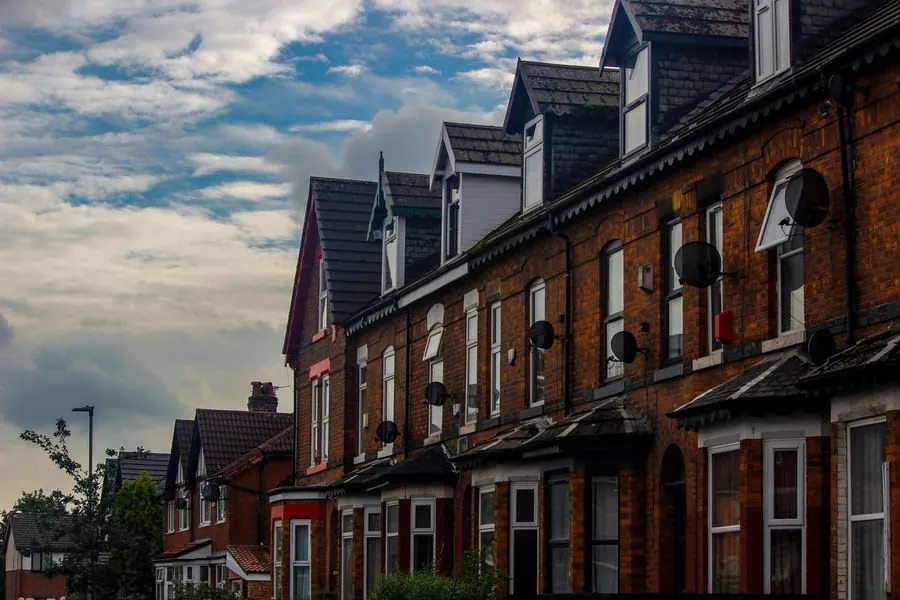
Stand across the road, not under the house. From directly below, every roof looks flat and fine.
Sight along each slope from one end rather than face on. A slate or tile that has slipped half an inch shows instantly from that angle and is invisible from any other. Then run your eye along the ridge - a dip or a sag in what should be a dead straight line is the one thing on this list that means structure rather than covering, and structure is the expensive category.
After that: the verges at the gable ends, where cracked or missing mortar lets wind under the edge units. The chimney, where you are looking for joints that have receded and a flaunching that has broken up. The gutters, where a fern growing out of the joint tells you nothing has been cleared in years and the wall head underneath has been getting wet all that time. A quick walk to the rear of the property is worth pushing for, because the elevation buyers never see is where sellers spend the least.
None of this makes you a surveyor. It tells you whether to look harder, which is the point, and it costs you nothing at a viewing you are attending anyway. If something looks wrong, our page on roof repairs and leaks sets out what the common faults actually involve.
What era of roof are you looking at?

Carlisle’s housing splits into a few clear generations, and each has a predictable roof issue.
The Victorian and Edwardian terraces - Denton Holme, Currock, Caldewgate, the streets off Warwick Road - are slate on iron nails, and most are now 100 to 140 years old. The slate outlasts the nails comfortably. What you are buying into is a roof somewhere on the countdown to nail sickness, where fixings corrode across a whole slope at roughly the same rate. One slipped slate on a house like this is a different conversation to one slipped slate on a 1990s semi, as our guide to slipped slates on Carlisle roofs explains in more detail.
Move out to the interwar and 1950s semis in Harraby, Belah, Raffles and Morton and the covering is usually clay or early concrete tile. The tiles themselves are often fine. It is the mortar bedding on the ridge and the verges that goes, so hip and ridge work is the bill you should be budgeting for.
Houses from the 1960s and 70s brought interlocking concrete tiles, which have a working life somewhere around 50 to 60 years. A lot of that stock is now at the end of it. The giveaway is surface erosion, so look for tiles that have gone rough and lost their colour with moss holding in the pits.
On the newer estates around the city’s edges the covering has decades left in it, and attention shifts to the detail work instead: dry ridge systems, flashings, and whether the loft ventilation was ever finished properly.
Ten minutes in the loft
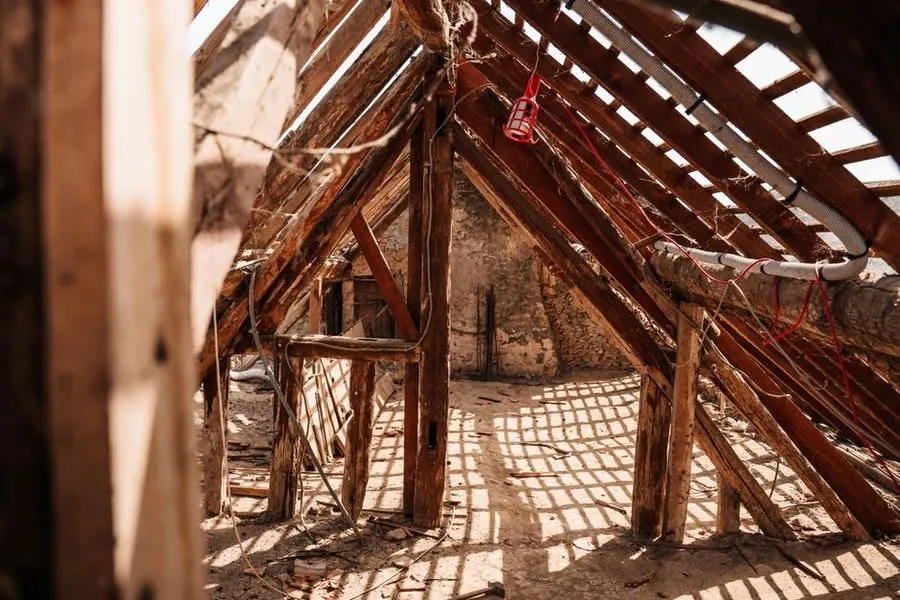
Ask at the second viewing. Most sellers say yes, and it is the single most informative ten minutes available to you.
Go up in daylight and turn the light off once your eyes adjust. Points of daylight through the covering mean gaps. A general grey glow along the eaves is ventilation and is meant to be there.
Then look at the timbers rather than the underside of the roof. Dark staining on rafters or purlins is old water; run a hand over it, and if it is dry and hard it is historic, while soft or damp timber is live. Check where the rafters sit on the wall plate at the eaves, since that is where rot concentrates. Look at the underlay between the rafters - brittle black felt that has torn along the batten line is doing nothing, whereas a modern breathable membrane means someone has re-roofed within the last twenty years or so.
Take a photo of the chimney breast in the loft too. Staining on the brickwork up there is common in Carlisle and is not always a leak. It is often condensation in a disused flue with no ventilation, which is a cheap fix rather than a roof job - our post on telling condensation from a leak covers how to tell them apart.
What the survey will and will not tell you

A mortgage valuation is not a survey. It exists for the lender and tells you close to nothing about condition.
Of the three RICS survey levels, Level 2 suits conventional homes in reasonable condition and covers the roof visually plus the loft where it can be safely reached. Level 3 is the in-depth version, intended for older, larger or altered properties, and it goes into the causes of defects and the likely scope of repair. On a pre-war Carlisle terrace or a stone villa in Stanwix, Level 3 is usually the better spend - the extra couple of hundred pounds is small against the cost of a slope of slate.
Understand the limits either way. Surveyors inspect roofs visually, from the ground and from inside the loft. They do not climb on the covering, they cannot see under slates, and they will not give you a repair price. What you get instead is careful language - “further investigation is advised” - which is accurate, unhelpful for negotiating, and the point at which you want a roofer rather than another surveyor.
The government’s How to buy a home guide sets out where the survey sits in the wider process, which matters because timing is everything here. Commission it early enough that you still have room to negotiate.
The roofline: gutters, fascias and the wall head
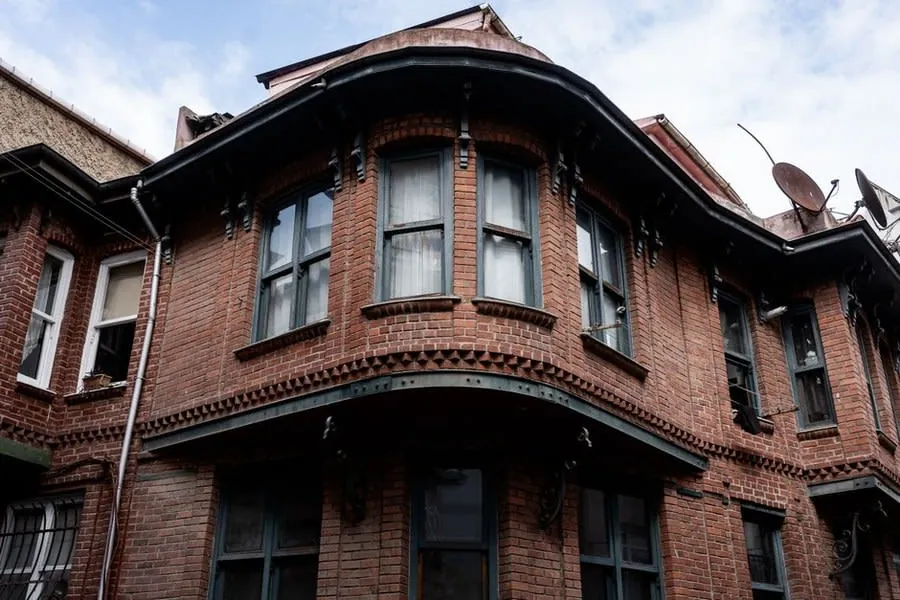
The roofline is where a wet-climate city does its quiet damage, and it is the bit buyers discount because it looks like decoration.
Met Office long-term averages for Carlisle put the city at around 919mm of rain across roughly 153 wet days a year, and the shape of that matters more than the total. It arrives as long moderate spells rather than short downpours, so things stay damp for days at a time, which is exactly the condition timber and iron fixings dislike most. A blocked gutter in that climate does not simply overflow occasionally - it keeps the wall head and the fascia wet for weeks at a time.
At a viewing, look for staining running down the wall below a gutter joint, sagging gutter lengths, and fascia boards that have gone soft or hold flaking paint. On older houses, original cast iron gutters can be excellent and worth keeping, but they need painting and they are heavy, so check the brackets. Where uPVC replaced them, look at whether it was fitted to sound timber or nailed straight onto rotten fascia - a common shortcut that hides the problem rather than fixing it.
Budget-wise this is the mid-range item on a house purchase: not a re-roof, not trivial. Replacing fascias, soffits and guttering across a typical semi generally lands somewhere between £1,200 and £2,500 depending on the run and the access.
The bits added later
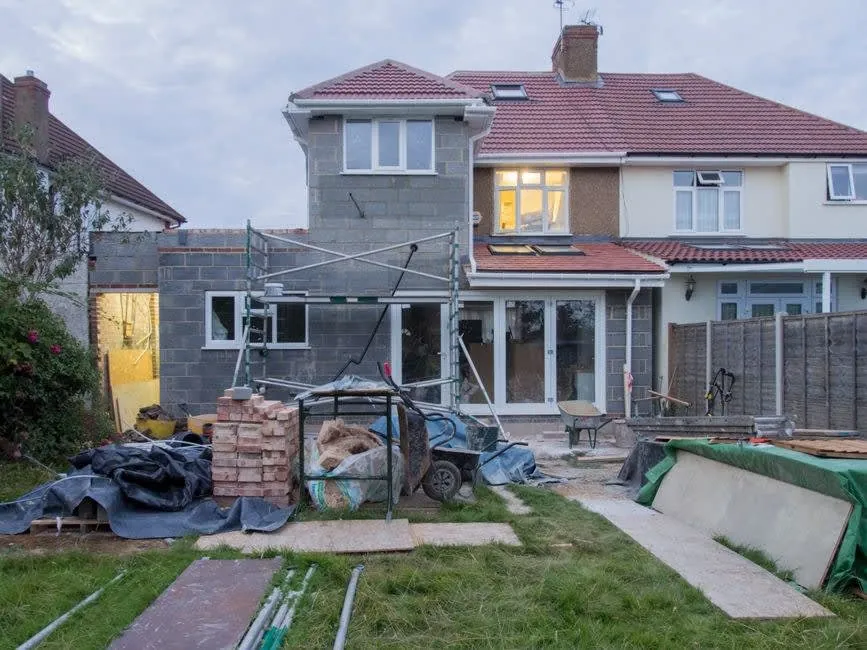
Extensions, dormers, porches and conservatories are where roof problems concentrate, because they are where two roofs meet and where corners were most likely cut.
Ask three questions about anything that was clearly added: when, by whom, and is there paperwork. Building regulations approval or a completion certificate should exist for structural work, and its absence is a negotiating point as well as a practical one. Then look specifically at the abutment - the join where the new roof meets the original wall. It should be a lead flashing chased into the brickwork. If it is a strip of mortar, or a bituminous tape, that is a repair on a timer.
Flat roofs on rear extensions and garages deserve their own look. Ask what covering it is and how old. Felt of the old three-layer kind is typically past its best after 15 to 20 years, while modern single-ply rubber and fibreglass systems go considerably longer. Standing water more than about 48 hours after rain says the falls are wrong, which is a design fault rather than a wear issue and does not fix itself.
Turning it into a number

A survey that says the roof needs attention is not much use on its own. A quote is.
Get a roofer to look before you exchange. Most will attend a property you do not yet own, and what you get back is a figure and a timescale rather than a caveat. Broad brackets for Carlisle: isolated slate and tile repairs run £150 to £400, ridge and verge re-bedding £400 to £900, a chimney stack repoint £450 to £950 plus access, and a full re-roof on a typical three-bed terrace £6,000 to £11,000 depending on covering, access and whether the battens and timbers need work. Our roof repair cost page breaks the individual jobs down further.
Then decide how to use it. A price reduction gives you control over who does the work and to what standard. Asking the seller to fix it before completion gets it dealt with, but they will hire on price and you inherit whatever they chose. On a house that has been on the market a while, a written quote is a far stronger card than a survey paragraph, because it moves the conversation from opinion to arithmetic.
A steady share of the quotes this business writes are for people who moved into a Carlisle house within the previous twelve months, and a good number of those describe a roof that “the survey mentioned”. Spend the money before you exchange and it comes off the price. Spend it after and it comes out of your pocket.
Frequently Asked Questions
Does a standard survey cover the roof properly when buying in Carlisle?
Partly. A RICS Level 2 survey looks at the roof visually from ground level and inspects the loft where there is safe access, which catches obvious trouble but will not tell you the state of the fixings or the underlay. For a pre-1940 terrace, a stone villa or anything with an unusual roof, a Level 3 goes considerably further and is the sensible spend on older Carlisle stock.
Should I get a roofer to look at a house before I buy it?
It is worth doing whenever a survey raises the roof or the property is over about 80 years old. A roofer will give you something a surveyor deliberately will not - a price. Surveys describe condition and recommend further investigation; a roofer's quote gives you a number you can put in front of the seller, and most will look at a property they have not been asked to work on yet.
What are the warning signs of an old roof at a Carlisle house viewing?
Look along each slope from the side rather than straight on and you will see any slate that has dropped. Then check the ridge line for a dip, the verges for cracked mortar, the chimney for eroded pointing, and the gutters for plants growing in them. Inside, look at the loft in daylight with the light off - pinholes of daylight tell you more in ten seconds than anything you can see from the pavement.
Can I reduce my offer if the survey finds roof problems?
Yes, and it is routine. The strongest position is a written quote rather than a survey phrase like further investigation is advised, because a quote gives both sides a number to work from. Sellers will often meet part of it, particularly on a house that has already been on the market a while, and the choice between a price reduction and having the work done before completion is worth thinking about - getting your own roofer in after completion usually gives you more control over the standard of the work.
Free Roof Survey & Quote
Free roof survey and a fixed written quote, anywhere across Carlisle and Cumbria.