
27 August 2026
Gutter Repairs In Carlisle: Why Standard Guttering Struggles Here
Carlisle sees rain on 153 days a year. Why 112mm gutters overflow on Cumbrian houses, what repairs cost, and how to tell a blockage from a capacity problem.
Nobody rings a roofer about guttering in July. The calls come in November, usually the morning after a wet night, and they nearly all start the same way: there is water running down the wall, or a puddle by the back door that was not there before, or a noise like a tap left on somewhere outside the bedroom window.
The reflex is to assume a blockage. Often it isn’t. Carlisle records 918.8mm of rain a year spread across 152.6 days with at least a millimetre, on the Met Office 1991 to 2020 averages, and the frequency matters more than the total. Rain here arrives in long steady spells off the Solway rather than in short summer bursts, which means guttering that would cope perfectly well in Peterborough spends a good part of the Cumbrian winter running at or beyond what it was sized to handle.
That distinction changes what the repair actually is. Here is how to tell which problem you have.
Watch: why standard guttering struggles in Carlisle, in under a minute.
The overflow that isn’t a blockage
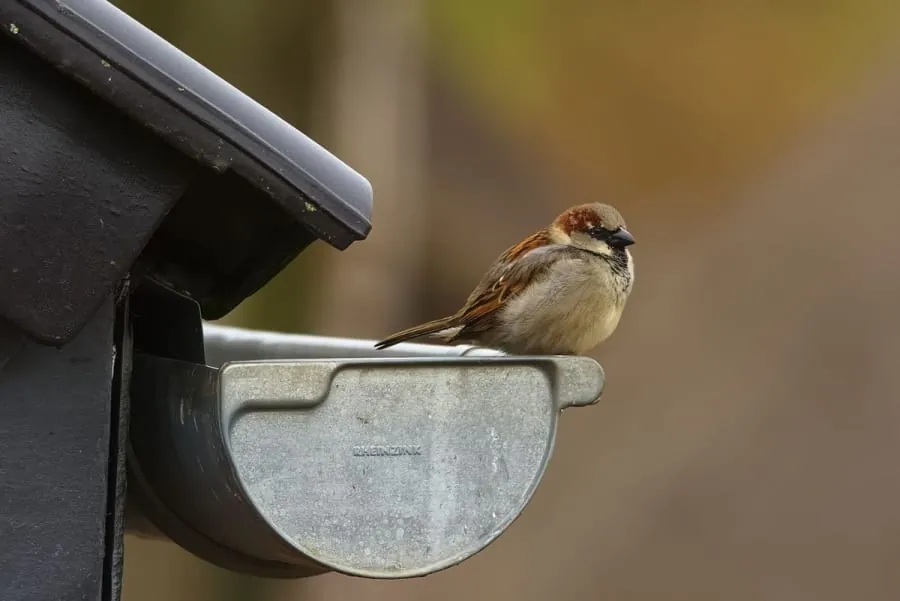
Watch where the water comes over, and when.
A blockage overflows in one place, and it does it in light rain as readily as heavy rain, because the water has nowhere to go at all. Debris packs at the outlet or against a bracket, the gutter fills behind it, and the same six inches of gutter spills every time.
A capacity problem behaves completely differently. It only shows up in genuinely heavy rain, it overflows along a length rather than at a point, and it stops the moment the downpour eases. Twenty minutes later the gutter is empty and looks perfectly fine, which is why people spend money having it cleared twice and cannot understand why the wall keeps getting wet. Most of the guttering work we get called out to in Carlisle is the second kind wearing the costume of the first.
There is a third possibility worth ruling out from the ground: a gutter that has lost its fall. Sight along the run from one end. If the line dips in the middle or runs slightly the wrong way, water pools rather than moves, and even a light shower will find the nearest joint.
What Carlisle’s rain actually does to a gutter
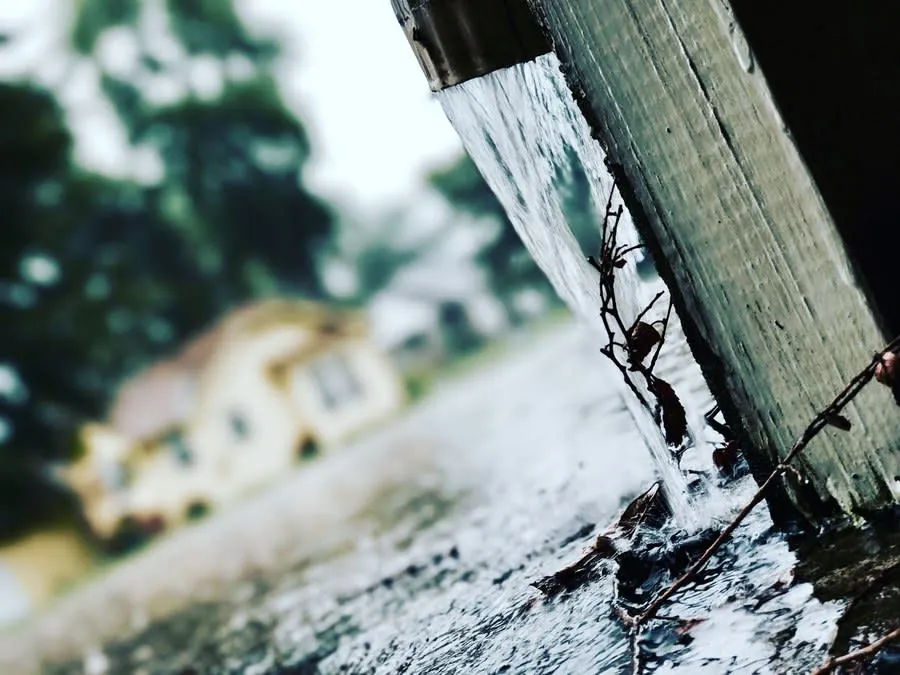
Domestic guttering in England is sized against a design rainfall figure, and the standard one used in Approved Document H of the Building Regulations is 75mm an hour, or 0.021 litres per second for every square metre of roof. That number is not a description of normal weather. It is a short, sharp storm intensity, and the tables that follow it assume the gutter is hung level with a clean outlet.
Two things go wrong with that assumption in Cumbria. The first is that western and upland parts of Britain sit above the standard intensity band, so the baseline is already generous to the plastic. The second is that our rain does not arrive as one hour of storm and then stop. It arrives as eight or ten hours of steady rain with heavier bands inside it, which fills the whole system, saturates every joint and gives standing water hours to find a weakness rather than minutes.
The extreme version of this is well documented. During Storm Desmond in December 2015, the Met Office recorded 341.4mm at Honister Pass in 24 hours, a UK record, and the Eden ran higher through Carlisle than it ever had. Nobody sizes a house gutter for that. But the same weather system, in its milder and far more frequent form, is what your downpipes handle every winter.
Where the outlet sits changes everything
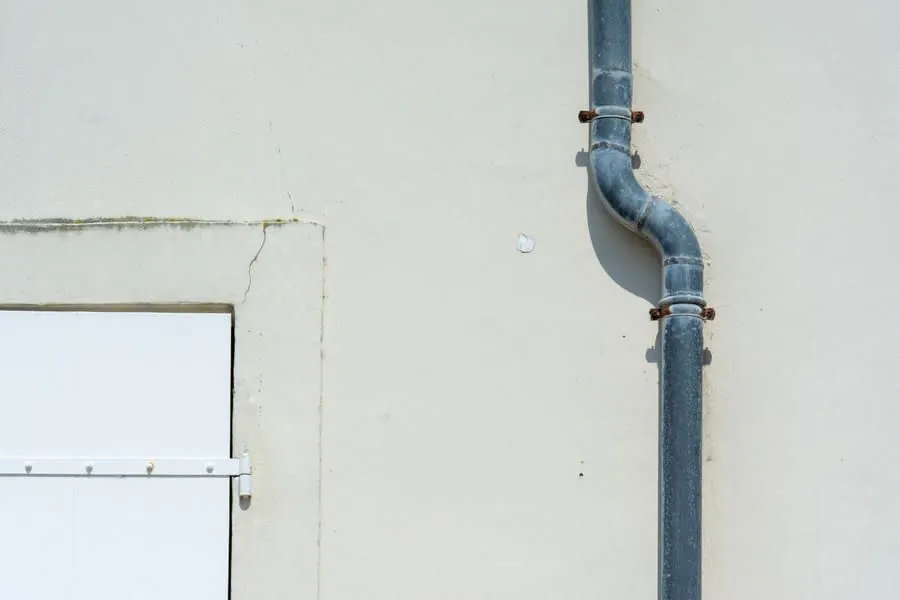
This is the single most useful thing a homeowner can understand about their own guttering, and almost nobody is told it.
A gutter with its outlet at one end has to carry every drop of water the whole length of the run to get to that one hole. Move the outlet to the middle and you have effectively created two shorter gutters, each draining half the roof, and the capacity of the run roughly doubles. Same gutter, same brackets, same fall. The only thing that changed is where the water leaves.
So when a long rear elevation in Botcherby or Harraby overflows persistently at the far corner, the fix is often not a bigger gutter at all. It is a second downpipe. That is usually cheaper than replacing the run, it is less disruptive, and it does more for the problem than any amount of clearing.
There is a flip side to that. If somebody has added a conservatory, a porch or a flat-roofed extension and tied its run-off into an existing gutter, the roof area feeding that outlet went up and the outlet did not. That is a very common Carlisle overflow, and it always appears a year or two after the extension went in, by which time nobody connects the two.
Cast iron, terraces and the shared-gutter problem
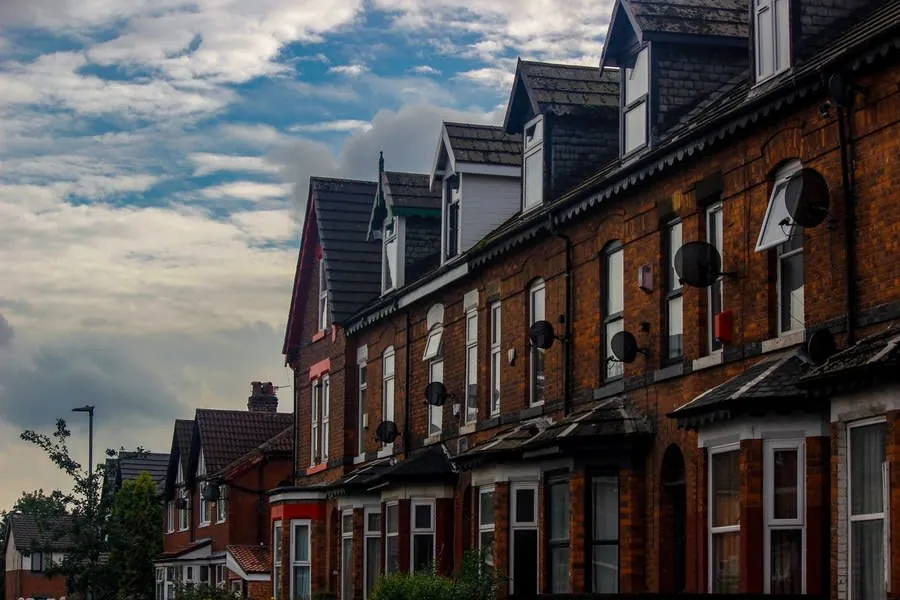
Carlisle’s terraced streets - the tight red brick rows around Denton Holme, Caldewgate and Currock that went up with the mills and the railway - present a problem no detached house has. The gutter does not belong to you. It runs continuously across four, six, sometimes a dozen properties, and the water leaving your roof may well be going down a neighbour’s downpipe.
Practically, that means three things. A blockage two doors up will overflow at your house. A repair done properly needs access along the run rather than just to your frontage. And when one owner replaces their length in plastic while the rest of the row stays cast iron, the join between the two profiles is a permanent weak spot that leaks quietly for years.
Original cast iron is not automatically a liability, incidentally. It was made in heavier sections than anything sold today and plenty of it in Stanwix and Belah is still doing its job at over a century old. What kills it is neglected paintwork at the back edge, where nobody looks, and rust jacking the joints apart from the inside. Repainting and re-bedding a sound cast iron run is far better value than ripping it out - and on a listed building or in a conservation area it may be the only route Cumberland Council will accept.
The damage a leaking gutter does before you notice

Gutter faults get ignored because the consequence is slow and the symptom is outside. That is exactly what makes them expensive.
Water running down brickwork rather than into a pipe keeps the wall wet for the whole of a Carlisle winter. Saturated masonry conducts cold, so the inside face of that wall drops below the dew point and mould appears in the corner of an upstairs bedroom. People then treat the mould, repeatedly, and wonder why it comes back. On solid nine-inch walls, which most of the pre-1919 stock here has, that path is very direct.
Worse is what happens behind the gutter. If it leaks at the back edge - the commonest place, and invisible from the ground - the water goes onto the fascia, into the ends of the rafters and along the wall plate. Timber that stays above roughly 20% moisture content is timber that rots, and the ends of rafters are the part of a roof that has the least margin to lose. A £120 gutter fault left for six winters is how you end up pricing carpentry, which is the subject of our piece on why Carlisle rooflines dip.
Moss is the accelerant on top of all this. Roofs here green over fast, the fragments wash down into the gutter, and they hold water against the metal or plastic all winter - which is covered in more detail in our guide to moss on Carlisle roofs.
What gutter work costs in Carlisle

Rough ranges from jobs around the city, before access:
- Clearing and re-sealing a run on a two-storey semi: £90 to £180
- Replacing brackets and re-hanging one elevation to correct the fall: £150 to £320
- Adding a second downpipe to a long run, including the connection to the drain: £220 to £450
- Full uPVC gutter replacement round a three-bed semi: £600 to £1,200
- Gutters, fascias and soffits together: £1,600 to £3,000
- Cast iron replaced like for like: £90 to £160 a metre
- Repainting and re-bedding sound cast iron: £45 to £90 a metre
Access is the variable that moves a quote more than the guttering does. A bungalow in Morton is tower work. A three-storey terrace on Warwick Road with a shared yard behind it may need a scaffold, and that alone can be £450 to £900 depending on how long it stands. Two quotes for the same gutter can differ by several hundred pounds purely because one roofer intends to work off a ladder and the other does not.
Repair, re-hang or replace

The honest decision tree is short.
Repair when the run is sound and one thing has failed - a split seal, a cracked union, a bracket that has pulled. On uPVC that is usually a same-day job. On cast iron it is a case of stripping back the joint, re-bedding it and getting paint on the bare metal before winter.
Re-hang when the guttering is fine but the line is wrong. Brackets sag, fascias move, and a run that was set at a proper fall thirty years ago may now be flat in the middle. Re-hanging costs a fraction of replacement and solves a surprising number of “it always leaks there” complaints.
Replacement is for when the profile itself is the problem. Brittle 1970s uPVC on the estates at Raffles and Upperby has generally had it - the plastic goes chalky, loses flexibility and cracks at every fixing point. And if the elevation genuinely overflows in heavy rain with a clean gutter and a correct fall, that is the moment to go up a size or to a deep-flow profile, because no amount of repair fixes a run that is simply too small for the roof above it.
If the fascia behind it is soft, do both at once. Hanging new guttering off rotten timber is money spent twice, and Met Office UK Climate Projections point to wetter winters across the north west, not drier ones, so the system you fit now needs headroom rather than exactly enough.
Keeping it clear without going up a ladder

Two clears a year is the right rhythm here: one in late November once the leaves are down, one in March after the winter has washed moss off the slopes. If you have sycamores nearby - and large parts of Stanwix and Belle Vue do - make it three.
Gutter guards are a mixed blessing. Brush inserts fill with moss fragments and become the blockage. Mesh works better, but only if somebody still brushes the top of it occasionally, and it makes clearing a genuine blockage harder when one does form. On a house with no overhanging trees they are usually solving a problem you do not have.
The best thing you can do costs nothing. Next time it rains hard, put a coat on and walk round the outside of the house. Thirty seconds per elevation tells you more about your rainwater system than any inspection done in dry weather, because a dry gutter looks fine right up until the day it does not.
Frequently Asked Questions
Why does my gutter overflow even though it isn't blocked?
Because the gutter is running at its limit before anything blocks it. A 112mm half-round gutter with a single outlet at one end handles roughly 40 to 50 square metres of roof. Put a long Carlisle terrace slope on it, or a slope that also collects run-off from a dormer or a lean-to, and heavy rain simply arrives faster than the outlet can take it away. Clearing it changes nothing because there was nothing in it.
How much does gutter repair cost in Carlisle?
Clearing and re-sealing a run on a two-storey semi is usually £90 to £180. Re-hanging one elevation to correct the fall runs £150 to £320. Replacing the guttering right round a three-bed semi in uPVC is roughly £600 to £1,200, and £1,600 to £3,000 if the fascias and soffits go at the same time. Cast iron is a different scale again, at £90 to £160 a metre to replace like for like.
Should I upgrade to deep-flow guttering?
It is worth it on the elevations that actually overflow, which is rarely all of them. Deep-flow profiles hold noticeably more water than standard half-round at the same bracket spacing, so they buy headroom on a long run or a steep slope. On a short front elevation with a mid-run outlet, standard guttering is usually already adequate and the money is better spent on the fall and the fixings.
Do I need permission to change guttering on a Carlisle house?
Not on an ordinary house - like-for-like replacement is repair and maintenance. It changes if the property is listed or sits in one of the Carlisle conservation areas, where original cast iron rainwater goods are often part of what the designation protects and swapping them for plastic can need consent. Cumberland Council is the authority to check with before anything comes down.
Free Roof Survey & Quote
Free roof survey and a fixed written quote, anywhere across Carlisle and Cumbria.