
14 August 2026
Moss On A Carlisle Roof: When It Matters And When It Doesn't
Carlisle gets less rain than the UK average but rain on 153 days a year, and that is exactly what moss wants. Here is when a green roof is harmless and when it is costing you money.
Every Carlisle homeowner has had the same moment. You look up at the house from the pavement, notice the roof has gone green since last year, and start wondering what it is costing you.
The answer is usually less than you fear and occasionally more than you would think - and the reason is a quirk of local climate that most roofing advice on the internet gets backwards. Carlisle is not an especially wet city by total rainfall. The Met Office long-term averages for Carlisle put it at 918.8mm a year across 1991 to 2020, comfortably below the UK average of 1,163mm. What Carlisle does have is rain on 152.6 days of the year, with December the wettest month at 98.1mm.
That distinction is the whole story. Moss does not need heavy rain. It needs persistent damp, and Carlisle delivers frequent, moderate, hard-to-dry-out wet weather better than almost anywhere. Here is what that means for your roof.
Why Cumbrian roofs go green faster than most
Frequency beats volume where moss is concerned. A roof that gets soaked once and then dries out in two days of sun is a poor host. A roof that gets damp every other day and never fully dries is ideal, and that second description is Carlisle for roughly eight months of the year.
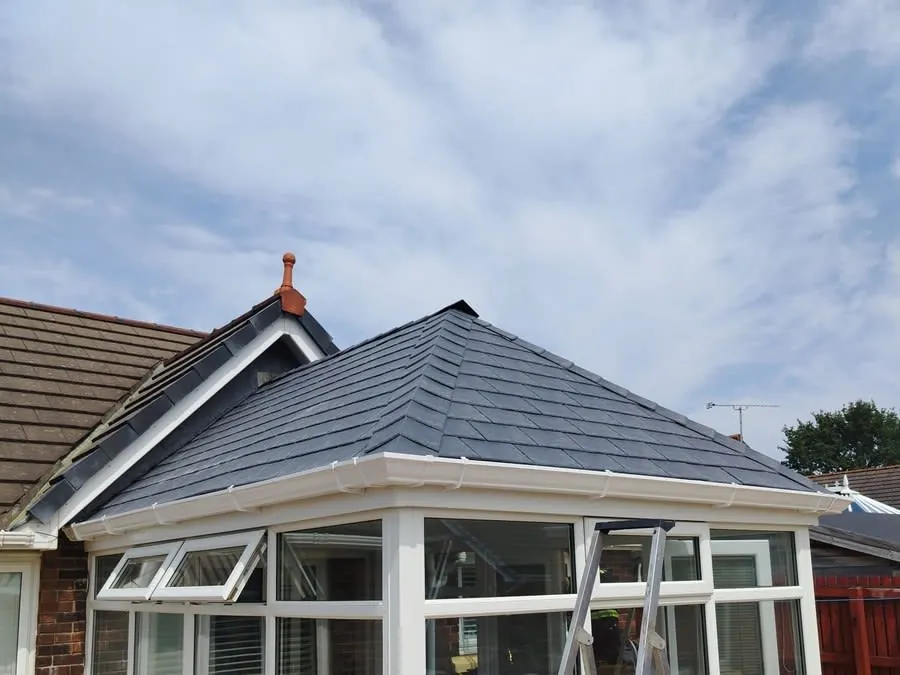
There is a common assumption that Cumbria is uniformly drenched, and it is worth correcting because it changes what you should expect. The famously wet part of the county is the central Lakeland fells, where the ground rises and squeezes the rain out of Atlantic air. Carlisle sits north of that, on the Solway plain, in something closer to a rain shadow. We get the frequency without the volume.
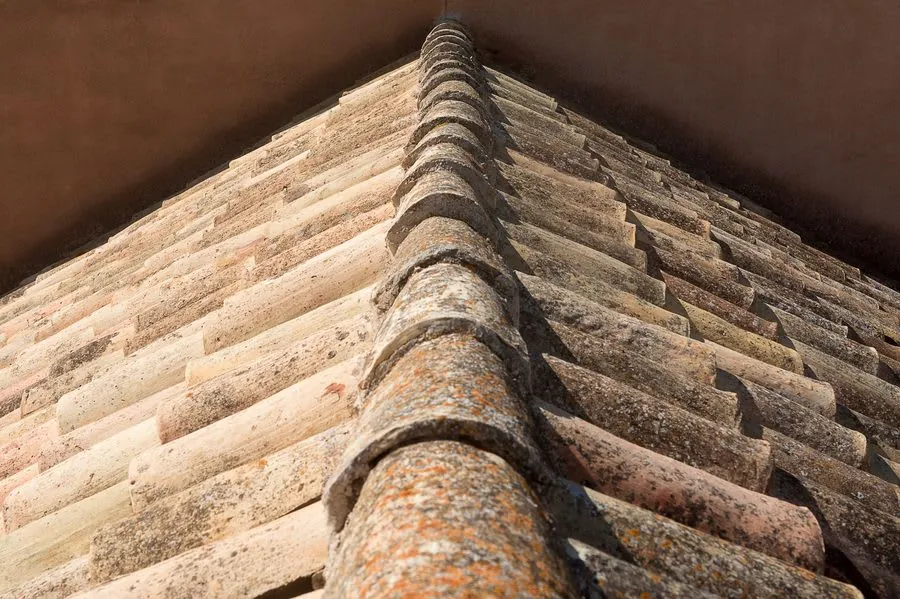
Add the rest of the local picture and the result is predictable. A great deal of Carlisle housing stock is Victorian terraced with north-facing rear slopes that see almost no direct sun between October and March. Older properties tend to have natural slate, which is slightly porous and textured enough to give moss spores somewhere to sit. Mature street trees in Stanwix, Denton Holme and Botcherby drop organic matter onto roofs all autumn, which is what moss actually feeds on. If your roof is green and your neighbour’s is not, the difference is usually shade and trees rather than anything wrong with your roof. Our roof leak repairs page covers what happens when that damp does find a way in.
Does moss actually damage a roof?
Not in the way most people assume. Moss is not a parasite and it has no root system that bores into slate or tile. It sits on the surface, anchored in the texture and in the silt that collects there. A slate roof can carry moss for decades without the slate itself deteriorating at all.
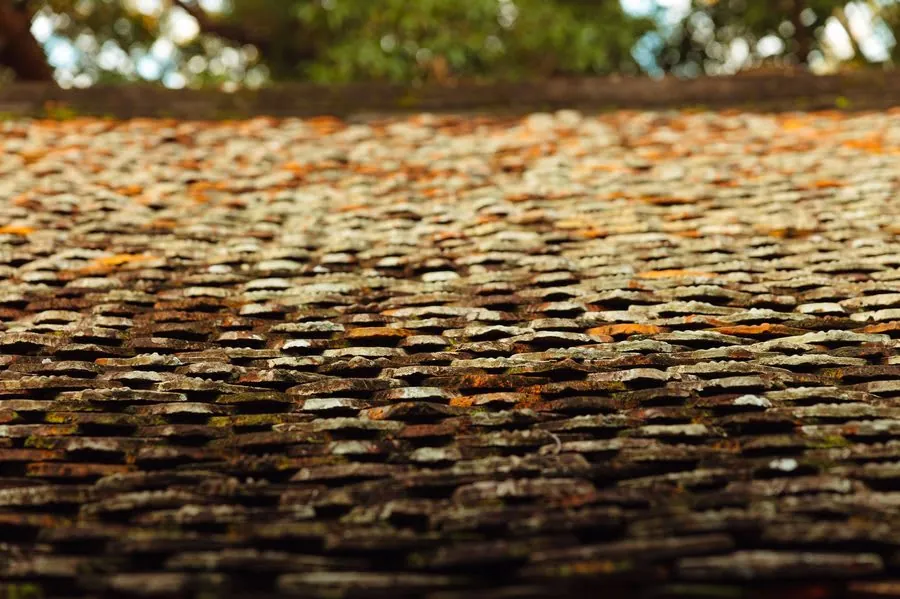
The damage moss causes is entirely indirect, and there are three mechanisms worth knowing. It holds water against the covering long after rain has stopped, which keeps the roof wet for longer than it was designed to be. That trapped water freezes in winter, expands by roughly 9% as it does, and works away at mortar joints, bedding and the edges of slates. And it sheds - constantly - into gutters, valleys and outlets.
That third one is where the actual money goes. In our experience across Carlisle, blocked gutters caused by shed moss cause far more damage than moss on the roof ever does, because an overflowing gutter saturates the wall below it every time it rains. On the soft red sandstone that much of the city is built from, repeated saturation and freezing causes the stone face to spall.
When moss genuinely becomes a problem
There is a point where cosmetic turns into structural, and it is worth knowing what it looks like so you can stop worrying about the rest.
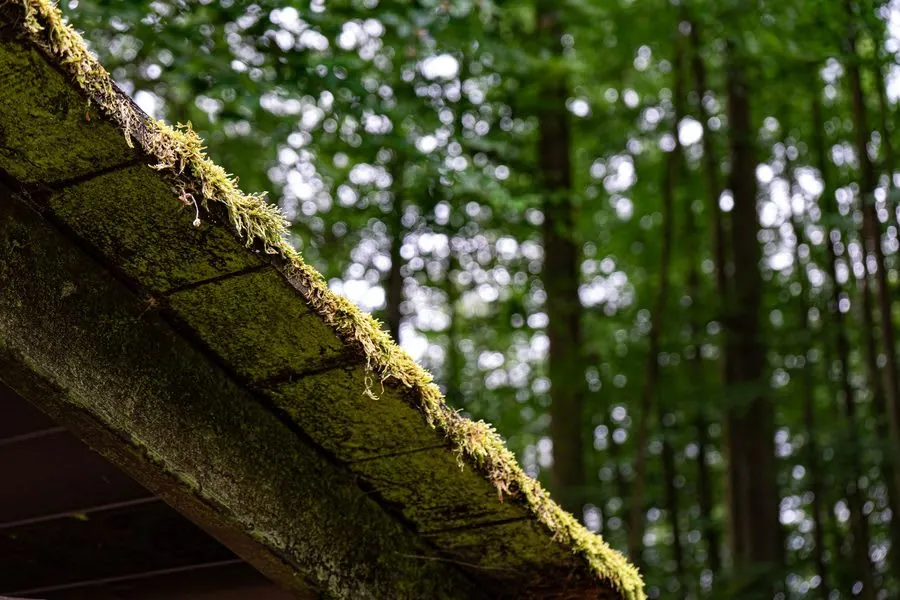
Growth thick enough to lift the tail of a slate is the clearest signal. Moss builds up in the lap - the overlap between courses - and once it is deep enough it physically raises the bottom edge, breaking the seal that stops wind-driven rain tracking upwards. Clumps sitting proud of the roof surface by 20mm or more usually mean this is already happening.
The second signal is repeat blockage. If you are clearing your gutters and finding them packed with moss again within months, the roof is shedding faster than the system can cope with, and the outlets are the weak point. The third is a valley that has gone green along its length, because a valley carries the water from two roof slopes and blocks faster than anything else on the building.
What is not a problem: a light green film across a north-facing slope, moss in the mortar of a ridge, or growth on an outbuilding you do not care about. Left alone, none of that will shorten the life of a sound roof.
The pressure washer mistake
One thing, if you read nothing else here. Never let a pressure washer near your roof, and do not borrow one and do it yourself.
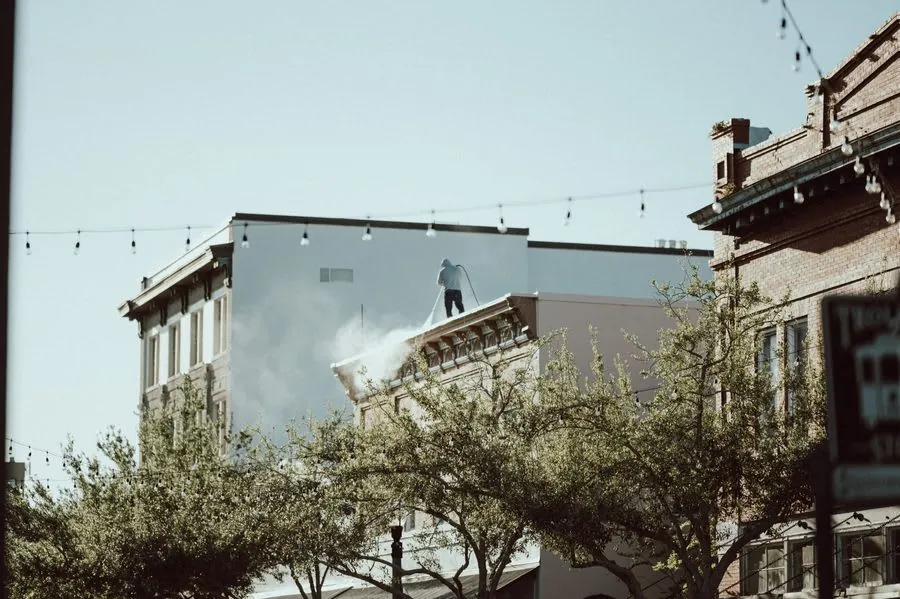
A roof covering is designed to shed water running downwards under gravity. It is not designed to resist water fired upwards at 100 bar. A pressure washer drives water straight up under the laps and into the roof space, where it soaks felt, battens and insulation. It strips the granular protective surface off concrete tiles, which shortens their life considerably and leaves a rougher surface for moss to colonise faster than before. It dislodges bedding mortar on ridges and hips, and on older slate roofs it can shift or break the fixings holding individual slates.
We get called to the aftermath of this every year and the pattern never varies. Someone pays a few hundred pounds to have the roof “cleaned”. It looks superb for a fortnight. Then a leak appears that was not there before. The cleaning did not cause a fault so much as expose the roof to conditions it was never built for. If a company’s quote for moss removal leads with jet washing, that tells you what you need to know about them.
How moss should actually be removed
Done properly, moss removal is slow, manual and boring to watch. That is rather the point.
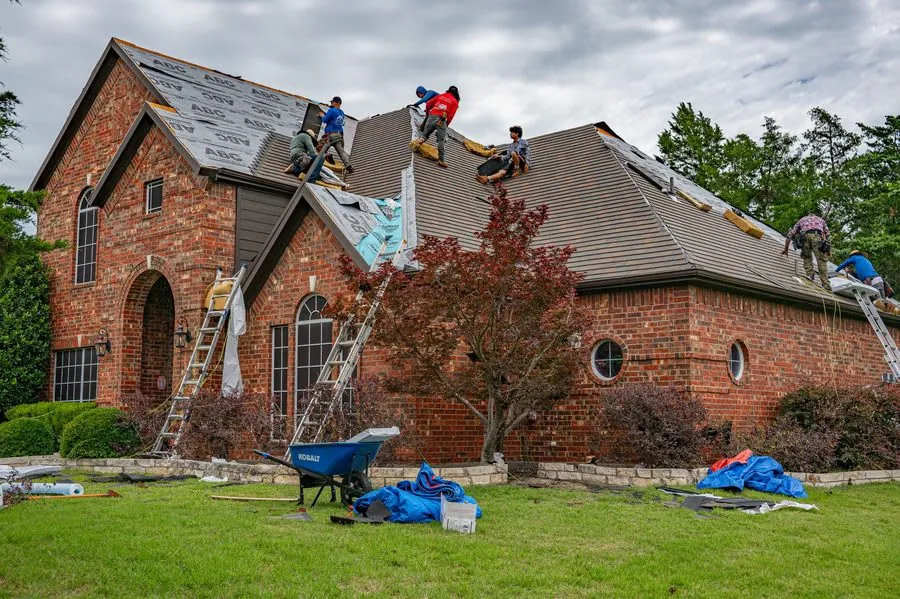
The method is scraping by hand, working downwards from the ridge with a stiff brush or a purpose-made scraper, taking the bulk off without lifting or levering the covering. Gutters and valleys get cleared afterwards, because a large volume of loosened moss goes straight into them. Anyone doing this properly will also be looking at the roof while they are up there and telling you what else they can see - slipped slates, cracked mortar, a lifted flashing - because being at roof level is the best inspection opportunity anyone gets.
Be realistic about what it buys you. Scraping takes the growth off. It does not stop it coming back, and on a shaded north-facing slope in Carlisle you should expect to see it again within two to four years. Anyone promising a permanent fix is selling you something.
Safety, honestly
Falls from height are consistently the single biggest cause of workplace deaths in Great Britain, as the HSE’s fatal injury statistics record each year. Moss makes a roof genuinely treacherous underfoot - wet moss on slate has almost no grip. This is not a job to do off a ladder on a Sunday morning to save a couple of hundred pounds. Anyone you hire should be using proper access and be insured for working at height. The National Federation of Roofing Contractors is a reasonable place to check a firm’s credentials.
Chemical treatments and what they actually do
After manual removal, most roofers will offer a biocide treatment. These work, within limits, and it is worth understanding what those limits are before paying for it.
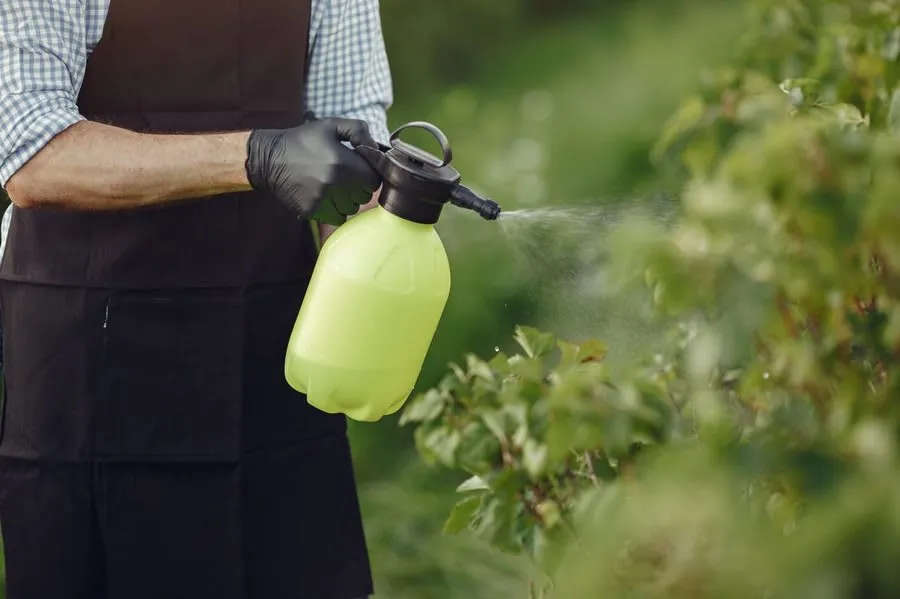
A biocide is applied by low-pressure spray and kills the remaining spores and root-level growth that scraping leaves behind. It slows regrowth rather than preventing it, typically buying you a couple of extra years over scraping alone. It is not a substitute for physical removal - spraying a thick moss mat just kills the top of it and leaves the same water-holding material sitting on your roof, now dead.
Two practical cautions for Carlisle properties. Runoff goes into your gutters and then into the drain, so anyone applying it should be diluting to manufacturer specification and keeping it off planting below. And if you have a rainwater butt fed from the roof, disconnect it before the work and leave it disconnected through the next few rainfalls.
Keeping it from coming back
You cannot stop moss in a climate like this, but you can make your roof a less appealing place for it.
Cut back overhanging branches. This is far and away the highest-value thing you can do, because it removes shade and stops the organic matter that moss feeds on landing on the roof in the first place. Clear the gutters every autumn without fail - late November, once the leaves are down, is the right window in Cumbria. Keep valleys clear, since they collect fastest and cause the most trouble when they block.
Copper and zinc strips fitted near the ridge are sometimes offered as a preventative. The chemistry is real - rainwater picks up metal ions as it passes and inhibits growth downslope - but the effect is modest and it weakens the further down the roof you go. Treat it as a marginal gain rather than a solution.
The honest summary is that a green roof in Carlisle is usually just a roof in Carlisle. Watch the gutters, keep the trees off it, and get someone up to look properly if the growth gets thick enough to lift the slates. Everything else is a cosmetic decision, and it is entirely reasonable to decide you would rather spend the money elsewhere.
Frequently Asked Questions
Does moss damage a roof?
Not directly, and not quickly. Moss has no roots that penetrate slate or tile, so on a sound roof a covering of moss is largely cosmetic. The damage is indirect - moss holds water against the covering, sheds into gutters and valleys and blocks them, and in freezing weather that trapped water expands and works at joints and fixings.
Should I pressure wash moss off my roof?
No. A pressure washer drives water up under the laps, strips the protective surface off concrete tiles, and can dislodge nail fixings and bedding mortar. It is the single most common way a cosmetic moss problem is turned into a genuine leak, and roof coverings are not designed to take water at that pressure from below.
How often does a Carlisle roof need moss removing?
Most roofs never strictly need it. What does need doing annually is clearing the gutters and valleys where shed moss collects, ideally in late autumn. Full removal is worth doing when growth is thick enough to lift tiles, block outlets repeatedly, or hold water against a north-facing slope through winter.
Why is moss worse on one side of my roof?
North-facing slopes get the least sun, so they dry out slowest and stay damp longest. Overhanging trees make it worse by adding shade and dropping organic matter that moss feeds on. It is completely normal for one elevation to be green while the other is clear.
Free Roof Survey & Quote
Free roof survey and a fixed written quote, anywhere across Carlisle and Cumbria.