
2 October 2026
Roofers In Penrith And The Eden Valley: Slate, Sandstone And What Roof Work Costs 20 Miles South Of Carlisle
What roof repairs and re-slating cost in Penrith, which council handles the planning, and how we cover the Eden Valley from Carlisle. Free survey, fixed written quote.
Penrith sits about 20 miles south of Carlisle, where the M6 meets the A66 and the Eden Valley opens out between the Pennines and the Lake District fells. A little over 16,000 people live there, in a town that has changed council twice in living memory and whose roofs range from Westmorland green slate laid two centuries ago to concrete tile laid in the 1990s. Since 1 April 2023 the planning authority has been Westmorland and Furness Council, not the Cumberland Council that covers Carlisle and not the old Eden District, which no longer exists.
We get asked fairly often whether a Carlisle roofer will come out this far. We do, most weeks. This post is about what we find when we get there: what Penrith’s roofs are made of, what re-slating costs when the covering is green slate rather than Welsh, who you ask about planning, and why the yards in the town centre make scaffolding a conversation to have before the quote, not after.
What is actually on Penrith’s roofs
Penrith’s older streets are a lesson in where slate came from before the railways. The traditional covering is Lakeland slate, either the green stone from the quarries at Honister, Elterwater and Kirkstone or the blue-grey Burlington slate from the Kirkby-in-Furness end of the county. Both are thicker and heavier than Welsh slate and were laid in diminishing courses, big slates at the eaves narrowing to small ones at the ridge. When the Lancaster and Carlisle line opened in 1846, Welsh slate became cheap to bring in, and the Victorian terraces around Castletown, west of the station, were mostly roofed in it.
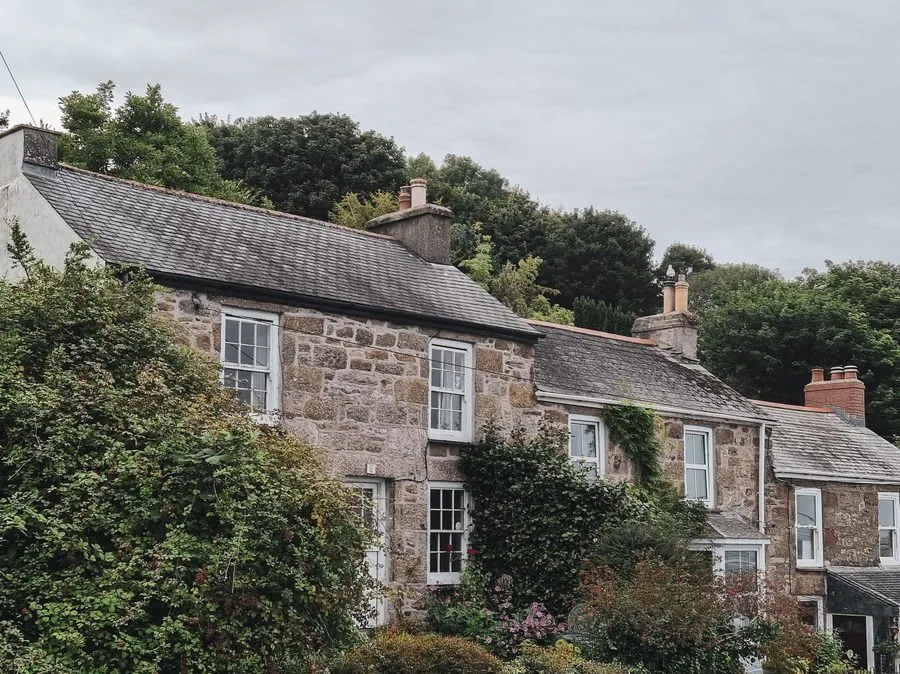
Beyond the old core the picture changes with each decade. Scaws and Pategill went up in the postwar years and the 1960s and 70s, largely as council housing, and they carry concrete interlocking tiles that are now reaching the age where the surface weathers off and the moss moves in. Carleton grew through the 1980s and 90s and keeps growing, with newer estates on the eastern edge of town roofed in whatever the housebuilder’s supplier was offering that year. Fairhill sits between the two. The right fix depends on which of these roofs you own. A roofer who prices Pategill the same way as Castletown is guessing. Our Penrith roof repairs page goes into the common faults we see on each type.
Red sandstone and what it does to chimneys and wall heads
The thing visitors notice about Penrith is the colour. The town centre, the castle and a good share of the terraces are built from Penrith sandstone, a Permian stone quarried locally and a close relative of the St Bees sandstone that Carlisle’s older buildings are made of. It looks solid. It is not, particularly. Sandstone is porous, it weathers by shedding its face a few millimetres at a time, and a chimney stack built from it has stood in the rain for a hundred and fifty years with nothing on top but a bit of mortar.
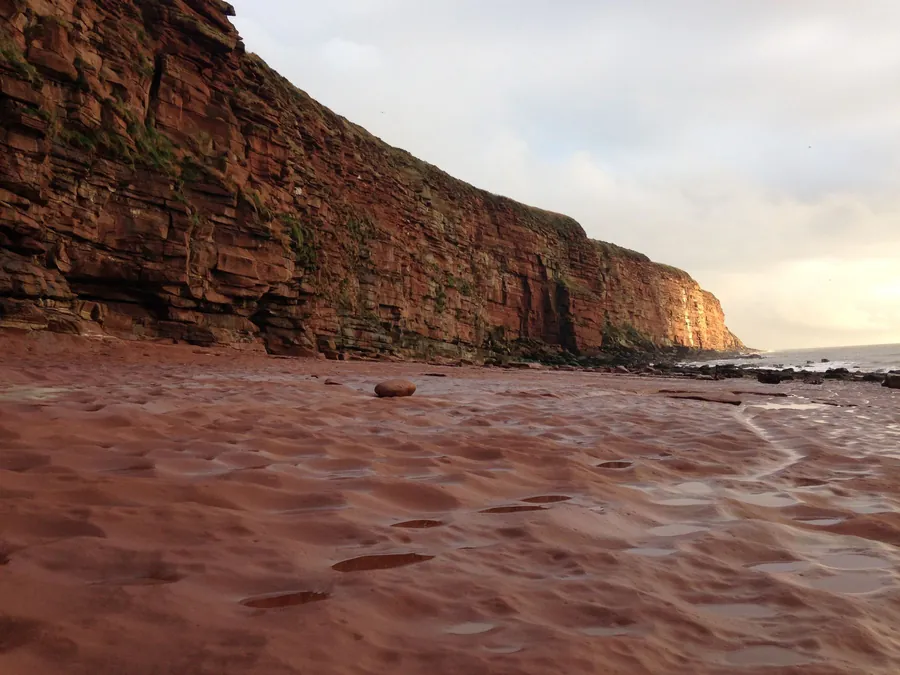
That produces a set of jobs we see far more in Penrith than in the brick parts of Carlisle. Stacks that have lost their arrises and need rebuilding from the roofline up. Flaunching that has cracked because the stone beneath it moved. Lead flashings whose chase was cut into stone that has since weathered back, leaving the lead held by nothing. And, repeatedly, repointing done in hard cement mortar in the 1970s or 80s that has trapped water in the stone and accelerated the decay it was meant to stop. The fix for sandstone is a lime-based mortar that lets the stone breathe, and a roofer who has only ever pointed brick will not have it on the van.
Re-slating a Penrith roof: green, blue-grey, Welsh, Spanish, and why salvage matters
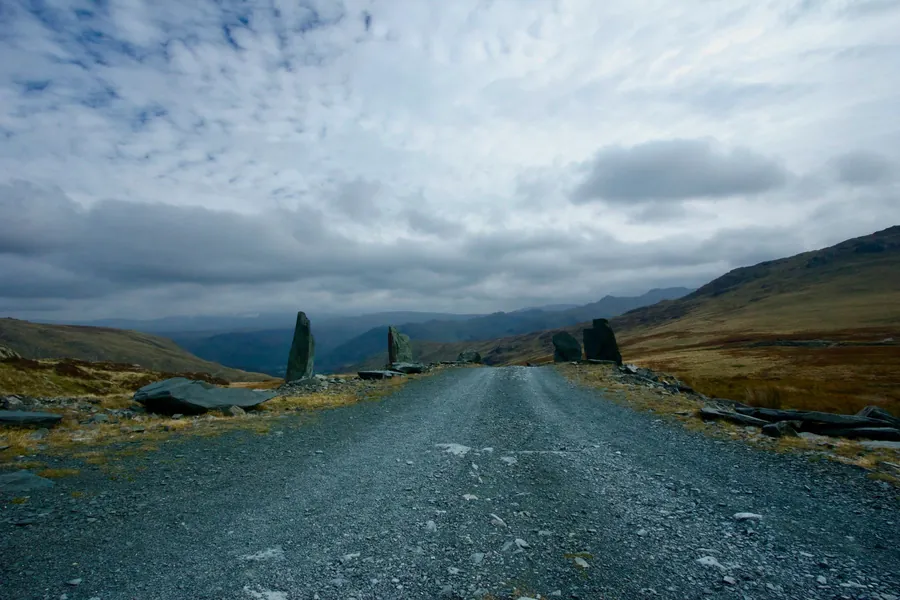
When a Lakeland slate roof reaches the end of its fixings, the first question is how much of the existing slate can go back on. Only then do you think about buying any. Westmorland green slate is now one of the most expensive roofing materials in the country, because the quarries are few and the demand from the national park and the conservation areas never lets up. A ton of sound reclaimed green slate has a resale value that a skip-load of broken Welsh never will, which is why we strip these roofs by hand, sort every slate and stack them in the yard rather than letting them slide down a chute.
As a rough guide, and with every roof different, re-slating a three-bedroom semi comes out at roughly £8,000 to £13,000 in Spanish slate, £11,000 to £17,000 in Welsh, and from around £20,000 upwards in new Westmorland green, with the top of that range a long way off if the roof is large or the diminishing courses have to be matched. Relaying salvaged green or Burlington slate on new battens, breathable membrane and stainless fixings usually lands somewhere near the Welsh figure, because the labour is heavier but the material bill is mostly the shortfall. On a typical strip we can save somewhere between six and eight slates in every ten, and the balance comes from reclaimed stock rather than new quarry output.
The weight question
Green slate is thick, sometimes 15 to 20mm against the 5 or 6mm of a Welsh slate, and a roof carrying it was built for the load. Going the other way is the risk. We have seen Penrith roofs where somebody replaced a heavy Lakeland covering with a light one without checking the structure, and the rafters, suddenly freed from the weight that had held them in compression for a century, began to lift at the ridge. If you are changing covering in either direction, the timbers need looking at first.
Who you ask: Westmorland and Furness Council or the National Park
This is where Penrith catches people out, and we include it because the wrong answer costs money. Penrith itself is decided by Westmorland and Furness Council’s planning service, the unitary authority that replaced Eden District Council and the county council on 1 April 2023. A large part of the town centre is a conservation area. Repairs and like-for-like re-slating do not need permission there, but changing the roofing material, altering the roofline, or adding street-facing dormers and rooflights can, and a listed building needs listed building consent for almost anything that touches the roof.
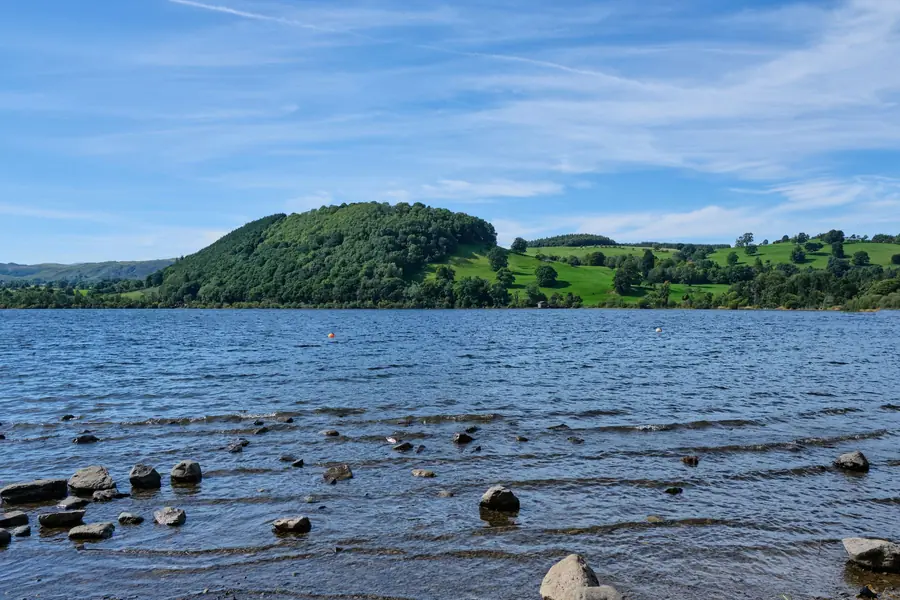
Go a couple of miles west, past Eamont Bridge towards Pooley Bridge and Ullswater, and you cross into the Lake District National Park. Inside that line the planning authority is the Lake District National Park Authority, not the council, and permitted development rights are narrower than they are in a normal town. Roof extensions that would be allowed without an application in Carleton need one in Glenridding. If you are not sure which side of the line a property sits on, the Planning Portal’s guidance on roof work explains the general rules and both authorities will confirm the boundary by postcode.
Weather in the Eden Valley: the Helm Wind, the A66 and Storm Desmond
The Eden Valley has the only named wind in Britain. The Helm Wind blows down the western face of Cross Fell when a north-easterly crosses the Pennine ridge, and it has been written about since the eighteenth century. In fairness to Penrith, the Helm mostly hits the villages along the foot of the escarpment, places like Milburn, Kirkland and Melmerby, and the town itself gets a less dramatic but more constant exposure: westerlies funnelling up the valley from the Solway, and anything the A66 brings over Stainmore from the east.
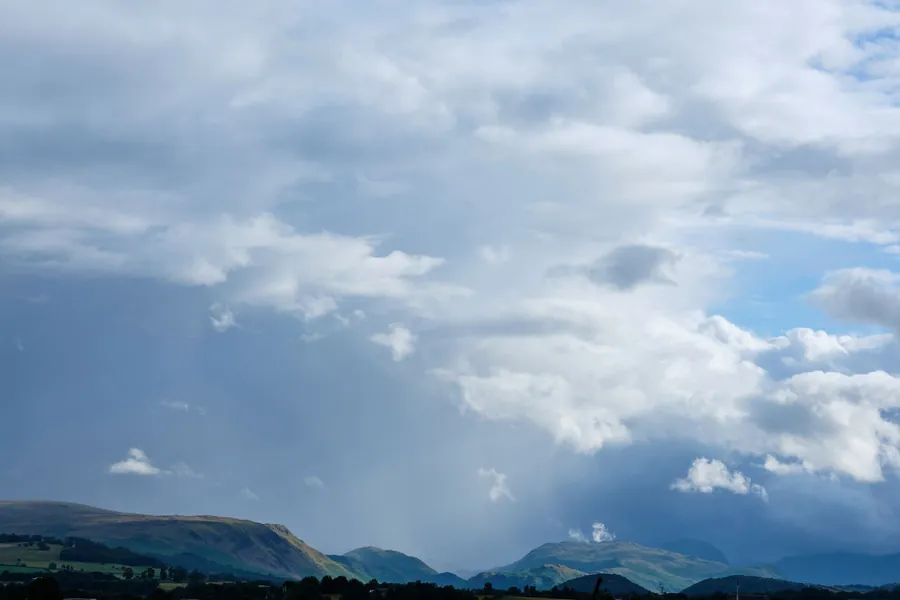
What that does to roofs is predictable. The eastern side of town, Carleton especially, sits with open fields between it and the Pennines, and ridge tiles and verges there work loose faster than anywhere else we cover. December 2015 showed the other side of it. Storm Desmond put 341mm of rain on Honister Pass in 24 hours, a UK record at the time, and the Eden and Eamont rose fast enough to flood Eamont Bridge and Appleby. Roofs that had never leaked let water in at the chimneys and the verges. The slates were fine. Rain driven that hard simply finds the mortar joints, which is why the edges of a Penrith roof are where we look first and the middle is where we look last.
Getting at the roof: the yards, the Narrows and scaffolding
Penrith’s town centre keeps its medieval plan. Off Middlegate, Burrowgate, King Street and the two Dockrays run long narrow yards, many of them reached through an archway barely wide enough for a wheelbarrow, with the houses sharing walls and gutters along the length. The Narrows by the Market Square is the extreme case. On a Carleton semi, scaffolding is a van, a morning and perhaps £700 to £1,000 for a single elevation. In a yard, the poles may have to be carried in by hand, there may be no ground to stand them on without agreement from three neighbours, and if the front faces a pedestrianised street a highway licence from Westmorland and Furness Council is needed before anything goes up.
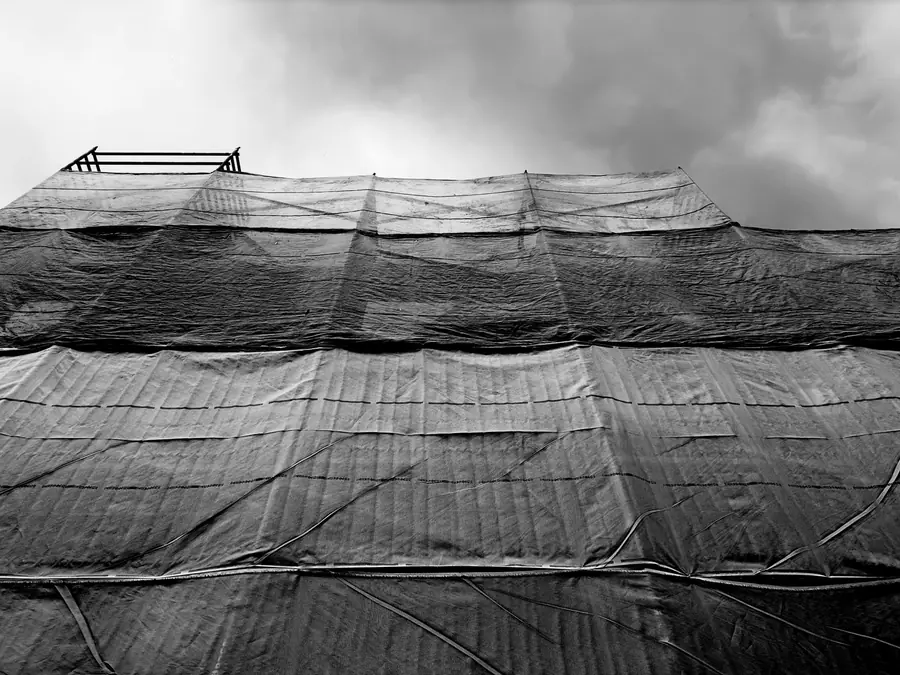
None of that stops the work getting done. It does mean the access wants sorting at the survey, because discovering it on the first morning is how a two-day job becomes a four-day one. We price the access as a separate line so you can see what the yard is costing you, and where a job can be done safely from a tower or a cherry picker we will say so. One more thing worth knowing about the older Penrith roofs: a good proportion of them are boarded rather than battened, and that changes the strip and the waste in the same way it does on the border roofs we wrote about in our piece on re-roofing over sarking boards.
How we cover Penrith from Carlisle
We are a Carlisle firm, and we would rather say that plainly than pretend to an office on Middlegate. The run from our base to junction 40 of the M6 is about 20 miles and takes around half an hour, less than it takes to cross Carlisle at school-run time. The A6 through Low Hesket and Plumpton is the alternative when Shap is closed or the motorway is stacked. Because the Eden Valley is on our regular round, with Brampton and Appleby either side of it, a Penrith job rarely sits on its own in the diary.
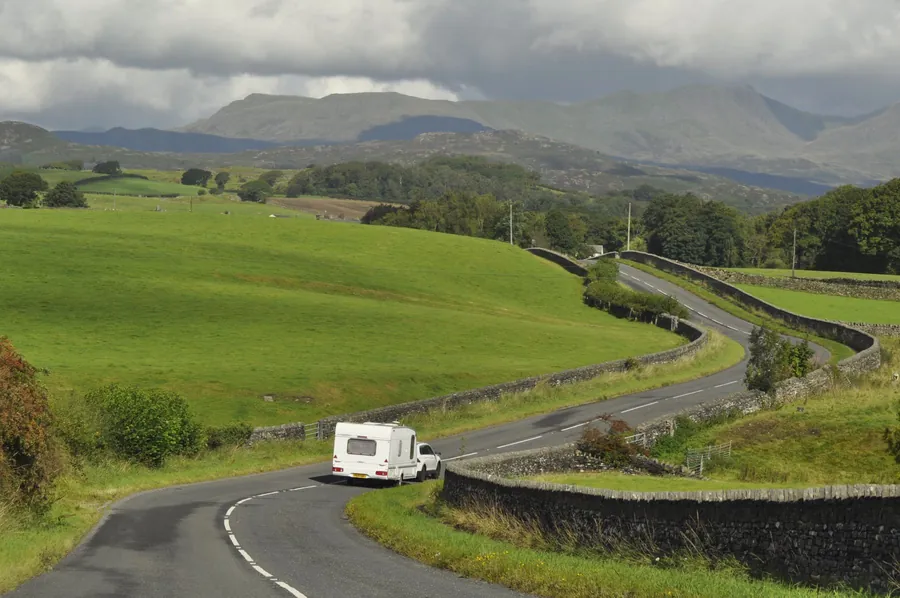
The survey is free and the quote that follows is written, fixed, and broken into the parts you can see: covering, timber, lead, access. For a slipped slate or a leak after a storm we carry enough reclaimed Lakeland and Welsh slate on the van to do the repair on the first visit. That matters more in Penrith than it does in Carlisle, because a matching green slate is not something you pick up at a merchant on the way. For a re-slate or a chimney rebuild, expect us to tell you which authority you are dealing with and what the scaffold is going to cost in your particular yard before we talk about anything else.
Frequently Asked Questions
Which council deals with planning for roof work in Penrith?
Westmorland and Furness Council, which took over from Eden District Council on 1 April 2023. It is a different authority from Cumberland Council, which covers Carlisle, so advice written for a Carlisle roof does not automatically apply in Penrith. If the property sits inside the Lake District National Park, which starts just west of the town around Eamont Bridge and Pooley Bridge, the planning authority is the Lake District National Park Authority instead.
Do I need permission to re-slate a roof in Penrith's conservation area?
Not for a straight repair or a like-for-like re-slate, which is why we always price salvaging the existing slate first. Swapping slate for concrete tile, changing the colour or profile of the roof, or adding dormers and rooflights that face the street can need an application, and anything on a listed building needs listed building consent whatever the material. We will tell you at the survey if your job falls into one of those categories.
How much does it cost to re-roof a house in Penrith?
As a rough guide for a three-bedroom semi, a re-slate in Spanish slate usually comes out between £8,000 and £13,000, Welsh slate between £11,000 and £17,000, and new Westmorland green slate from around £20,000 upwards. Where the existing green or blue-grey slate can be salvaged and relaid on new battens and membrane, the price falls back towards the Welsh figure. Scaffolding in the town-centre yards, chimney rebuilding and rotten sarking boards are the three things most likely to push a quote up.
How quickly can you get to Penrith from Carlisle?
The run down the M6 from Carlisle to junction 40 takes around half an hour, and we are in the Eden Valley most weeks anyway. For a slate off or a leak after a storm, we can usually get to Penrith the same day or the next morning. Surveys for bigger jobs are booked in at a time that suits you and cost nothing.
Free Roof Survey & Quote
Free roof survey and a fixed written quote, anywhere across Carlisle and Cumbria.