
31 August 2026
Roof Windows In A Carlisle Loft: Read This Before Cutting Into The Slates
Carlisle gets 43 hours of sunshine in a whole December. What roof windows can do about it, how slate changes the job, and the rules that apply.
Carlisle recorded 43.4 hours of sunshine in an average December across the Met Office’s 1991 to 2020 baseline. That is the whole month - about 84 minutes of sun a day, most of it while people are at work. June manages 181 hours, so the swing between midsummer and midwinter here is more than fourfold, and anyone living under a small-windowed Cumbrian roof feels every bit of it. It is the single best argument for roof windows in this part of the country: an opening in the roof plane collects light from the whole sky rather than one wall’s worth, which is worth roughly twice the daylight of the same glass fitted vertically. In a city this far north, at this latitude, under this much cloud, that difference is not cosmetic.
But cutting a hole in a perfectly good roof is not a decision to take lightly, and the roofs Carlisle is built with add a few wrinkles worth knowing about first.
Why the daylight case is stronger here than almost anywhere
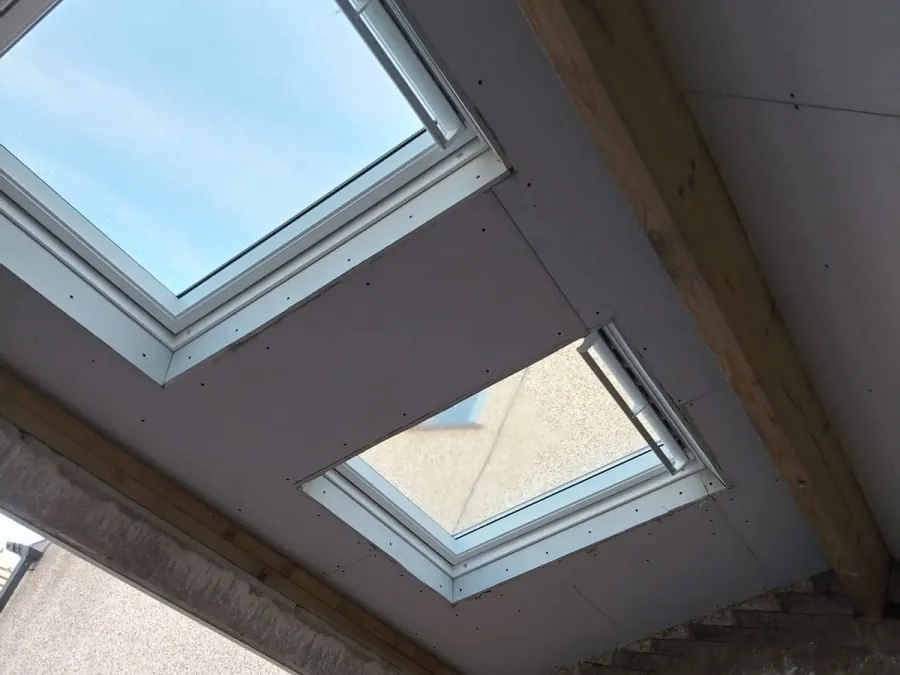
Across a full year Carlisle averages 1,420.9 sunshine hours - noticeably short of what the south coast enjoys, and delivered under a sky that spends much of the winter the colour of wet cement. Overcast light is diffuse light, though, and diffuse light comes from directly overhead. A vertical window facing a grey sky receives a sliver of it; a window set into a 35-degree roof slope stares straight at the brightest part.
This is why the difference indoors is out of all proportion to the glass area. A single decent-sized roof window over a stairwell or landing will carry a north Cumbrian winter better than three wall windows on the shaded side of the house. It is also why the best-value moment to add them is during a full roof replacement, when the slope is already stripped, the scaffold is already up, and each window adds a few hundred pounds of work rather than a standalone job’s worth.
Slate or tile: your roof decides what the job looks like
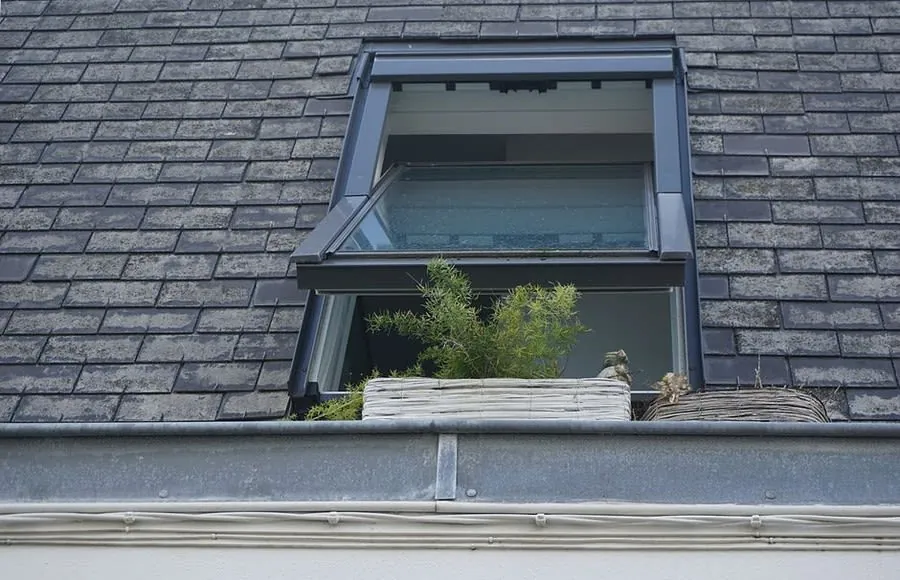
Carlisle’s housing splits fairly cleanly. The Victorian and Edwardian terraces of Denton Holme, Currock and the streets off Warwick Road mostly carry slate; the interwar semis of Stanwix and Belah and the postwar estates at Harraby and Morton mostly carry tile. The window itself does not care, but the installation does.
Slate is the easier covering to cut into well. Each slate is an individual flat unit that can be trimmed, re-holed and re-hung, so the covering closes around the new flashing in neat courses with no odd cuts on show. The catch is age: if the slope is nail-sick - the fixings rusting to the point where slates let go on their own - disturbing a metre-wide opening can loosen everything around it, and the window job quietly becomes a repair job. Interlocking concrete tiles are more forgiving of condition but clumsier at the margins, because a tile can only be cut so far before it loses its interlock, and the flashing kit has to absorb the difference. Either way, the person quoting should be on the roof or in the loft before giving you a number, not estimating from the kerb.
The junction is the whole job
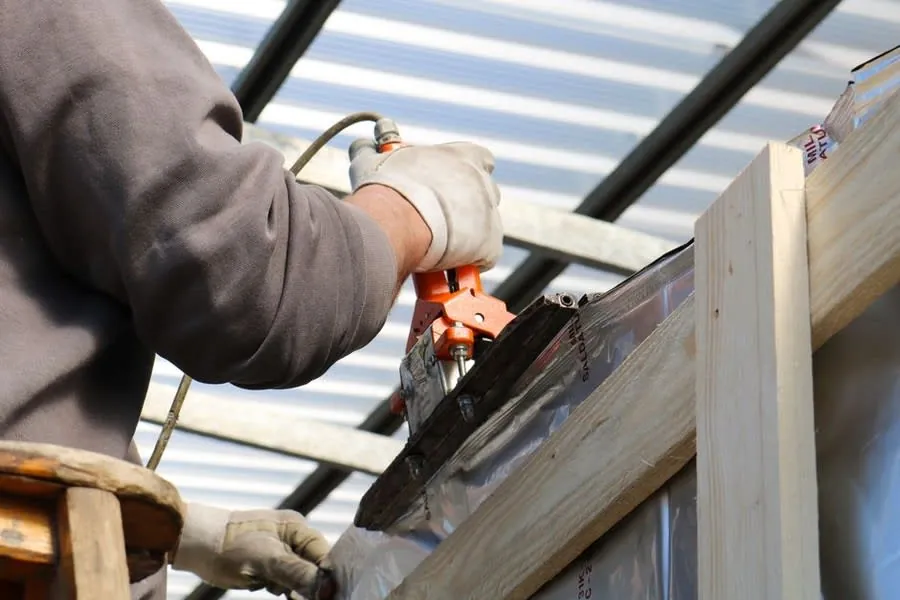
A roof window is a factory-sealed unit; the manufacturer has already done the hard part. What separates a dry installation from a persistent drip is everything around it: the flashing kit matched to the covering, the soakers and aprons dressed into the courses in the right order, the underfelt cut and turned up so any water that gets past the covering is directed around the opening rather than into it.
This is where Carlisle’s weather stops being an abstraction. Rain here arrives on westerly wind, 918.8mm of it a year, and wind-driven rain works sideways and upwards in ways still water never does. A flashing that would survive indefinitely in a sheltered southern suburb will find its weak corner exposed on an open slope in a Cumbrian January. Use the manufacturer’s flashing kit for the exact covering - slate kits and tile kits are different products, not variations - and never let anyone talk you into a bed of sealant as a substitute. Sealant is how a two-hour flashing job becomes an annual callback.
Condensation: the complaint nobody warns you about

The most common phone call after a roof window goes in has nothing to do with rain. Carlisle averages 42.4 days of air frost a year, and on those mornings the glass is the coldest surface in the room. Moisture from cooking, showers and breathing finds it, condenses, runs to the bottom edge of the frame and drips onto whatever sits below. People understandably assume the new window leaks.
Telling the two apart is straightforward once you know the pattern - we went through it properly in our piece on loft condensation versus a genuine leak - but the short version is that condensation appears on cold, often clear mornings and dries by midday, while a leak tracks rainfall and stains the plaster. Prevention is ventilation: use the trickle vent position most units have, keep bathroom extraction working if the window serves a loft bathroom, and do not box the reveal in so tightly that air cannot wash over the glass. In a climate with this many frost mornings, a roof window without airflow around it will weep every winter no matter who fitted it.
Permission: the 150mm rule and the conservation catch
For most Carlisle houses, roof windows are permitted development - no application needed - provided the unit projects no more than 150mm beyond the existing roof plane and sits no higher than the ridge. Standard modern windows are designed to sit within that limit, which is why the Planning Portal’s guidance on roof works treats them as one of the simpler alterations a homeowner can make.
The exceptions do real work around here, though. Flats have no permitted development rights at all. Listed buildings need consent for almost anything visible. And in the city’s conservation areas, the council can take a close interest in openings on slopes that face the street - where consent is needed, a conservation-style window with a central bar and a low profile is usually what wins it. None of this is a reason to abandon the idea; it is a reason to spend ten minutes with Cumberland Council’s planning pages before money changes hands, because retrofitting consent after the neighbours mention it is a far worse afternoon.
Building regulations apply even when planning does not
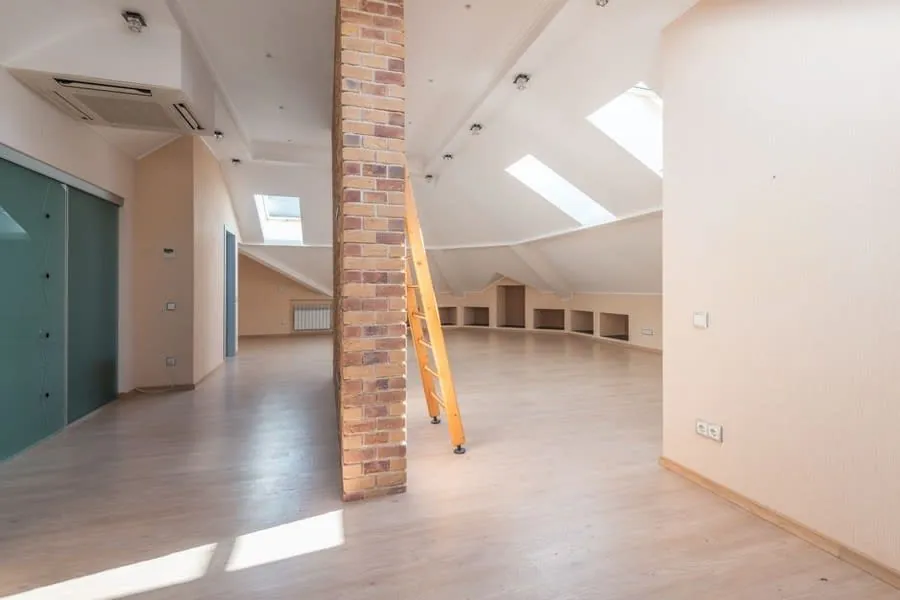
Permitted development answers the planning question, not the building regulations one, and the two trip people up in opposite directions. Cutting a new opening means the trimmed rafters must still carry the roof - openings wider than a single rafter bay need the cut timbers properly supported, not just left hanging on the frame. The glazing itself has to meet the thermal standards in Approved Document L, which any current double-glazed roof window sails past but a second-hand or reclaimed unit may not.
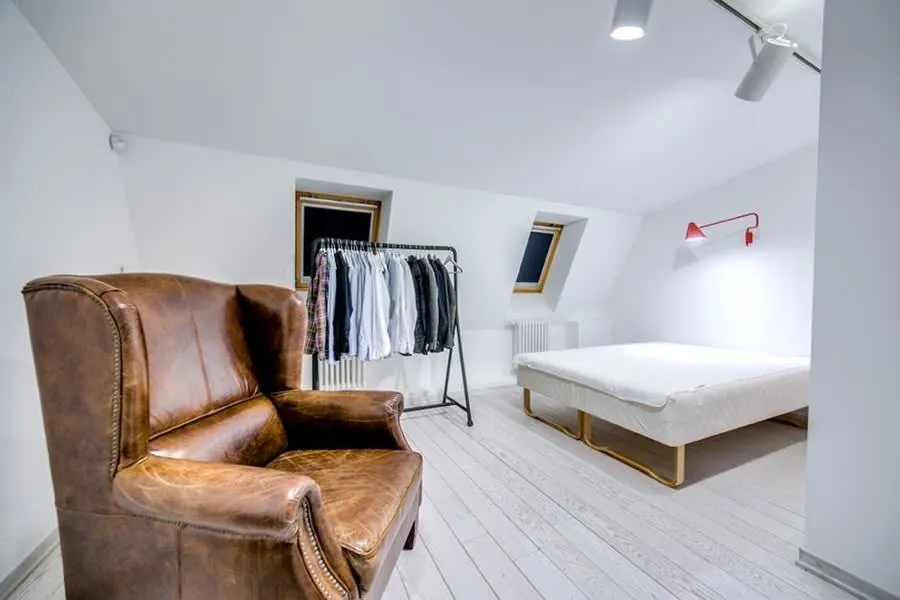
And if the window is part of turning the loft into a proper room, the stakes rise: a habitable loft room needs an escape-suitable window of the right size and sill height, alongside everything else a loft conversion involves. A roof window punched into a storage loft is a small, simple job. The same window as part of a conversion is one piece of a regulated project, and it pays to know which one you are actually doing before the first slate is lifted.
What it costs, and the cheapest time to do it
As a working guide from jobs around Carlisle: a standard centre-pivot window cut into an existing roof, supplied, fitted, flashed and finished inside, typically lands between £1,100 and £1,800. Bigger units, conservation styles and electric openers push that up; awkward access or scaffold pushes it up faster. Fitting two or three at once brings the per-window price down usefully, because the access and setup are paid for once.
The genuinely cheap moment, though, is a re-roof. With the covering stripped and the scaffold standing, adding a window is a few hundred pounds of extra work instead of a self-contained job - which is why we ask every re-roof customer about daylight before we start, not after we finish. Roofs in this city get opened up once in a generation. If yours is due, that is the moment to think about where the light should come in for the next thirty years.
If you are weighing one up - whether it is a single window over a dark landing or daylight for a full loft plan - we will look at the slope, the covering and the room below and give you a straight answer on what it needs.
Frequently Asked Questions
Do I need planning permission for a roof window in Carlisle?
Usually not. Roof windows generally fall under permitted development provided they do not project more than 150mm beyond the roof plane and do not sit higher than the ridge. The exceptions are the ones that catch people: flats have no permitted development rights, and listed buildings or homes in one of Carlisle's conservation areas can need consent, particularly on the street-facing slope. Cumberland Council is the authority to check with before ordering anything.
How much does it cost to fit a roof window?
For a standard centre-pivot window cut into an existing Carlisle roof, supplied and fitted with the correct flashing kit, expect roughly £1,100 to £1,800 depending on size, roof covering and internal finishing. Conservation-style units with a central glazing bar cost more, as does anything needing scaffold rather than internal access. Fitting during a re-roof is significantly cheaper per window because the roof is already open and the access is already paid for.
Can you fit a roof window into a slate roof?
Yes, and much of our roof window work in Carlisle is exactly that. Slate actually gives a neater result than interlocking tile because individual slates can be trimmed and re-holed to close up tightly around the flashing. The caveat is the condition of what surrounds the opening: on an old nail-sick roof, disturbing one area can loosen its neighbours, so an honest fitter checks the slope before quoting rather than after cutting.
Why does my roof window drip in cold weather?
Nine times out of ten it is condensation, not a leak. The glass is the coldest surface in the room, and moisture from the house condenses on it, pools on the bottom edge and drips - classic on Carlisle's frosty mornings. A leak wets the plaster around the frame during or after rain regardless of temperature; condensation appears on cold clear mornings and vanishes by lunchtime. The fix for the first is flashing work, for the second ventilation and heat.
Free Roof Survey & Quote
Free roof survey and a fixed written quote, anywhere across Carlisle and Cumbria.