
2 September 2026
Loose Ridge Tiles In Carlisle: When The Mortar Has Had Enough
Carlisle gets 152 wet days a year and the ridge takes all of them. How to spot failing mortar, what changed in 2015, and what re-bedding actually costs.
Carlisle records 152 days a year with at least a millimetre of rain, and 918.8mm of it in total. Most of that arrives on a south-westerly straight off the Solway, which means it does not fall on the roof so much as get pushed across it. The one part of the roof taking that head-on, every time, is the strip of tiles capping the top: the ridge. On thousands of houses around the city, the only thing holding those tiles in place is a bed of sand and cement that somebody trowelled on decades ago. Mortar is not waterproof, it is not flexible, and it does not enjoy 42 nights of frost a year. It fails slowly, then all at once, usually into a garden or onto a car. Here is how to tell where yours is in that process.
The metre of roof that takes everything
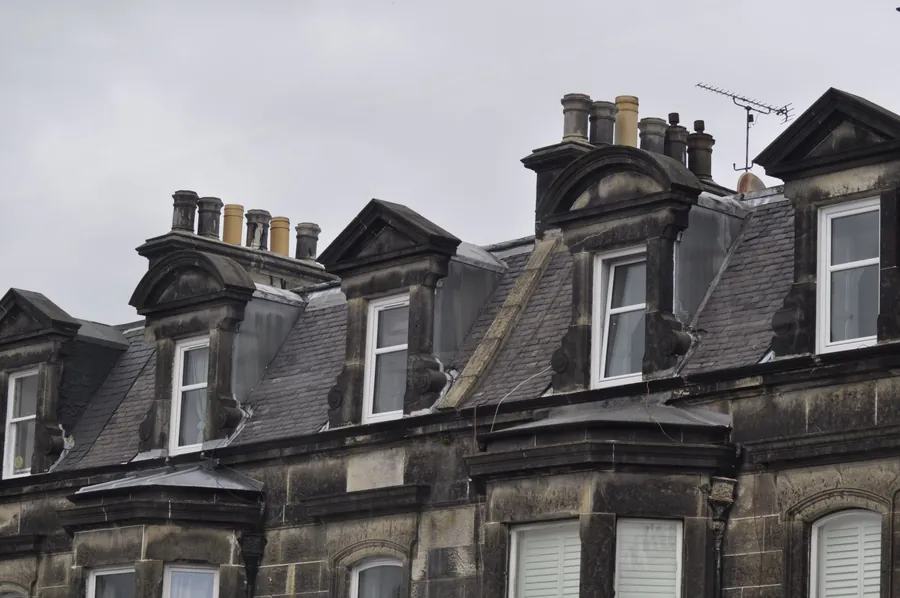
The ridge is a joint, not a surface. Two slopes climb up and stop short of each other, and the ridge tiles sit over the gap like a saddle, keeping weather out of the space where the rafters meet. The verge does the same job at the gable end, closing the raw edge where the covering runs out over the wall.
Neither is doing anything clever. They just have to stay put and stay closed. What makes them the weak point on a Carlisle roof is exposure: the ridge is the highest line on the building, hit by wind before anything else and dried by it faster, and the verge on a gable facing the Solway takes rain almost horizontally. When a joint at that height finally lets go, water does not stay at the top. It runs down the underside of the covering and appears as a damp patch on a bedroom ceiling two or three metres from where it got in, which is why so many ridge problems get diagnosed as something else entirely.
Sand, cement, and thirty years of movement
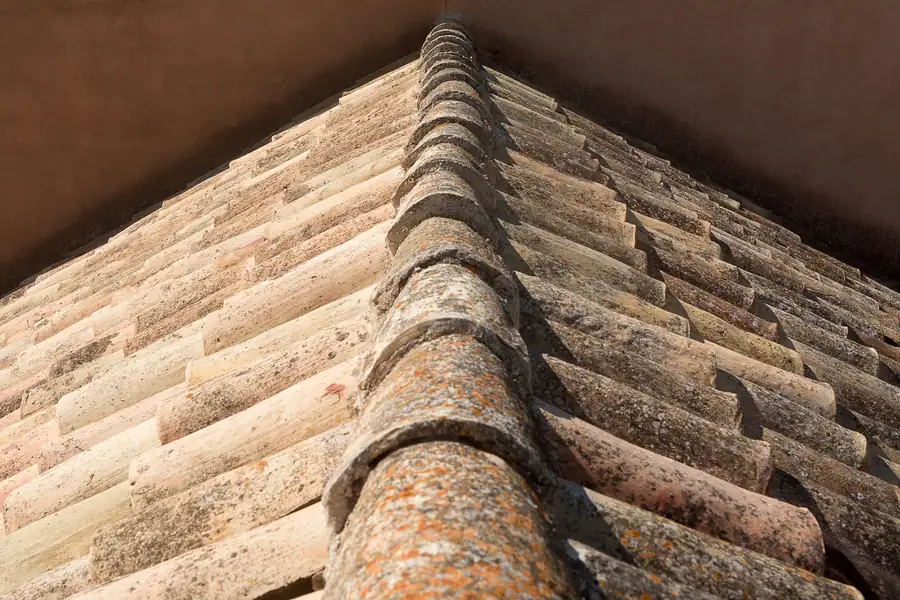
A bedded ridge is a strip of mortar maybe 20mm thick, sitting on top of a roof that expands in July and contracts in January. It cracks. That is not bad workmanship, it is what happens to a rigid material laid across a moving joint, and on an exposed Cumbrian roof the honest working life of a mortar bed is around 20 to 25 years rather than the 40 people assume.
Once a hairline crack opens, the sequence is predictable. Rain gets behind the mortar rather than running off it. It sits there through a cold night, freezes, and pushes the crack a fraction wider. Moss establishes in the gap because there is now grit and moisture to hold onto, and the moss keeps the joint damp long after the roof has dried. Two or three winters of that and the bedding is no longer bonded to anything - it is a strip of crumbly grey material lying in place, held down by its own weight. The tile above it is then only as secure as the day the wind gets under one end.
Look at your own ridge after a dry spell. Sound mortar is a continuous grey line. Failing mortar shows as a broken, gappy line with darker shadows where pieces have dropped out, and often a green fringe of moss along the bottom edge.
What changed in 2015, and why it matters to you

Roofing standards caught up with this. The 2014 revision of BS 5534, the code of practice for slating and tiling, took mortar out of the role of sole fixing. Ridge and hip tiles now have to be mechanically fixed - a screw, nail or clip connecting each tile to the timber below - whether or not mortar is used as well. Local Authority Building Control has a clear summary of the fixing requirements if you want the detail from the people who sign work off.
Two practical consequences for a homeowner in Carlisle. First, if your roof was covered before about 2015 - which is most of the housing stock in Currock, Botcherby, Belah and the streets off Warwick Road - your ridge almost certainly relies on mortar alone. It is not illegal and nobody is going to make you change it, but it is a known weak point with a known end date. Second, when you do have work done, it has to be brought up to the current standard, and a quote that does not mention fixings is a quote from someone working to a version of the rules that expired over a decade ago. The standards themselves are published by the British Standards Institution, and any competent roofer will happily tell you which one they are working to.
The verge is the edge nobody looks at
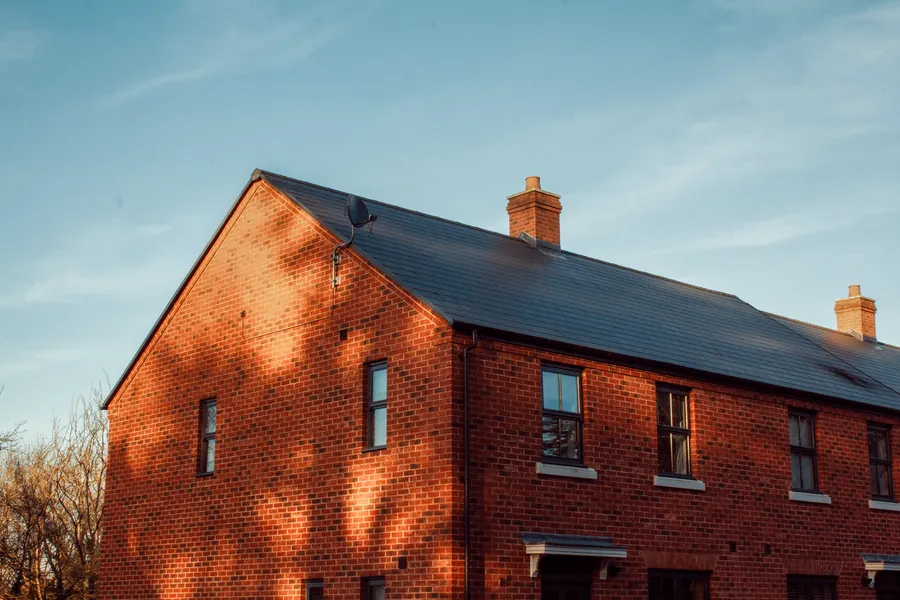
Ridges get talked about. Verges get ignored until a lump of mortar lands on the path. The verge is the mortar fillet running down the sloping edge of a gable, bedded onto an undercloak and closing the gap between the last slate and the wall head.
It fails earlier than the ridge for two reasons. It is a vertical-ish face rather than a horizontal one, so it sheds less water and holds more, and it sits directly above a wall that moves independently of the roof. On the exposed gables around Harraby and the newer estates north of the river, verge mortar is often the first thing on the roof to look tired.
The replacement most roofers will offer is a dry verge unit: an interlocking plastic or aluminium cap screwed down over the edge. Done properly it is a genuine improvement and it removes the maintenance for good. Done cheaply it is not. Budget plastic goes brittle and chalky after a decade of Cumbrian UV and rain, and a run left unclipped at the bottom end will lift in the first proper gale off the Solway. Nobody finds out which they bought until about year eleven.
Reading your roofline from the pavement
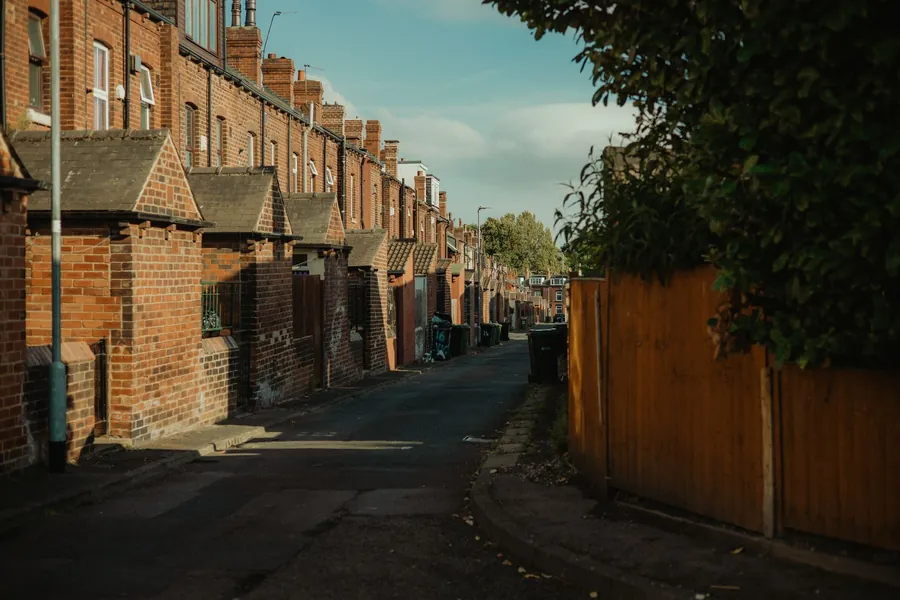
You do not need to go up to get most of this. Stand across the road on a bright day and work along the top of the roof slowly.
A sound ridge reads as a straight, even line with consistent shadow underneath. What you are looking for is anything that interrupts that. A tile sitting slightly higher or lower than its neighbours has lost its bed. A dark gap at the end of the run, usually at the gable, means the end tile has moved and the run is now open to wind. Moss growing along the joint line rather than on the slates tells you the joint has been damp for years. On the gable, look for a stepped or missing edge where the fillet has dropped away, and for daylight visible under the edge of the covering.
Inside, go into the loft on a dry day and look up at the ridge line with the light off. Pinpricks of daylight along the top are normal on an old roof with no underlay. A broad slot of light, or a patch of staining on the timbers directly below the ridge, is not. That combination - staining below the ridge, gappy mortar above it - is the same evidence trail as slates letting go one at a time, and it usually means the roof is telling you about fixings rather than about one bad tile.
What the work costs around Carlisle

Ridge and verge work is priced by the metre, but the number you get is driven by access far more than by materials. Sand and cement costs almost nothing. Getting a person safely along the top of a roof for a day costs real money.
As a guide for the city and the villages around it: re-bedding and mechanically fixing a full ridge on a two-bedroom terrace typically comes in between £700 and £1,100 with access included. A larger semi or a detached with hips as well as a main ridge runs £1,100 to £1,800. Converting to a proper dry ridge system usually adds £150 to £300 over a re-bed, and is money most people should spend. A verge in isolation is £250 to £600 a side.
Where it moves is access. A house on a wide plot at Stanwix or Morton takes a straightforward scaffold. A mid-terrace on a Denton Holme street with no rear lane may need a pavement licence from Cumberland Council or a tower brought through the house, and that is a genuine extra rather than an invented one. Ask for the access cost to be shown as its own line so you can see what you are paying for, and be suspicious of anyone who quotes a ridge without having looked at how they are getting to it.
Doing it once, properly

Ridge work attracts the wrong sort of trader because it is visible from the street and easy to frighten people about. Somebody knocking on your door in Botcherby to tell you your ridge is dangerous, having seen it from a van, is selling you a feeling rather than a survey.
The things worth insisting on are simple. A written quote that names the fixing method, the ventilation detail if a dry system is going on, and the access arrangement. Confirmation that the existing tiles are being lifted, cleaned and reused where sound rather than smashed and replaced with a mismatched set - reclaimed ridge tiles matter on a street where every house has the same profile. Public liability cover you can actually see. And a guarantee in writing with a length on it.
You can cross-check anyone quoting against a scheme like Which? Trusted Traders, which vets the businesses it lists rather than simply publishing whoever pays. Five minutes of checking on a £1,000 job is not paranoia, it is proportionate.
If your ridge line has gone gappy, or a lump of verge mortar has already turned up on the drive, it is not an emergency this week - but it is a job with a deadline set by the weather rather than by you. Get a free quote for ridge and verge work in Carlisle and get it dealt with before the frosts arrive.
Frequently Asked Questions
How much does it cost to re-bed ridge tiles in Carlisle?
For a standard terrace or semi, re-bedding a full ridge line usually lands between £700 and £1,400 including access, depending on the length of the ridge and whether the existing tiles survive lifting. A short section of three or four tiles, done while a roofer is already on the roof for something else, can be £180 to £350. The access is often the bigger half of the bill: a ridge on a Denton Holme terrace with no rear lane costs more to reach than the same ridge on a detached house at Morton.
Is a dry ridge system better than mortar?
For most Carlisle roofs, yes. A dry ridge system clamps each tile to a batten with a screw and a fixing bracket, and a ventilated roll seals the gap underneath. Nothing depends on sand and cement staying intact through 42 frosts a year. Mortar still has its place on conservation work and where the appearance of a bedded ridge matters, but it should be holding the tile down alongside a mechanical fixing, not instead of one.
Do ridge tiles have to be mechanically fixed now?
On any new or replacement work, effectively yes. The 2014 revision of BS 5534, which took full effect in 2015, stopped mortar counting as the sole fixing for ridge and hip tiles. They can still be bedded in mortar, but there has to be a screw, nail or clip tying each one to the structure. If a roofer quotes you for a straight re-bed with no mechanical fixings mentioned anywhere, ask why.
Can ridge and verge work be done from a ladder?
It should not be. Working along a ridge means moving sideways at the highest point of the roof with both hands occupied, which is exactly the situation a ladder cannot make safe. Proper work at that height needs a scaffold or a tower, and on terraced streets a roof ladder hooked over the ridge as well. If someone offers to sort your ridge off a ladder for cash that afternoon, the saving is coming out of your risk, not theirs.
Free Roof Survey & Quote
Free roof survey and a fixed written quote, anywhere across Carlisle and Cumbria.