
5 September 2026
What A New Roof Costs In Carlisle, And What The Number Is Made Of
Guide prices for re-roofing a Carlisle terrace, semi or detached, plus the scaffolding, disposal and insulation costs that quietly sit inside every quote.
Ask three Carlisle roofers what a new roof costs and you will get three answers, all of them honest, none of them the same. That is not evasiveness. A re-roof is around eight separate costs stacked into one figure, and the mix shifts enormously between a mid-terrace off Currock Street and a 1970s detached at Morton. The house next door to you can come in £3,000 apart from yours for reasons neither of you can see from the pavement. This is what sits inside the number, so you can read a quote properly instead of just comparing the total at the bottom.
Nobody can price your roof down the phone
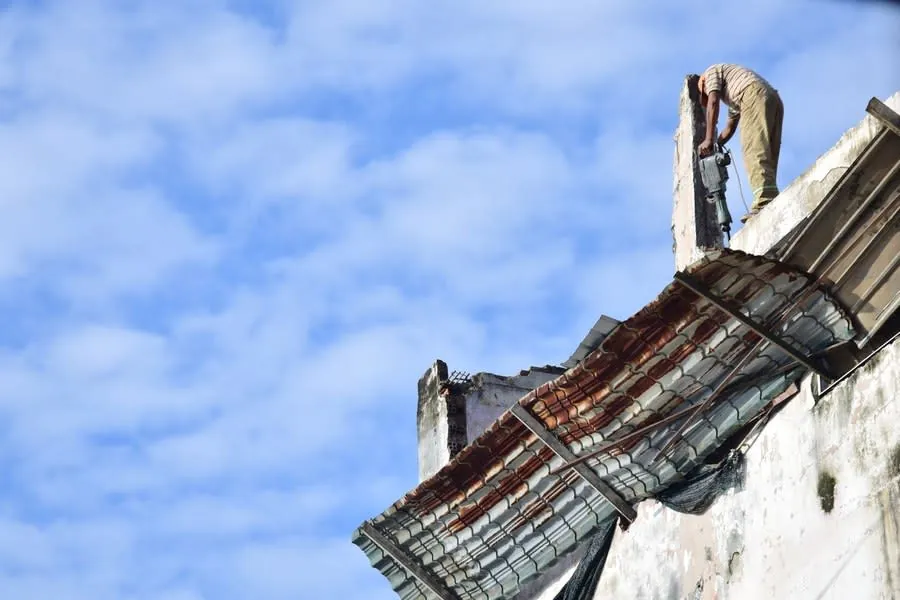
There are two reasons a phone estimate is worthless, and only one of them is about honesty.
The first is measurement. Roof area is not floor area. A steeply pitched Victorian terrace roof can be half again the footprint of the house, and pitch is exactly the thing people misjudge from the ground. Add a hip, a valley, a dormer or a chimney and you have added labour that does not show up in any rule of thumb.
The second is that half the job is invisible until the covering comes off. Battens, felt, rafter feet and the wall plate are all under there, and their condition is the difference between a clean re-cover and a fortnight of carpentry. A roofer who prices a full roof replacement without getting up there is either padding the figure to cover themselves or setting up a conversation about extras on day three. Neither is what you want.
What you are actually buying when you buy a roof
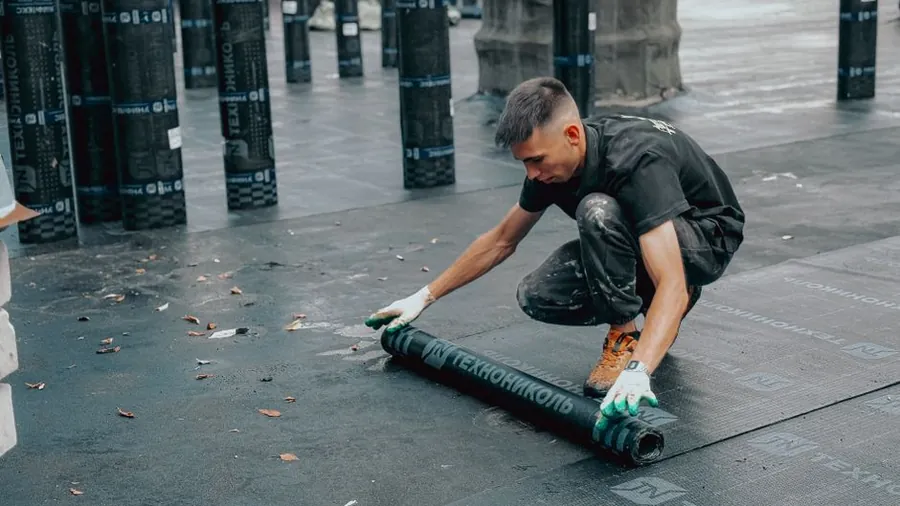
Strip out the jargon and a re-roof is six things. The old covering comes off and goes in a skip. A breathable membrane goes down over the rafters. New treated battens are fixed at the right gauge for whatever is going back on. The covering itself is laid and fixed. Ridge, hip and verge details are formed and mechanically fixed. Then flashings at the chimney and any abutments are renewed in lead.
People fixate on the covering because it is the bit you can see, but on most quotes it is nowhere near the biggest share. Labour and access usually are. A tile is a tile whether it goes on a bungalow at Dalston or a three-storey terrace on Warwick Road; the difference in price is entirely about how hard it is to get a person and a pallet of tiles safely to that surface and keep them there for a week.
That is worth knowing when you are comparing quotes, because a cheaper covering rarely rescues a bill. Downgrading from natural slate to a slate-effect tile changes real money. Downgrading the membrane to save £120 changes nothing except how long the roof lasts.
Scaffolding: the line most people have not budgeted for
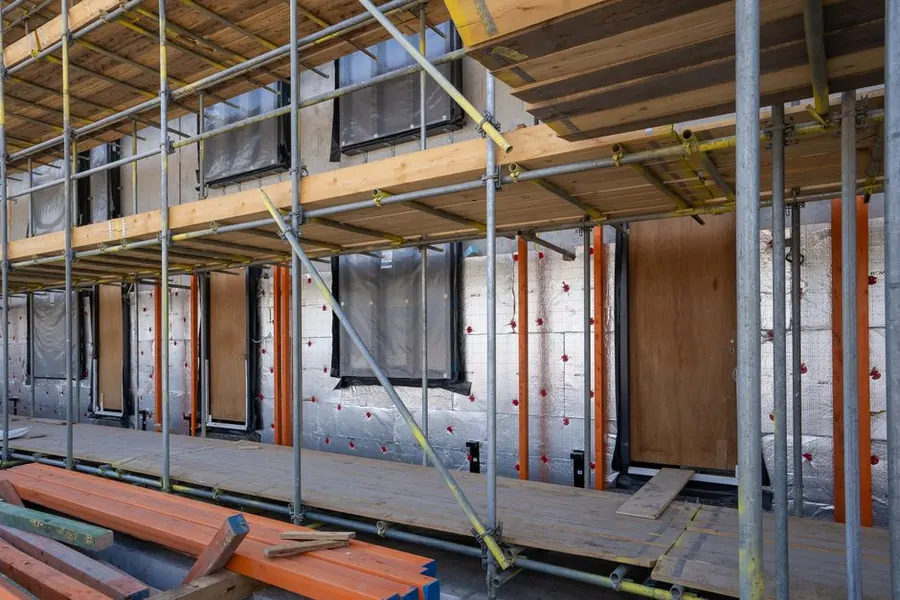
Scaffolding is where the surprises live. Expect roughly £900 to £2,500 for a domestic re-roof around Carlisle, and understand what moves it: how many elevations need boarding, how high the eaves are, whether the ground is level, and how many weeks the scaffold stands before it can come down.
Terraced streets are the expensive case. Where there is no rear lane - and there is not, on plenty of the older streets around Denton Holme, Caldewgate and Longsowerby - materials have to come over the top or through the house, and the front elevation is going over a public footway. That means a licence from Cumberland Council, a lead time to get it, and lamps and barriers on the structure while it is up. On a detached at Kingstown with a driveway either side, none of that applies.
It is also the line where corner-cutting is most tempting and least acceptable. Working off ladders to re-cover a roof is not a cheaper method, it is an uninsured one. The Health and Safety Executive sets out what proper scaffold provision looks like and it is the same standard whether the job is a shop front or your semi.
Slate or concrete tile, and why Carlisle has both
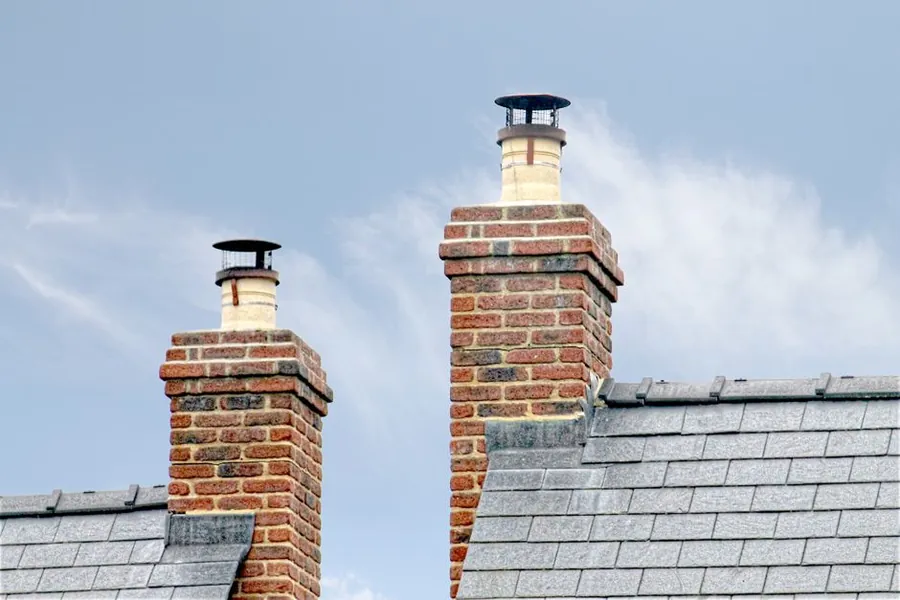
Carlisle’s roofscape splits along a fairly clean line. The pre-1919 stock - the sandstone and red brick terraces that fan out from the city centre - went on in natural slate, mostly Welsh, arriving cheaply on a railway network that made Carlisle one of the busiest junctions in the north. The interwar and postwar estates at Raffles, Harraby, Botcherby and Belah, and the private estates that followed at Upperby, Morton and Carleton, went on in concrete interlocking tile.
The practical consequence is that your options are partly decided for you. Natural slate is roughly £180 to £280 per square metre installed, against £110 to £180 for concrete tile, and on a terrace where every other roof in the row is slate, the cheaper covering is visible from the street forever. In a conservation area it may not be permitted at all.
There is a structural point too, and it is the one homeowners get caught by. Concrete tiles are heavier per square metre than slate. A roof framed in 1890 for Welsh slate was not designed to carry a modern tile, and putting one on without checking the rafters is how you buy a sagging roofline a decade later. Any quote that changes your covering type should say who has assessed the loading.
The insulation rule that quietly joins the bill
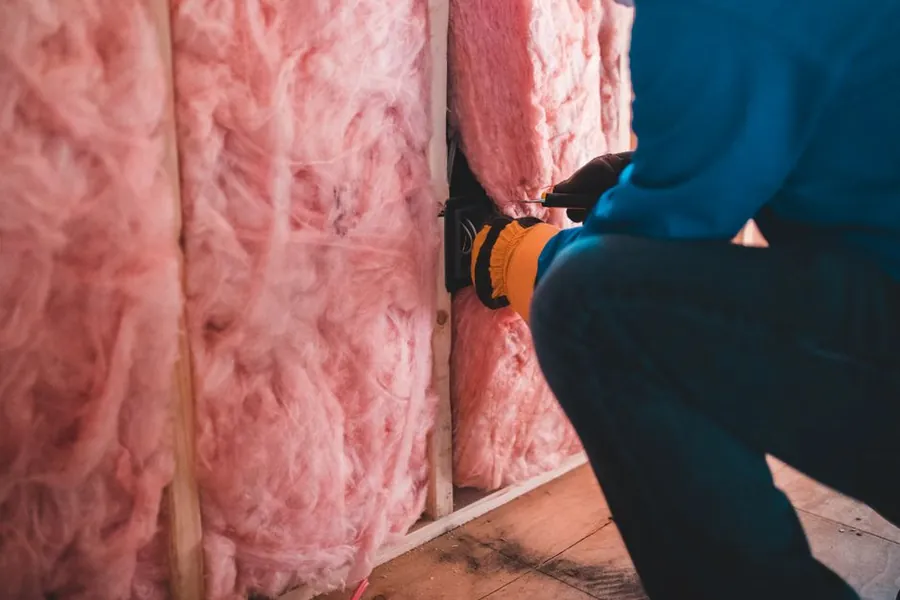
Here is the one most people have never heard of until it appears on a quote. Under Part L of the building regulations, when you renovate more than half the surface of a thermal element, that whole element has to be brought up to current thermal standards where it is technically, functionally and economically feasible to do so. A roof is a thermal element. Stripping and re-covering it is renovation.
In practice, on a Carlisle house with a cold loft, that means bringing the insulation up to the current limiting value - and a lot of lofts around the city are still sitting at 100mm laid in the 1980s. If the loft is a converted room, the insulation has to go in at rafter level instead, which is a bigger job and needs a ventilation strategy designed alongside it. The Planning Portal explains how the thermal element rules apply to roofs, and the underlying standard is set out in Approved Document L, published by the government.
Budget £400 to £1,200 for the insulation element depending on which of those two situations you are in. And expect the work to be notified, either to Cumberland Council building control directly or self-certified by a roofer registered with a competent person scheme. If nobody mentions notification, ask. The certificate is what a buyer’s solicitor will want in four years, and reconstructing it afterwards is a nuisance nobody enjoys.
What turns up when the covering comes off
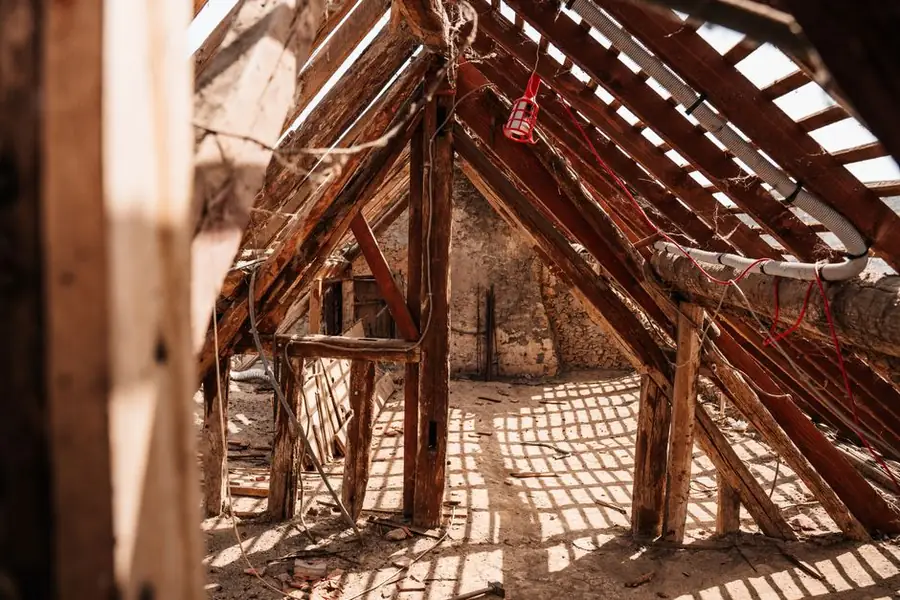
Every re-roof carries an unknown, and any quote that pretends otherwise is hiding it rather than removing it.
The common finds in Carlisle are rot at the rafter feet, where decades of a leaking gutter have soaked the timber at the eaves, and a wall plate that has gone soft under the same conditions. Neither is visible from a loft hatch, because the loft hatch is nowhere near the eaves. On the older terraces you also find sarking boards - a full timber deck under the slate rather than felt - which is good news structurally and slower to work on.
A well-written quote handles this in one of two ways. It either includes a stated allowance for timber repair, with a rate for anything beyond it, or it excludes timber work entirely and gives you the day rate that will apply. Both are fine. What is not fine is silence, because silence becomes a phone call on Wednesday afternoon with your roof open and no leverage. As a rough guide, allow 5 to 10 per cent of the job value for what you cannot see, and be pleasantly surprised if it goes unspent.
Rough numbers for real Carlisle houses

With every caveat above still standing, here is where jobs of this type usually land in and around the city.
A two-bedroom mid-terrace re-covered in concrete interlocking tile, scaffolding and disposal included, is generally £5,500 to £8,000. Put the same house back in natural slate and you are at £9,000 to £13,000. A three-bedroom semi runs £7,000 to £11,000 in tile or £10,000 to £16,000 in slate, and a rear dormer or an awkward run of valleys pushes the labour up faster than the materials. Detached houses start around £12,000 and go past £20,000 without much effort, mostly because you are scaffolding four elevations rather than one and because hips and valleys are slow work.
Conservation areas and listed buildings sit outside all of that, since the covering and the details are prescribed rather than chosen. And if you are out at Wigton, Longtown, Brampton or Dalston, expect a small allowance for getting the crew and the scaffold there. A firm running a wagon thirteen miles out to a farmhouse is carrying a real cost and would rather show it on the quote than bury it in the rate.
Reading three quotes without getting stung
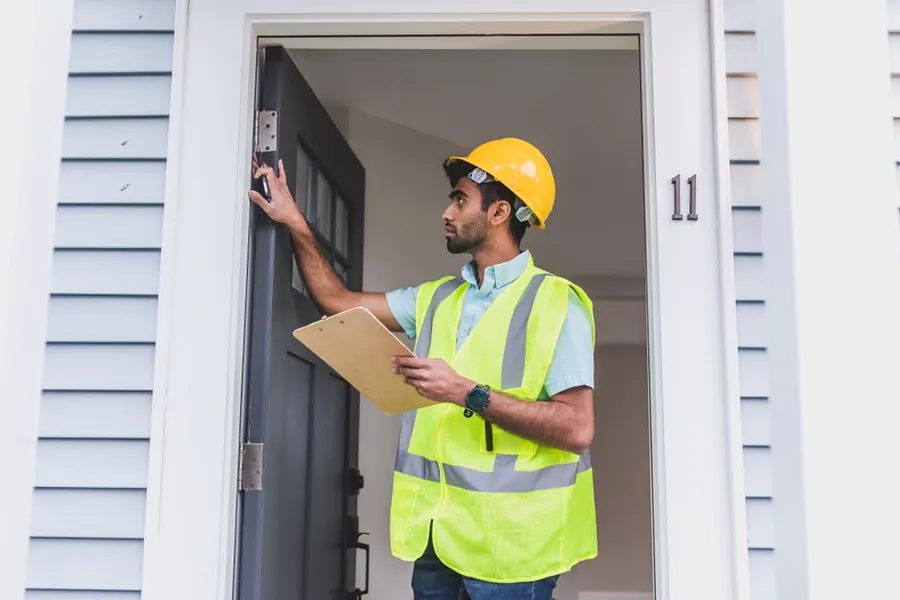
Get three, and compare them on content rather than on the number at the bottom.
A quote worth taking seriously names the covering by manufacturer and product rather than calling it “tiles”, specifies the membrane, and states how ridge and verge are being fixed - which since the 2015 standards has to be mechanical rather than mortar alone. Scaffolding should appear on its own with a hire period against it. The insulation work and the building control route should be there. So should the answer to who is carting the old roof away, and whether that is in the price.
Then check the firm rather than the paperwork. Public liability cover you can see a certificate for, a written guarantee with a number of years on it, and an address that is a place rather than a mobile number. It is worth cross-checking against an independent directory such as the Federation of Master Builders’ find-a-builder service, which inspects the companies it lists.
On payment, a deposit for materials is normal on a job of this size. A demand for half the value before anyone has been on the roof is not. Stage payments tied to visible progress - scaffold up, roof stripped and dried in, covering complete - protect both sides, and any established firm will agree to them without a fuss.
If your roof is patched, tired and costing you a call-out every winter, the honest first step is a proper look rather than a price. Get a free quote for a new roof in Carlisle and get a figure that is built from your roof rather than from an average.
Frequently Asked Questions
How much does a new roof cost in Carlisle?
As a working range, a two-bedroom mid-terrace re-covered in concrete interlocking tile lands around £5,500 to £8,000 with scaffolding and disposal included. A three-bedroom semi is roughly £7,000 to £11,000 in tile, or £10,000 to £16,000 if it is being put back in natural slate. Detached houses with hips, valleys or dormers start around £12,000 and climb from there. Those are guides for a straightforward job, not fixed prices - the roof has to be looked at.
Why is scaffolding a separate cost on a roofing quote?
Because it is a separate trade with its own hire period. A scaffold for a re-roof is usually £900 to £2,500 in and around Carlisle, driven by the height, the number of elevations and how long it stands. A mid-terrace off Denton Holme with no rear lane costs more to scaffold than a detached house at Carleton with a driveway on both sides, and a pavement licence from Cumberland Council adds time as well as money. Ask for it as its own line so you can see it.
Do I need building regulations approval to replace a roof?
Usually yes for the insulation side rather than the covering itself. Under Part L, once you renovate more than half the surface of a thermal element, that element has to be brought up to current standards where it is technically and economically sensible. On most Carlisle re-roofs that means topping up the loft insulation or fitting insulation at rafter level. Your roofer notifies Cumberland Council building control, or self-certifies through a competent person scheme.
Can a roof be replaced in winter in Carlisle?
It can, but the working window is shorter and the sequence changes. A roofer will strip and dry in smaller areas at a time rather than opening the whole roof, and days get lost to wind more often than to rain - working at height stops long before the weather looks dramatic from the ground. Winter jobs are not more expensive as a rule, but they take longer in calendar days, so build that into your expectations rather than your budget.
Free Roof Survey & Quote
Free roof survey and a fixed written quote, anywhere across Carlisle and Cumbria.