
24 August 2026
Chimney Stack Repairs In Carlisle: Repoint, Rebuild, Cap Or Take It Down?
Four ways to deal with a failing chimney stack in Carlisle, what each one costs, and how a roofer decides which your stack actually needs.
Most chimney problems announce themselves indoors long before anyone spots anything on the roof. A patch of plaster goes darker than the wall around it, three or four feet above the fireplace. Wallpaper lifts at a seam. There is a faint tide mark in the corner of the chimney breast in the back bedroom that was not there last winter.
Carlisle has an enormous number of stacks in exactly that condition. The city’s Victorian and Edwardian terraces were built with a fireplace in nearly every room, which means tall multi-flue stacks standing well above the roofline, and the great majority of them stopped doing any useful work decades ago. They still sit up there taking the weather. Nationally, chimney fires have fallen a long way as open fires disappeared - Home Office fire statistics record 2,019 chimney fires in England in the year to March 2025, down 61% on a decade earlier - but the stacks themselves did not go anywhere.
So what do you do with one? There are four answers, and which of them applies to your stack is not really a matter of opinion. Here is how the choice gets made, and what each route costs around Carlisle.
Reading the signs from inside the house
Where the damp sits tells you a surprising amount before anyone climbs anything.
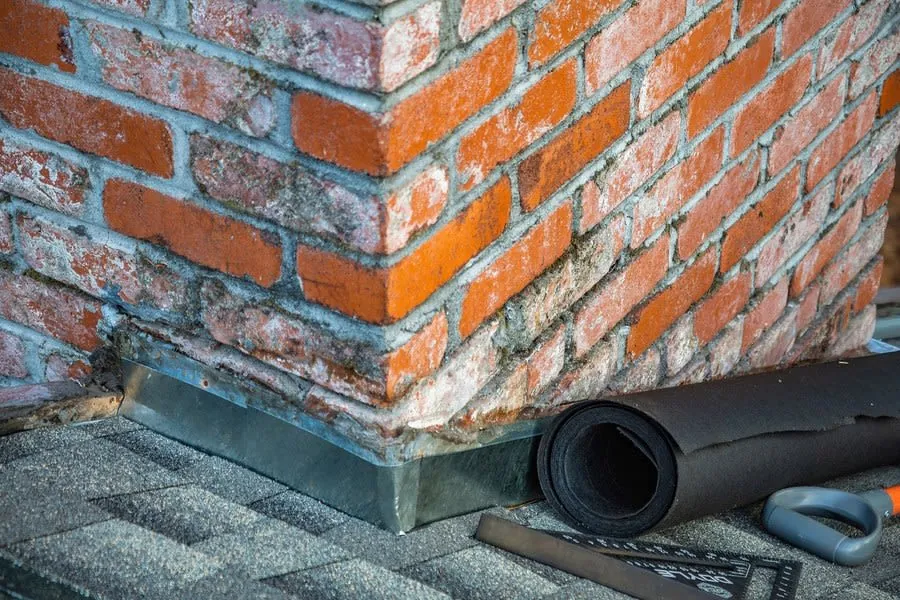
High on the breast, in the loft or the top bedroom, and worst after driving rain: that is usually water coming through the stack itself or past the flashings. Low down beside the fireplace, present all year, worse in cold weather: that is more likely condensation in a flue with no ventilation, which is a different job entirely and a much cheaper one. Staining that runs horizontally along the line where the stack passes through the roof points at the lead - the apron at the front, the soakers and step flashing at the sides, the back gutter behind it.
Getting that distinction right first is the whole game, and it is the main thing our chimney repairs work starts with. Plenty of Carlisle homeowners have paid to have a stack repointed when the water was arriving through a failed back gutter two feet below it, and the damp carried on exactly as before.
Why stacks in Carlisle give up before the roof does
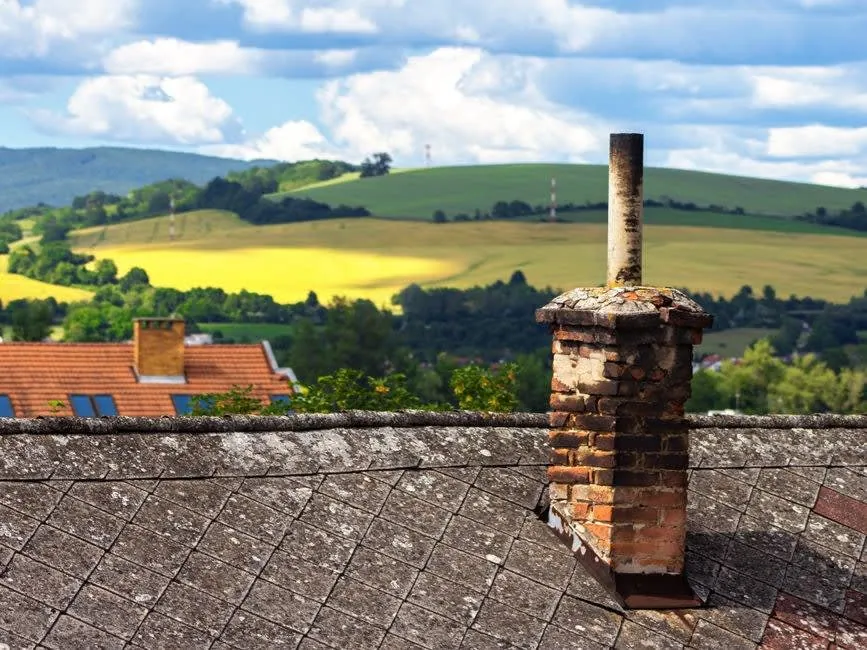
A stack is the only part of a house that gets weather on all four sides at once. The roof slope below it sheds water downhill and is protected on three edges. The stack is out in the open, catching the prevailing south-westerly on one face, holding rain in its mortar joints, and losing heat from every side.
Two things then work on it. Water soaks into old mortar and, on the nights Carlisle sits a couple of degrees either side of freezing - which happens far more often than a hard sustained freeze does - it expands as it turns to ice and pushes the joint apart a fraction. Repeat that through a winter and the pointing recedes. Once it recedes, it holds more water, and the cycle speeds up.
The second is what happens after a stack stops being used. A working fire kept the flue warm and dry and drew moisture out of the brickwork continuously. Cap the fire off and the whole structure spends the winter cold and saturated. It is one of the reasons stacks in this city so often look worse than the roof they stand on, even where the roof is a hundred years older than the last time anyone lit anything.
Flaunching, pots and the lead line
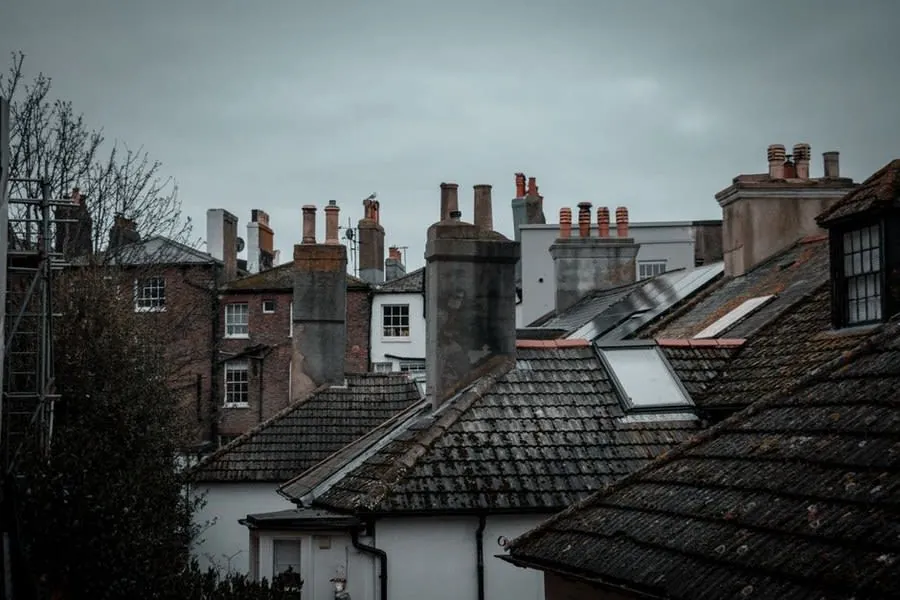
The flaunching is the sloped mortar collar on top of the stack that holds the pots and throws water off the top surface. It is a thin band of mortar in the most exposed position on the entire building, and it is nearly always the first thing to go. Cracked flaunching lets water straight down into the core of the stack, where it does its damage from the inside out with nothing visible from the ground.
Below that sits the lead. Where a stack passes through a slope, water is kept out by four separate pieces - a front apron, step flashings and soakers up both sides, and a back gutter on the uphill side. The back gutter is the one that fails, because it is the only part asked to hold and divert a body of water rather than simply shed it, and it is invisible from the ground and from most windows.
Roofers get called to plenty of “leaking chimneys” in Carlisle that turn out to be a back gutter with a split in the fold, or a stack where someone has smeared mortar over the lead line instead of renewing it. Mortar fillets over lead crack within a couple of winters here. If a previous repair left grey mortar where lead should be, treat it as a repair waiting to be redone.
Repoint, re-flaunch, rebuild or remove
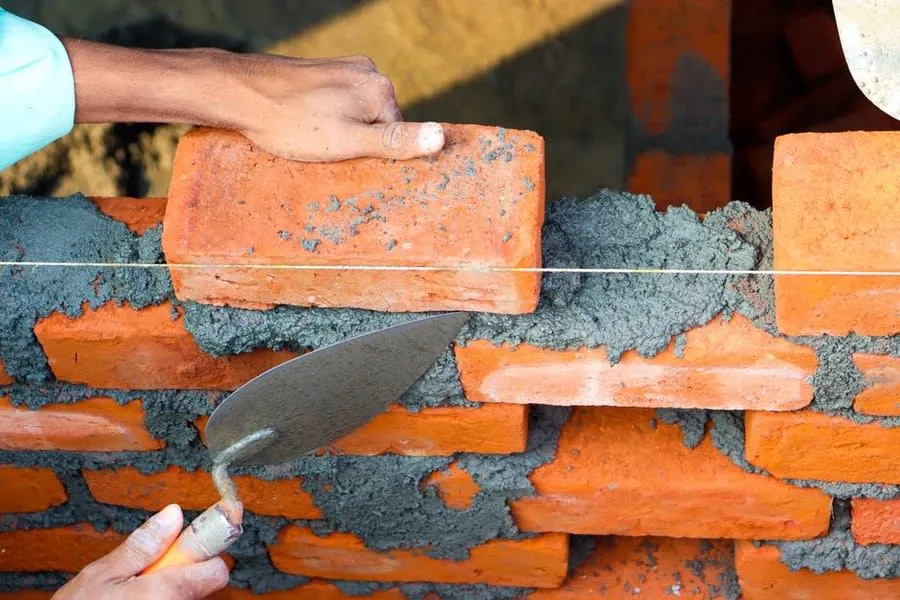
Four options, and the choice is made by how deep the damage has gone rather than how bad it looks.
Repointing suits a stack where the bricks or stone are sound and only the joints have eroded. The test is simple. If a key or a screwdriver goes into the joint but the brick faces are still crisp, the structure is fine and the pointing is the job. Stacks built in lime mortar should be repointed in lime, not cement, because cement is harder than the brick around it and the brick face ends up taking the movement instead of the joint. You can see the result of getting that wrong on terraced stacks all over the city, usually dating from a well-meant repair in the eighties, where the brick faces have shelled off around perfectly intact grey pointing.
Renewing the flaunching and the lead is the maintenance tier. New flaunching, pots re-bedded, fresh lead where the old has split or been fudged with mortar. This is the work that keeps an otherwise sound stack going for another twenty years, and it costs a fraction of the alternatives.
A rebuild becomes the answer once the brickwork itself has broken down, with faces spalled off, courses leaning and mortar that comes out as sand. Most rebuilds are partial. The stack comes down to a sound course, usually just above the roofline, and goes back up from there, reusing whatever bricks are still good so it still matches next door.
Removal is for a stack nobody will ever use again where a rebuild cannot be justified. There is more on that below, along with the two mistakes that tend to follow it.
If the roof underneath is also near the end of its life, the sums change again - that decision is covered in our guide to repairing or replacing a Carlisle roof, because doing stack work and a re-roof on one scaffold is a good deal cheaper than doing them two years apart.
Shared stacks, and the conversation with next door
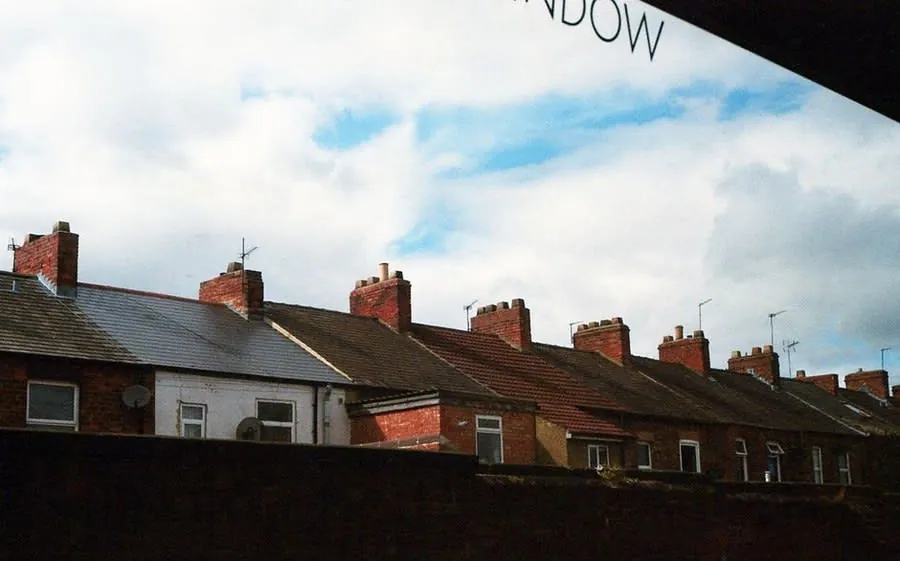
On terraced streets across Denton Holme, Currock, Caldewgate and Botcherby, the stack on the party wall belongs to both houses. Your flues run up one side of it, next door’s run up the other, and the brickwork is shared all the way to the pots.
That matters practically more than legally. A roofer cannot repoint half a stack, and rebuilding one side of a shared stack while leaving the other is asking for trouble. In most cases the sensible route is a single job with the cost split, which means a conversation with the neighbour before anyone gets quoted rather than after. Where work affects the shared structure, party wall procedures can come into play too, and it is worth knowing that before a scaffold goes up rather than when it does.
The practical version: knock on next door early, get one roofer to quote the whole stack, and split it. Two separate jobs on one stack cost both households more and produce a worse result.
What chimney work actually costs around Carlisle
Ranges you can plan around, for a standard two-storey house here in 2026:
- Renewing flaunching and re-bedding pots, £180 to £400 plus access
- Repointing an average stack, £450 to £950 plus access
- New lead flashings and a back gutter, £350 to £750 plus access
- Partial rebuild above the roofline, £900 to £2,000
- Full rebuild of a tall multi-flue stack, £2,000 to £3,500
- Removal to below roof level and making good, £700 to £1,600
- Access: a tower £200 to £400, a scaffold £450 to £900
Cumbria sits below the national average on labour, so figures quoted in London-weighted price guides run high for this area. What does not vary is access, and on small chimney jobs it is regularly the biggest single line on the invoice. That is the honest reason a £250 repair can end up on a £900 bill, and it is also the argument for grouping work - if a stack needs pointing and the gutters need renewing, do both while the scaffold is up.
Of the chimney enquiries this business takes in a year, roughly two in three are on stacks that have not had a fire in them for twenty years or more. Almost none of those homeowners had ever had the stack looked at until something appeared on a wall.
Taking a stack down - and the two mistakes that follow
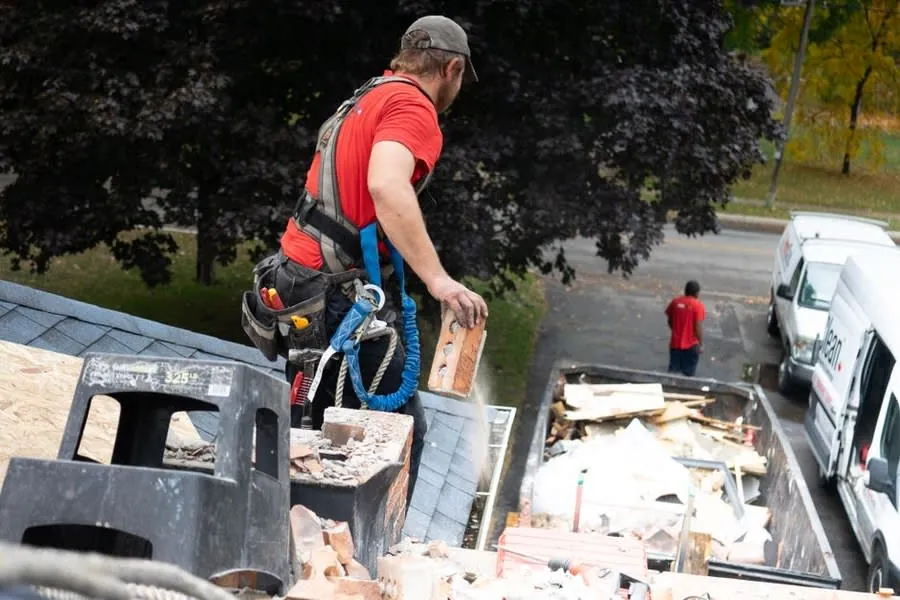
Removal is the permanent answer for a redundant stack and it is often the cheapest one. Taking a stack down to below roof level on an ordinary house is normally permitted development, so no planning application is needed. That changes if the house is listed or sits in a conservation area, and Carlisle has plenty of both - Cumberland Council holds the maps and the guidance on conservation areas across the district, and in a designated area a stack is frequently part of what the designation exists to protect. If you are altering rather than removing a flue, the Planning Portal’s guidance on flues and chimneys sets out where permitted development stops.
Two mistakes follow removals with depressing regularity.
The first is the roof patch. Where the stack came through, the covering has to be made good with matching slates or tiles, new battens and properly lapped underlay. A patch done in whatever was on the van shows from the street for the next thirty years and often leaks within five.
The second is what happens below. If the stack is removed above the roof but the breast and flues remain inside the house, the remaining brickwork above the ceiling still needs support and the flue still needs ventilating. Where the breast is being taken out inside as well, that is structural work with building control involved - it is not a job that ends when the skip leaves.
Disused flues, damp and the case for two small vents
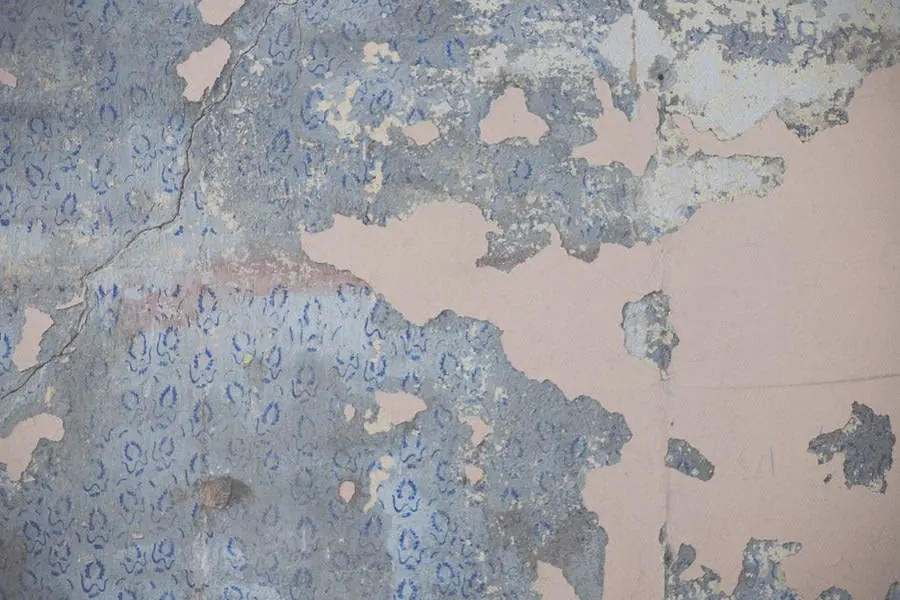
A great deal of “chimney damp” in Carlisle houses is not a leak at all.
When a flue is sealed at the top and blocked at the bottom, the air inside it has nowhere to go. Warm moist air from the house works its way in, hits brickwork that is cold because it has been standing outside all winter, and condenses. The moisture soaks into the flue lining, comes through the plaster and produces a stain that behaves like a leak and defeats every roof repair thrown at it. Old soot deposits make it worse - they are hygroscopic and salty, so they pull moisture from the air and carry it through the plaster.
The fix is ventilation at both ends: a vented cap or cowl on the pot rather than a solid seal, and an airbrick or vent into the breast in the room below. It costs very little and it is the standard way of dealing with a flue that has been retired.
If you still burn anything - wood, coal or gas - the rules are different again. Flue condition, lining, hearth and carbon monoxide alarms all fall under Approved Document J of the Building Regulations, and a stack in poor condition is not just a damp problem when there is a live flue inside it. Sweeping a working chimney at least once a year, and having someone look over the stack while the sweep is there, catches most of what would otherwise turn into a bill.
Where to start
If there is a stain on a chimney breast, start by watching when it changes. Worse within a day of heavy driving rain points at the stack or the lead. Steady through the cold months regardless of rain points at an unventilated flue. That single observation saves a lot of money and tells whoever you call where to look first.
Then get someone up there before winter rather than after it. Flaunching and pointing are cheap while they are still flaunching and pointing, and expensive once the frost has been through them for another year.
Frequently Asked Questions
How much does it cost to repoint a chimney stack in Carlisle?
Budget £450 to £950 for the pointing itself on an average two-storey stack, then add access. A tower will add roughly £200 to £400 and a scaffold £450 to £900 depending on how long it stands and whether it has to reach over a conservatory or a neighbour's yard. That is why two quotes for the same stack can differ by more than the work is worth - they are quoting different ways of getting to it.
Do I need planning permission to remove a chimney stack in Carlisle?
Usually not on an ordinary house, because taking a stack down to below roof level is normally treated as permitted development. It changes if the property is listed, or sits in one of the Carlisle conservation areas, where the stack is often part of what the designation protects. Cumberland Council is the authority to ask, and asking first is far cheaper than being told to rebuild it.
Can a chimney stack be repaired without scaffolding?
Small jobs sometimes can. Re-bedding a loose pot or renewing flaunching on a low bungalow stack is achievable from a tower. Anything that involves raking out mortar, rebuilding courses or dressing new lead needs a working platform with room for materials, and no reputable roofer will rake out a full stack off a ladder. If someone offers to, that tells you something about the rest of the job.
Why is damp appearing on my chimney breast if the chimney is capped?
Because a flue that is capped without a vent has nowhere to breathe. Warm damp air rises into the disused flue, meets cold brickwork, condenses and soaks back into the plaster - and it looks exactly like a leak. A capped stack needs a vented cowl at the top and an airbrick into the breast at the bottom. Two small vents solve a problem people often spend hundreds chasing on the roof.
Free Roof Survey & Quote
Free roof survey and a fixed written quote, anywhere across Carlisle and Cumbria.