
5 September 2026
Asbestos Garage Roofs In Carlisle: How To Spot One And What You Can Legally Do With It
Thousands of Carlisle garages and outbuildings still have cement sheet roofs. How to identify one, whether it's a risk, and Cumberland Council's disposal rules.
Somewhere between the mid-1950s and 1985, an enormous number of garages, coal stores, lean-tos and workshops went up across Carlisle with the same roof: grey corrugated cement sheet, bolted down through the crowns, cheap and quick and effectively fireproof. Most of them are still there. On the estates at Harraby, Botcherby, Raffles and Upperby, and in the back yards of the older terraces, that material is now forty to seventy years old and reaching the point where it cracks, sheds its surface and finally gives way under a heavy frost. This is what it is, what the rules actually say, and what your options are when it starts to fail.
Watch: what an asbestos cement garage roof looks like, and the rules on removing it.
Why so many Carlisle garages still have one
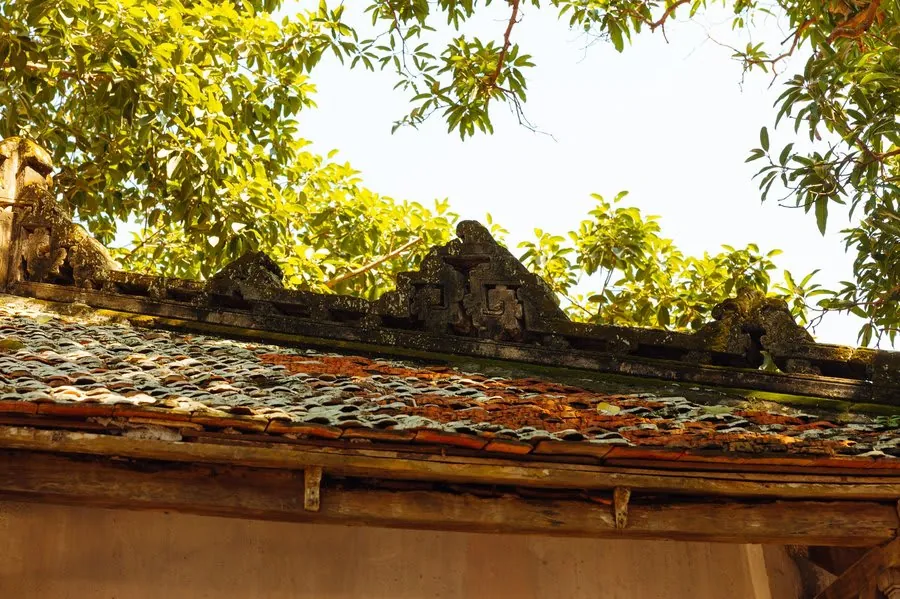
Asbestos cement was the default for anything that was not a house. It was light enough to span rafters at wide centres, it did not rot, it did not burn, and a sheet cost a fraction of anything comparable. Between the postwar housing boom and the 1985 ban on blue and brown asbestos, it went onto more or less every prefabricated sectional concrete garage sold in Britain - the ones with the bolted panel walls and the up-and-over door that you can still pick out from the street on estates all over the city.
Two other Carlisle contexts matter. The Victorian and Edwardian terraces have back yards full of small outbuildings, and where an original slate roof failed in the 1960s it was frequently patched or replaced with cement sheet. And out in the rural fringe towards Wigton, Longtown and Brampton, the farm and smallholding buildings are full of it, on a scale that no garage owner has to think about.
White asbestos was not banned in the UK until 1999, so anything built after 1999 will not contain it. Between 1985 and 1999 is a grey area. Before 1985, assume it does.
How to tell asbestos cement from everything else
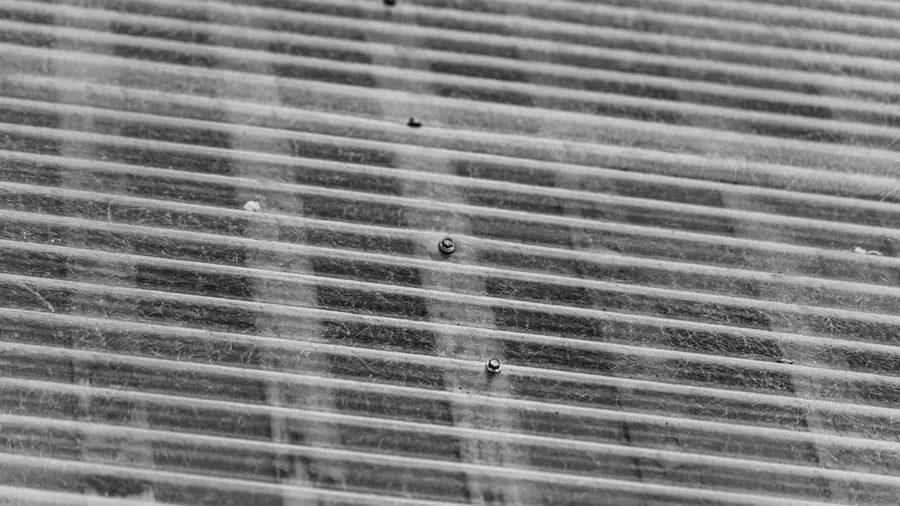
You are looking for a combination of things rather than one giveaway.
The profile is the first clue. Asbestos cement sheet has a big, regular corrugation, typically a three-inch or six-inch wave, and it is fixed with hook bolts or crook bolts passing through the top of the wave into a purlin below, each one with a washer and a cap. Modern plastic and steel sheets are fixed the same way, so that alone proves nothing - but combined with age it is telling.
The surface is the better clue. Asbestos cement weathers to a flat, chalky grey, often with lichen and moss taking hold in the troughs where water sits. Under a hand lens, or sometimes just close up in good light, you can see fine fibres in the broken edge of a sheet. It is cold and hard and rings dully when tapped, quite unlike a plastic or steel sheet.
What you must not do is snap a corner off to have a look. Breaking the material is precisely the act that releases fibres, and a casual test does more harm than leaving it alone for another decade. If you genuinely need to know - because you are selling, or a builder needs a written answer - a laboratory sample taken properly costs around £40 to £70 and settles it.
Is it actually dangerous sitting where it is?

Mostly, no - and that is the part that gets lost in the alarm.
Asbestos cement is a bound product. The fibres, typically around ten to fifteen per cent of the material, are locked into a cement matrix. An intact sheet sitting on a garage in reasonable condition is not releasing anything into your garden, and the honest advice for a great many Carlisle garages is to leave it exactly where it is, keep an eye on it, and not drill it, cut it, sand it or pressure-wash it.
Condition is what changes the answer. A sheet that has cracked across a bolt hole, delaminated in the frost, or been holed by a falling branch is no longer bound in the same way, and the loose material at the break is what you care about. So is a roof somebody has walked on - cement sheet is brittle, it does not carry weight, and people fall through these roofs every year in the UK.
The specific Cumbrian factor is the freeze-thaw cycle. Water gets into the surface of a weathered sheet, freezes overnight, and pushes the material apart a fraction at a time. That is the same process that wrecks mortar and sandstone here, and it is why a fifty-year-old cement roof in Carlisle is usually in worse condition than the same roof in the south east.
What the law lets you do yourself

This surprises people: removing an asbestos cement garage roof from your own home is not licensed work, and you are allowed to do it.
Asbestos cement sits in the lowest of the three categories in the regulations. It is not the sprayed coating, lagging or insulating board that requires a licensed contractor, and the Health and Safety Executive sets out clearly which work falls outside licensing. A homeowner working on their own domestic property is not covered by the duty to manage that applies to commercial premises either.
What the permission does not remove is the method. If you take this on yourself, the requirements are an FFP3 respirator that actually fits, disposable coveralls that go in the waste afterwards, gloves, and wet working throughout - the sheets get damped down before and during, because dry handling is what generates airborne fibre. Bolts get cut or unwound rather than sheets being levered off. Each sheet comes off whole and goes straight into the wrapping. Nothing is broken to make it fit in the car.
And be honest about the access. Most garage roofs are low enough for a tower or a pair of trestles. If yours needs a ladder and one free hand, that is a different job, and the risk of the fall now outweighs the risk of the fibre.
Cumberland Council’s rules for getting rid of it
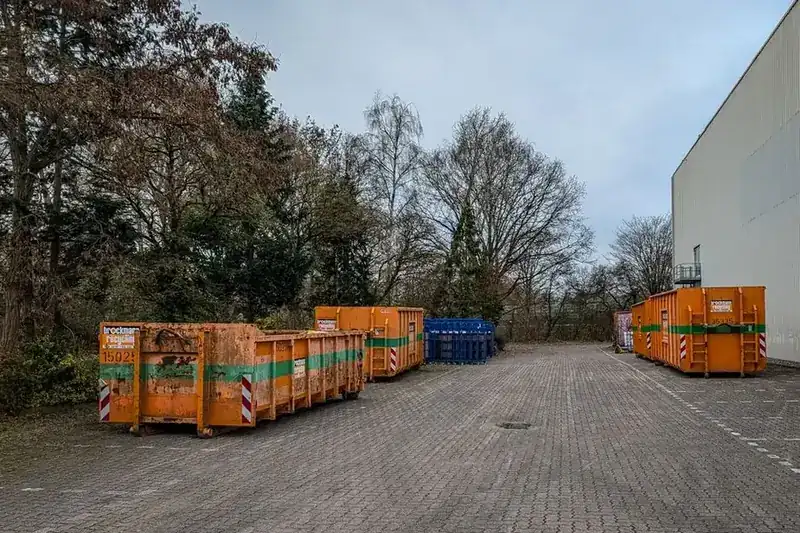
This is the part people get wrong, and it is entirely avoidable because the rules are published and specific.
Carlisle Household Waste Recycling Centre at Boustead’s Grassing on Rome Street takes small quantities of household asbestos, but not on a walk-up basis. You have to phone first on 01228 531 454 so the site can confirm it has space, and Cumberland Council’s hazardous household waste guidance sets a hard limit of four sheets or the equivalent in a day, with a maximum of three visits.
The preparation rules are just as specific. Everything must be double wrapped in plastic and sealed with tape before you get to the site. Sheets have to be under six feet in length. You tell the staff what you are carrying when you arrive rather than unloading it yourself into a general skip. And the council is explicit that sheets must not be broken up to make them fit, and must never go into a hired skip or be fly-tipped.
Which is why a general builder offering to take the old roof away with the rest of the rubbish is describing an offence rather than a favour. Asbestos is hazardous waste. It travels on a consignment note to a licensed facility, and if someone is quoting you for removal, the disposal route belongs in the quote in writing.
What removal and replacement cost
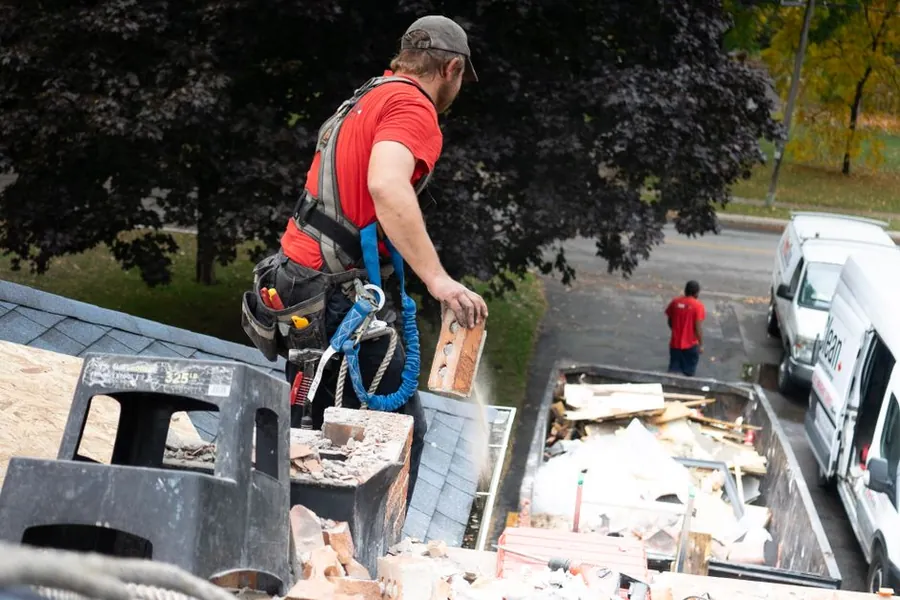
For a standard single garage in Carlisle, removal and licensed disposal on its own usually lands between £450 and £900. That covers the strip, the wrapping, the consignment paperwork and the tip charge, and the reason it is not cheaper is that hazardous waste is priced by weight at a transfer station rather than by the skip.
Removal plus a new roof on the same visit typically comes in between £1,200 and £2,200 for a single garage, depending on what goes back on. Doing both together is nearly always better value than doing them a year apart, because you pay for access once.
A double garage or a workshop scales roughly with area. Anything where the building is close to a boundary, or where a tower will not do and a scaffold is needed, adds a few hundred more. And a large agricultural building out towards Longtown or Wigton is a different market entirely, quoted by the square metre and usually run as a licensed job because of the scale.
Be wary of a figure well under those ranges. The corners that get cut are always the same two: breaking sheets to save time, and disposing of them somewhere they should not go.
What to put on instead
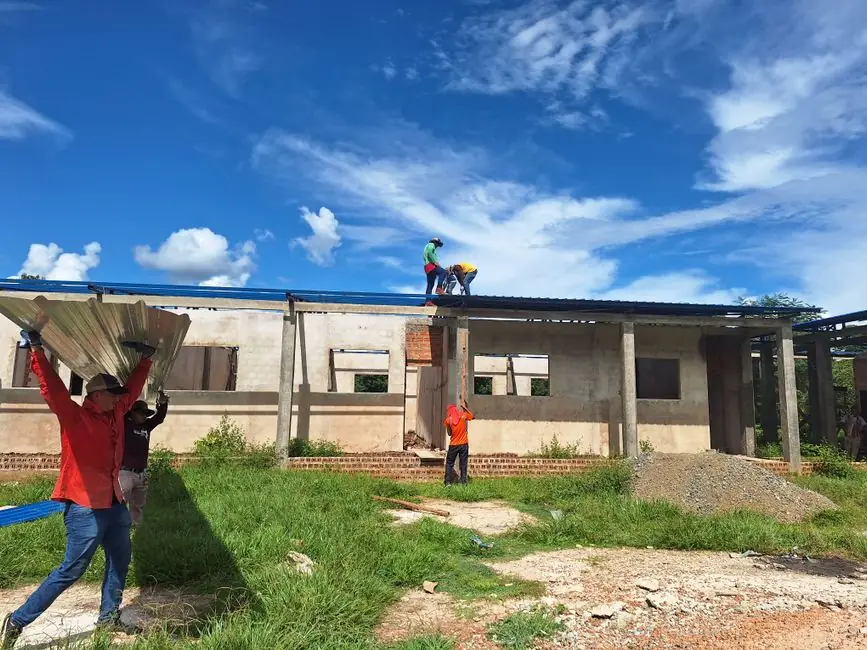
Three options cover most Carlisle garages.
Box profile steel sheet is the direct replacement and the cheapest. It is light, it goes onto the existing purlins in a day, and a plastisol-coated sheet has a realistic thirty-year life. It is noisy in heavy rain and it will sweat underneath without an anti-condensation lining, which matters more here than in a drier part of the country.
A rubber or felt membrane over a boarded deck is the option where the garage is attached to the house, visible from a window, or being converted to something that is not a garage. It is quieter, warmer, and better suited to a low pitch. It is also the point where a garage roof stops being agricultural sheeting and becomes a proper flat roof with the maintenance that implies - worth reading up on how long a flat roof actually lasts here before you choose it.
Fibre cement sheet - the modern, asbestos-free version - is the third option, and the one to pick where the building sits in a conservation area or alongside something traditional, because it looks like what was there before.
Choosing someone to do the work
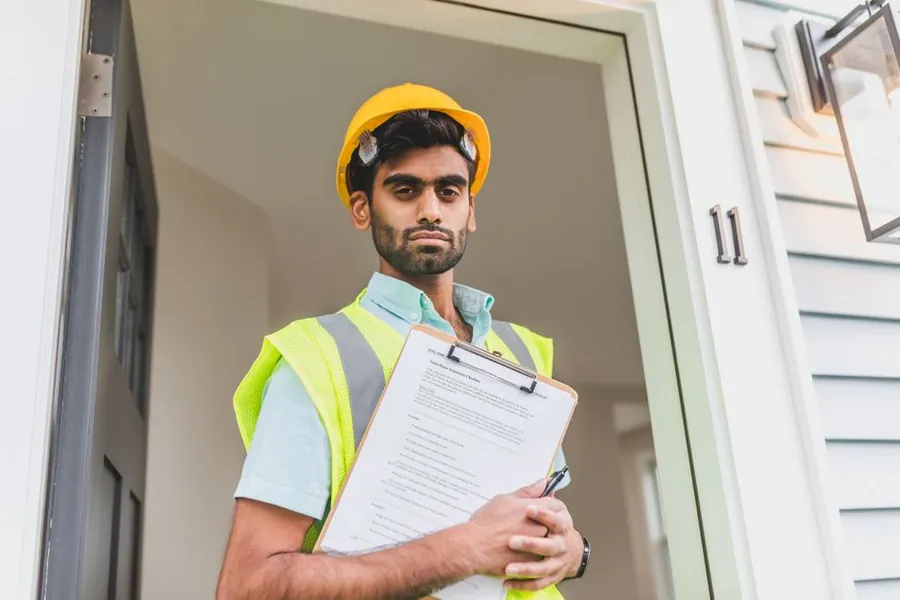
You do not need a licensed asbestos contractor for an ordinary garage roof, but you do need someone who treats it as a specific task rather than as rubble.
Ask three questions. What method are you using to take the sheets off, and will they come off whole? Where is the waste going, and will I get a copy of the consignment note? What insurance covers this work, and does the policy name asbestos? A competent firm answers all three without hesitating. Anyone who waves them off is telling you something useful.
For a larger building, or if there is any suggestion the material is not simple cement sheet, use a contractor from a specialist body such as the Asbestos Removal Contractors Association, which vets and audits its members. For a standard garage, an established local roofer who does this regularly is the sensible middle ground - and they can quote the removal and the new covering as one job rather than two.
If your garage or outbuilding roof has started cracking, shedding or letting water in, get it looked at before the frosts do the deciding for you. Get a free quote for garage and outbuilding roof work in Carlisle and we will tell you honestly whether it needs replacing this year or simply watching.
Frequently Asked Questions
How do I know if my garage roof is asbestos?
Age and appearance get you most of the way. If the garage went up between the 1950s and the mid-1980s and the roof is grey corrugated sheet fixed with hook bolts through the crown of the corrugation, assume it contains asbestos cement until proved otherwise. Asbestos cement is dull, chalky and cool to the touch, with a faint fibrous texture in the surface. Modern fibre cement looks similar, which is exactly why you assume rather than guess. The only certainty comes from a sample tested by a UKAS-accredited laboratory, which costs around £40 to £70.
Can I remove an asbestos garage roof myself in Carlisle?
Legally, yes, in most cases. Intact asbestos cement sheet is non-licensed work, and a homeowner may remove it from their own domestic property without a licence. That is not the same as it being a good idea. You need FFP3 respiratory protection, disposable coveralls, wet working to suppress dust, and a method that lifts sheets whole rather than breaking them. If the sheets are already cracked or crumbling, or if you would be working at height off a ladder, pay someone. The saving is not worth the exposure.
Where can I dispose of asbestos in Carlisle?
Carlisle Household Waste Recycling Centre at Boustead's Grassing, Rome Street, CA2 5LE takes small quantities of household asbestos, but you must call ahead on 01228 531 454 so they can confirm they have space. Cumberland Council's limit is four sheets or equivalent in a day, with a maximum of three visits. Everything must be double wrapped in plastic and sealed with tape before you arrive, sheets must be under six feet in length, and you have to tell staff at the gate what you are carrying. It must never go in a skip.
What does it cost to replace an asbestos garage roof?
For a standard single garage in Carlisle, removal and disposal on its own usually runs £450 to £900. Removal plus a new roof - box profile steel sheet or a rubber membrane on a boarded deck - typically comes in between £1,200 and £2,200 fitted. A double garage or a larger outbuilding scales roughly with area, and anything needing scaffold rather than a tower access adds several hundred. Disposal is a real cost inside those figures, not padding: hazardous waste is charged by weight at a licensed transfer station.
Free Roof Survey & Quote
Free roof survey and a fixed written quote, anywhere across Carlisle and Cumbria.